










How the System Actually Works Across Regions
Multi-region asset management rarely fails because of missing data. It fails because the data arrives too late, or arrives without context. Once assets begin moving between warehouses, offices, or project sites, the gap between physical reality and system records becomes difficult to close. That gap is where most operational inefficiencies start.
RFID systems change how this gap is handled. Instead of relying on periodic updates, they capture asset movement continuously. Each read event becomes a small piece of verified truth—where an asset was, and when it was there. When these events are aggregated across regions, the result is not just tracking, but a living map of asset movement.
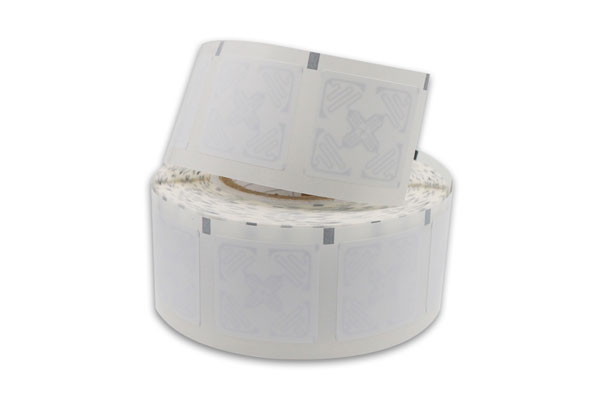
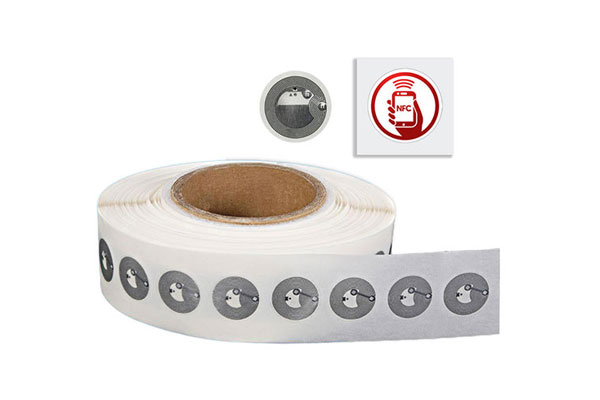
From a technical perspective, the system is built in layers, but what matters is how these layers interact. Passive UHF RFID is typically the foundation, largely because it balances cost and performance. Chips such as Impinj M830 and NXP UCODE 9xe are frequently used in enterprise deployments due to their stability in dense environments and strong read sensitivity. In practical deployments, these chips maintain consistent performance even when several hundred tagged assets are present within the same read zone.
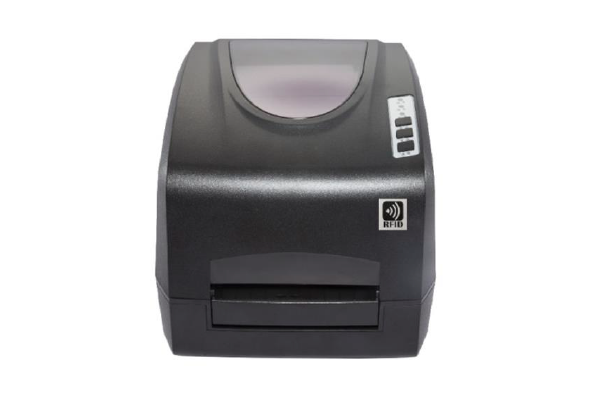
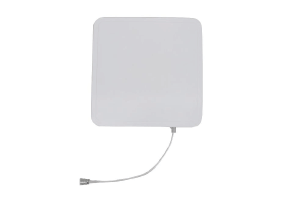
Reader capability is another important factor. Modern UHF readers can process more than 1,000 tag reads per second, allowing entire pallets, racks, or rooms to be scanned without slowing operations. Combined with read ranges of up to 10 meters in typical indoor conditions, this creates enough flexibility to monitor movement at key transition points rather than relying on manual scans.
Underneath the hardware, the system depends on event processing. Raw RFID reads are not immediately useful; they must be filtered, deduplicated, and interpreted. In multi-region environments, this becomes more complex due to network latency, asynchronous uploads, and repeated reads from different locations.
A well-structured system quietly handles all of this in the background:
- Tag identification linked to asset records
- Reader networks capturing movement events
- Middleware filtering redundant or noisy data
- Application logic translating reads into asset states
When properly configured, such systems consistently achieve accuracy levels above 99%, significantly higher than the 80%–90% range typical of manual or barcode-based tracking. The difference is not incremental. It determines whether data can be trusted across regions without constant verification.
What Really Matters in System Design
The real difficulty in multi-region RFID systems is not technology, but structure. Poorly defined systems often produce large volumes of data that do not align with operational reality.
One of the first areas that needs careful attention is how locations are defined. In a distributed environment, “location” is no longer a simple attribute. It becomes a hierarchy—country, region, facility, zone, and sometimes even sub-zone. Without consistency in this structure, data from different regions cannot be compared or aggregated reliably.
Asset identity presents another layer of complexity. RFID tags provide unique EPC codes, but those codes must be tied to enterprise asset identifiers. Without a clear mapping strategy, duplication and inconsistencies appear quickly, especially when assets move frequently between regions.
Movement interpretation is where many systems either succeed or quietly fail. An RFID read only indicates that a tag has been detected. It does not explain why the asset moved or whether the movement was expected. This requires alignment between system logic and operational processes.
Several principles tend to hold up well across different industries:
- A unified region hierarchy should be defined before scaling
- Each asset must maintain a globally unique identity
- Movement events need to align with real operational workflows
- Data synchronization must tolerate delays without breaking consistency
- Access control should reflect organizational boundaries
Environmental conditions also play a role that is often underestimated. Metal surfaces, liquids, and dense storage layouts can interfere with RF signals. Even with advanced chips, improper tag selection or placement can reduce read rates below 90%, which quickly becomes noticeable in multi-region systems.

The difference between a stable system and an unreliable one is often found in these details. Hardware may remain the same, but outcomes vary widely depending on how the system is structured.
What Happens in Real Deployment Environments
The practical value of RFID in multi-region asset management becomes clear when looking at how it operates in real environments. The technology tends to blend into operations rather than stand out, but its effects are measurable.
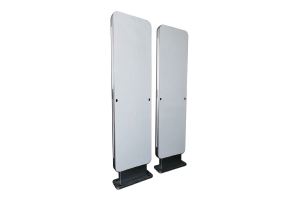
In cross-site transfers, RFID portals placed at facility exits and entrances automatically capture asset movement. As assets leave one location, their departure is recorded. When they arrive at another, the system updates their status without requiring manual confirmation. This eliminates the common delay between shipment and system updates, which can otherwise last hours or even days.
Inventory processes change even more noticeably. Instead of scanning items individually, operators can walk through a storage area with a handheld reader and capture everything within range. In many cases, a single operator can verify 3,000 to 5,000 assets per hour, compared to traditional methods that may require multiple people working over several days.
In industries where assets are constantly in motion—construction, utilities, field services—RFID provides a continuous movement history. Equipment that moves between project sites can be tracked automatically, creating a clear record of usage and location. This improves both accountability and utilization.
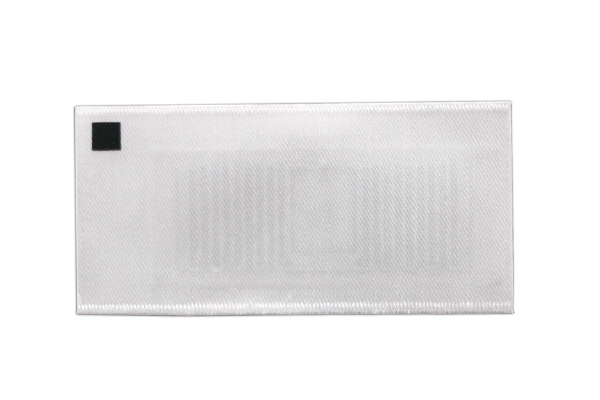
Metal-heavy environments, which were once considered difficult for RFID, are now manageable with specialized tags. Industrial-grade solutions, including models such as the DTB-C70M tag listed from DTB RFID, are designed to maintain stable read performance. In real deployments, these tags significantly improve read consistency in equipment rooms, manufacturing floors, and warehouse racks.
Retail networks offer another perspective. Inventory moves constantly between distribution centers and stores. RFID enables near real-time visibility across all locations, allowing faster replenishment and more accurate stock positioning. This becomes particularly important in high-turnover environments where delays directly affect sales.
What connects these scenarios is continuity. RFID reduces the gaps between events, making asset movement visible as it happens rather than after the fact.
How to Roll Out Without Problems
Deploying RFID across multiple regions is rarely a one-step process. Systems that attempt to scale too quickly often encounter issues that could have been avoided with a more gradual approach.
A structured rollout typically follows a sequence that balances technical validation with operational adaptation:
- Begin with a controlled pilot covering a limited asset set
- Validate read performance under real environmental conditions
- Expand coverage within the initial location
- Introduce cross-region synchronization
- Extend deployment across additional sites
This approach allows problems to surface early, when they are easier to address. Reader placement is one of the most common sources of issues. Small adjustments in antenna position or orientation can significantly affect read accuracy, especially in environments with interference.
System integration is another critical factor. RFID platforms must connect with existing systems such as ERP or asset management software. Without this connection, asset data becomes fragmented, limiting its usefulness for financial reporting and operational planning.

Cost considerations are often less restrictive than expected. Passive RFID tags typically range from $0.05 to $15, depending on durability and application requirements. This allows different tagging strategies to be applied across asset categories without excessive cost.
Training plays a quiet but important role. Even though RFID reduces manual input, it introduces new concepts that require understanding. Operators need to interpret system events correctly, especially when dealing with movement across regions.
What Kind of Value Can Be Expected
The impact of RFID in multi-region asset management tends to appear quickly, often within the first few operational cycles.
Accuracy improves almost immediately. Systems that previously operated with error rates between 5% and 15% can reach near-perfect accuracy once RFID is fully implemented. This has a direct effect on planning and decision-making, especially in distributed environments where data discrepancies are more difficult to detect.
Efficiency gains are equally visible. Inventory processes can be reduced by 75% to 90%, allowing organizations to perform more frequent audits without increasing labor. In some cases, full asset verification cycles that once required weeks can be completed in days.
Loss reduction is another measurable outcome. In many organizations, asset loss is not the result of theft but misplacement. RFID provides continuous visibility, reducing uncertainty and lowering loss rates by 30% to 70%, depending on system coverage.
There is also a financial dimension that often goes unnoticed at first. Many asset registers contain inaccuracies—items that no longer exist or cannot be located. Estimates suggest that 15% to 30% of recorded assets may fall into this category. RFID enables rapid verification, allowing these discrepancies to be corrected.
Return on investment is typically achieved within 12 to 18 months, driven by labor savings, reduced loss, and improved asset utilization. After that point, the system continues to deliver value without significant additional investment.
Why Some Projects Do Not Work Well
RFID systems do not usually fail because of technical limitations. More often, they fall short because of misalignment between system design and real-world operations.
Certain patterns tend to appear repeatedly in underperforming deployments:
- Inconsistent location structures across regions
- Incorrect tag selection for environmental conditions
- Poor reader placement leading to incomplete data capture
- Lack of integration with existing enterprise systems
- Processes that are either too complex or not followed consistently
One of the more subtle issues is overdesign. Systems that attempt to capture every possible scenario can become difficult to operate. When this happens, users may bypass processes, leading to gaps in data.
Environmental factors also contribute to performance issues. Metal interference, dense storage, and physical obstructions can reduce read reliability if not properly addressed during deployment.
Another common problem is data overload. RFID systems generate large volumes of raw reads. Without proper filtering and event processing, this data can become difficult to interpret, reducing its practical value.
Finally, consistency across regions is essential. Multi-region systems depend on standardized processes. If each location operates differently, the system loses coherence, and the benefits of centralized visibility begin to diminish.
