










Applications
Track IT, office, production, and laboratory assets throughout their lifecycle.
DTB provides UHF RFID tags and hardware for fixed asset identification, inventory checks, and movement tracking. Identify laptops, servers, desks, chairs, production equipment, and valuable laboratory instruments, linking each physical asset to its owner, custodian, assigned location, and lifecycle records.
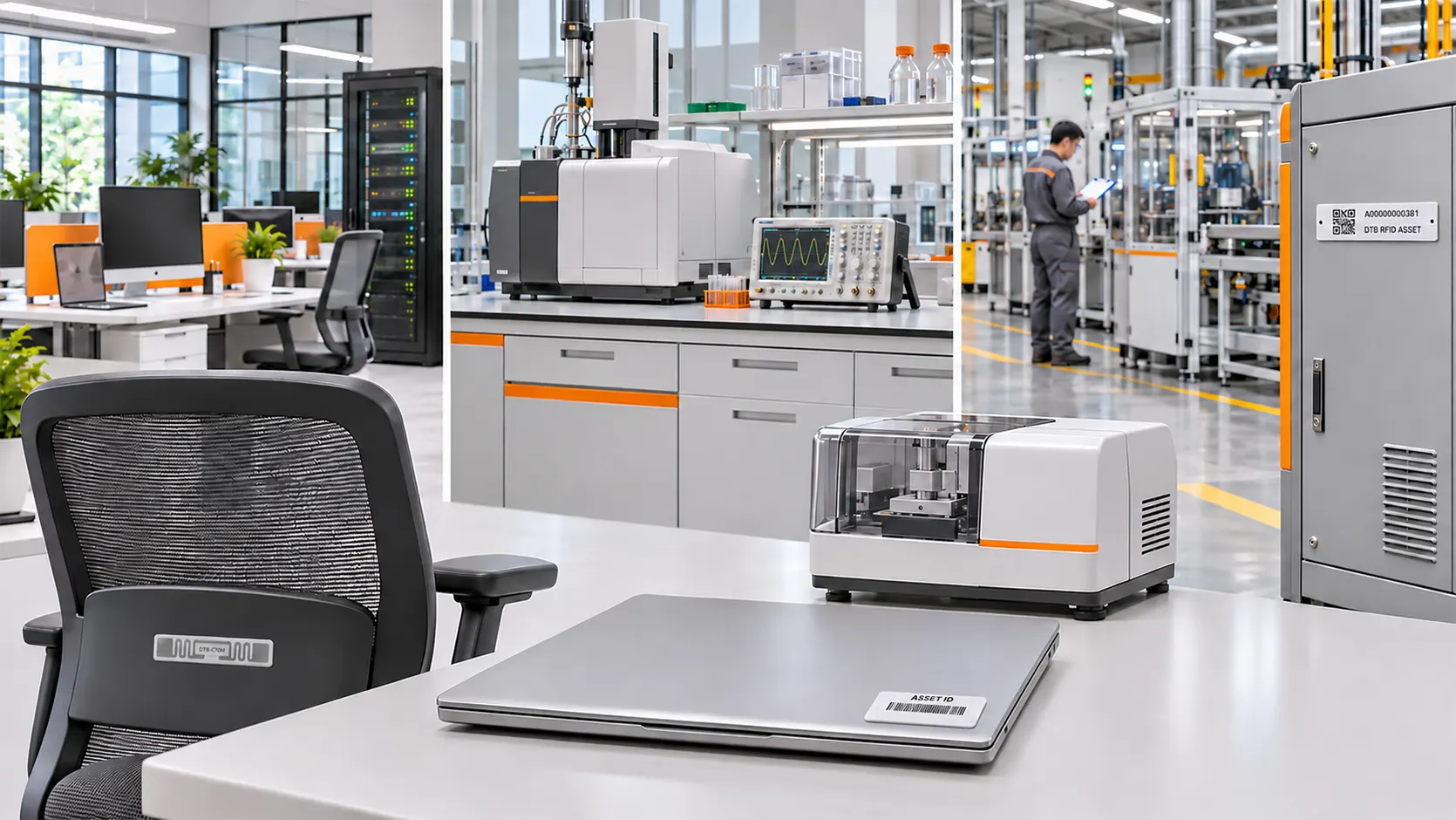
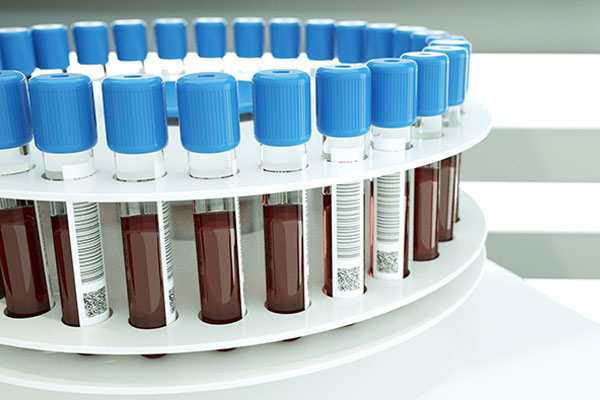
Illustrative application scene.
Asset Management Challenges
Assets are dispersed across rooms, departments, and sites. Manual inventory takes time, while unrecorded moves and incomplete handovers cause differences between registers and physical stock. Borrowed equipment can become overdue, idle assets remain hidden, and service histories are difficult to retrieve. Metal housings, small mounting areas, cleaning, and daily wear place different demands on tag selection and attachment.
RFID Solution Overview
Give each asset a persistent RFID identity and link it to the existing asset register, ERP, IT service, or maintenance system. Use handhelds for counts and search, and fixed readers at selected handover points to capture movements. DTB supplies suitable tags, readers, printers, and device integration support; connected applications manage approvals, responsibilities, and status changes.
Applications Across the Asset Lifecycle
Acquire and register → assign and use → transfer or loan → service → verify → retire.
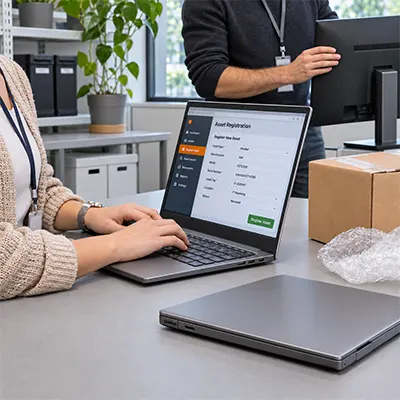
Link the RFID identity to an asset number and manufacturer serial number where available. Keep ownership, custodian, department, assigned location, and status consistent across handovers. Distinguish company-owned assets from externally borrowed or leased equipment, and retain the same asset history through label replacement.

Receipt / registration

Assignment / transfer
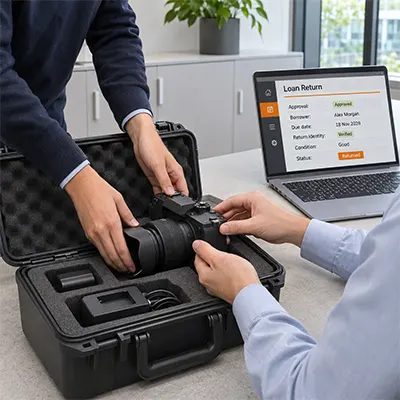
Loan / return
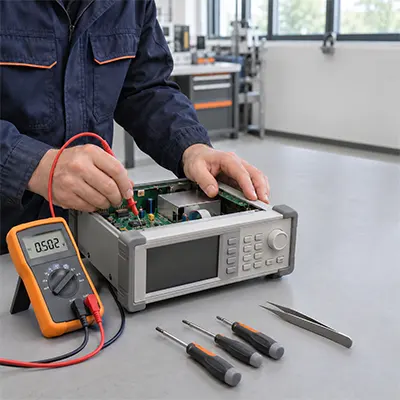
Repair / maintenance
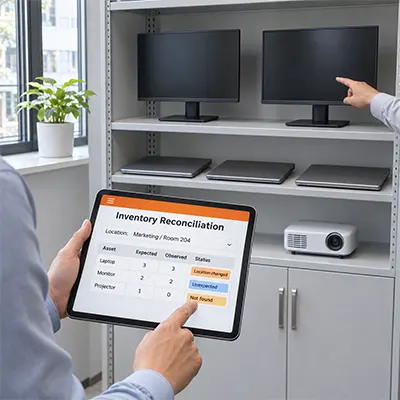
Inventory / reconciliation
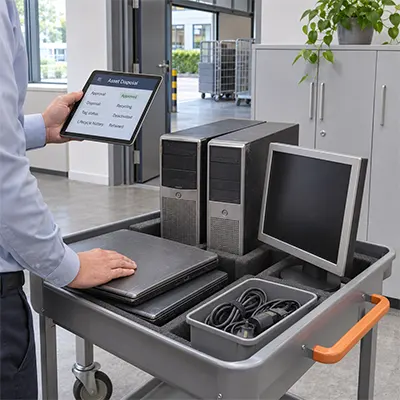
Retirement / disposal
| Lifecycle stage | RFID application | Related products |
|---|---|---|
| Receipt / registration | Tag and encode accepted assets; link purchase, serial, warranty, category, and ownership records. | Adhesive or on-metal labels; RFID printers and handhelds |
| Assignment / transfer | Identify assets at issue and receipt; update custodian, department, location, and handover records. | Handhelds; integrated or multiport readers |
| Loan / return | Match assets to approved loans, borrowers, and due dates. Confirm the returned identity and record condition. | Handheld or fixed readers; suitable asset tags |
| Repair / maintenance | Identify equipment against work orders; link repair, maintenance, or calibration results and return-to-service decisions. | Handhelds; durable on-metal or ABS tags |
| Inventory / reconciliation | Compare observed IDs with expected assets by department or location; investigate missing, unexpected, or relocated items. | Handheld readers; fixed checkpoints where suitable |
| Retirement / disposal | Verify approved assets before removal; record disposal and tag retirement while preserving lifecycle history. | Handheld or fixed readers; asset identification tags |
Fixed reading points record observed handovers and locations. Combine these events with periodic physical checks and work-order updates to keep the asset record current.
RFID Tag Selection
Choose for the asset surface, available space, expected wear, and attachment method.

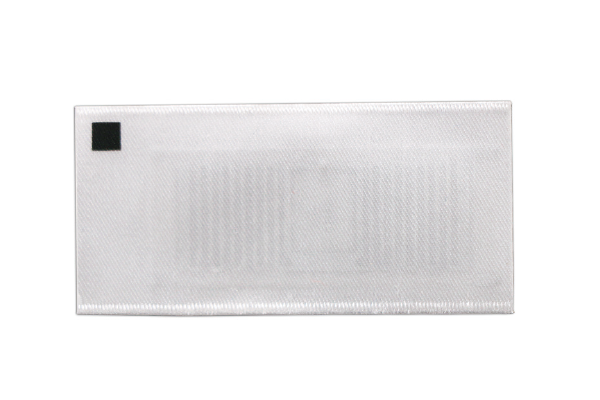
Adhesive UHF RFID labels

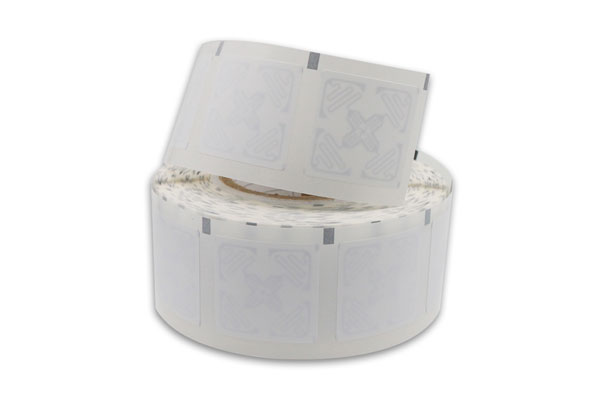
Flexible on-metal RFID labels

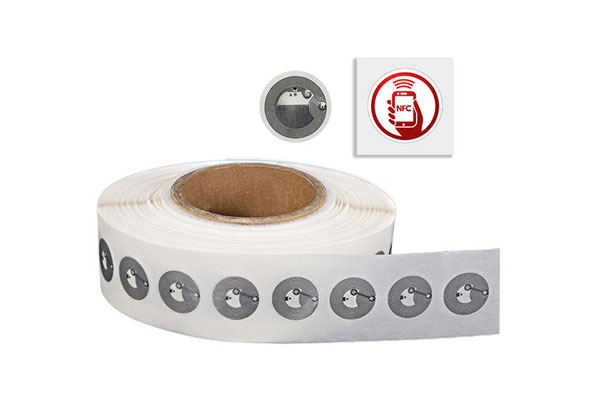
ABS RFID hard tags

PVC RFID card tags
Form-factor illustrations: adhesive label / flexible on-metal label / ABS hard tag / PVC card tag. Final appearance depends on the selected product.
| Tag type | Typical assets | Selection priorities |
|---|---|---|
| Adhesive UHF RFID labels | Wood or plastic furniture, plastic equipment housings, and suitable non-metal surfaces. | Surface texture, adhesive, cleaning, abrasion, and printing. Add a visible asset number and optional QR/barcode for manual checks. |
| Flexible on-metal RFID labels | Metal laptops, servers, instrument housings, cabinets, and suitable equipment surfaces. | Metal backing, label size, curvature, thickness, adhesion, and readability. Keep clear of vents, controls, connectors, and service openings. |
| ABS RFID hard tags | Production equipment, laboratory instruments, heavy-use assets, and reusable equipment cases. | Fasteners, impact, cleaning agents, sealing, and operating temperature. For metal mounting, select an explicitly compatible on-metal design. |
| PVC RFID card tags | Furniture or equipment with card holders, tie points, or suitable non-metal mounting areas. | Holder or tie strength, snagging, card size, and replacement. Validate the complete attachment, particularly near metal. |
Validate tags on representative assets in their intended mounting positions. Check surface compatibility, read performance, attachment durability, cleaning resistance, and regional UHF compatibility.
RFID Hardware Selection

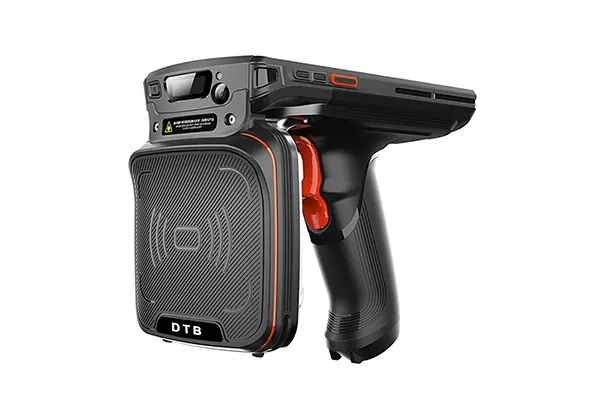
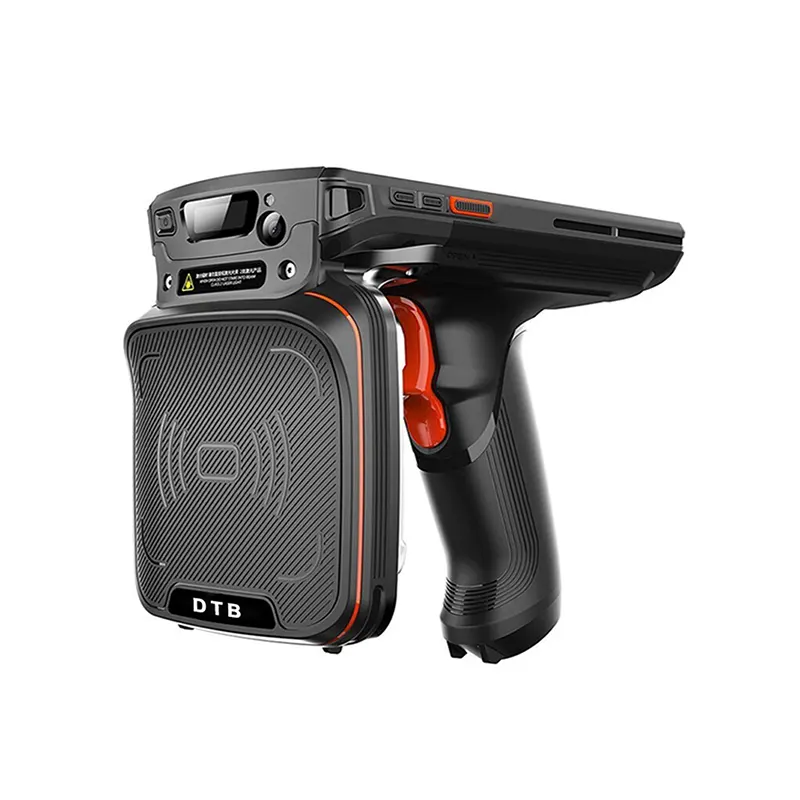
PDA / handheld readers

Integrated RFID reader

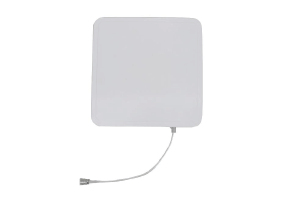
Multiport readers / antennas
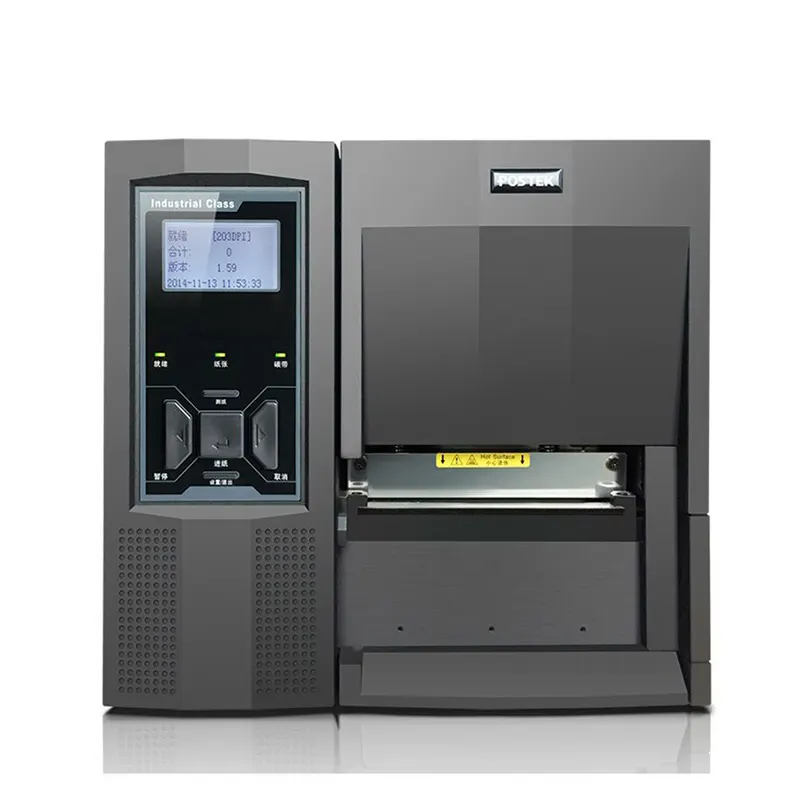
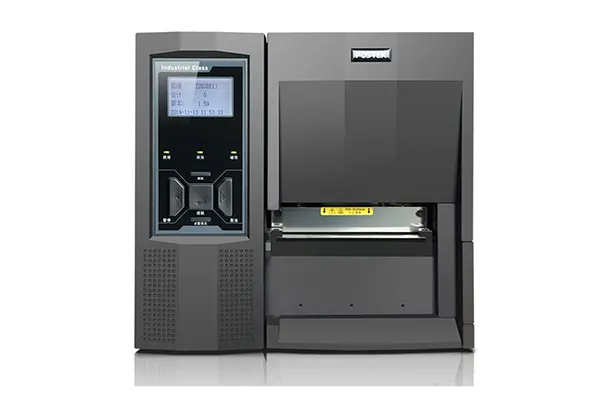
RFID printer encoder
| Hardware | Typical use | Selection priorities |
|---|---|---|
| Handheld RFID readers | Room-by-room counts, handovers, loans, and targeted asset search. | Ergonomics, battery, barcode capture, search support, and application compatibility. |
| Integrated RFID readers | Compact reading points at selected rooms, storerooms, or handover desks. | Antenna orientation, read-zone control, triggers, mounting, and interfaces. |
| Multiport readers / antennas | Several reading points, equipment exits, and controlled movement checkpoints. | Coverage, adjacent zones, movement direction, and linkage to authorized transfers. |
| RFID printer encoders | Print and encode compatible adhesive and flexible on-metal labels. | Supported media, encoding verification, print durability, and asset-number consistency. |
Business Value
Faster inventory and search. Batch reading reduces repetitive barcode scans and makes regular asset checks more practical, while compatible handheld search helps teams find tagged equipment.
More reliable asset records. Reconcile physical IDs with the register to reveal unrecorded transfers, location differences, and assets requiring follow-up.
Clearer custody and movement history. Recorded issues, returns, and transfers support accountability, overdue-loan follow-up, and investigation of unusual movements.
Better maintenance coordination. Asset-linked work orders help retrieve repair, maintenance, and calibration history and support timely service planning.
Better use of existing assets. Visibility of assigned, idle, on-loan, and under-repair assets supports redistribution and helps avoid unnecessary replacement purchases.
Measurable operating improvement. Compare count time, asset-record accuracy, search time, overdue loans, idle-asset reuse, and replacement spending against the starting baseline.