









Consumer Electronics

Connect work in progress, finished goods, and product traceability.

DTB provides UHF RFID tags and hardware for smart manufacturing and finished-goods tracking. Identify workpiece carriers, fixtures, products, or packaging to support assembly traceability, warehouse operations, shipping verification, and channel tracking for smartphones, wearables, and other premium consumer electronics.
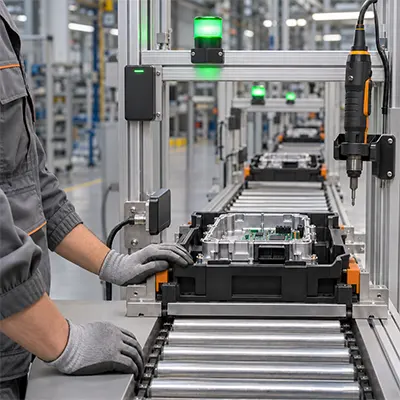
Manufacturing-1

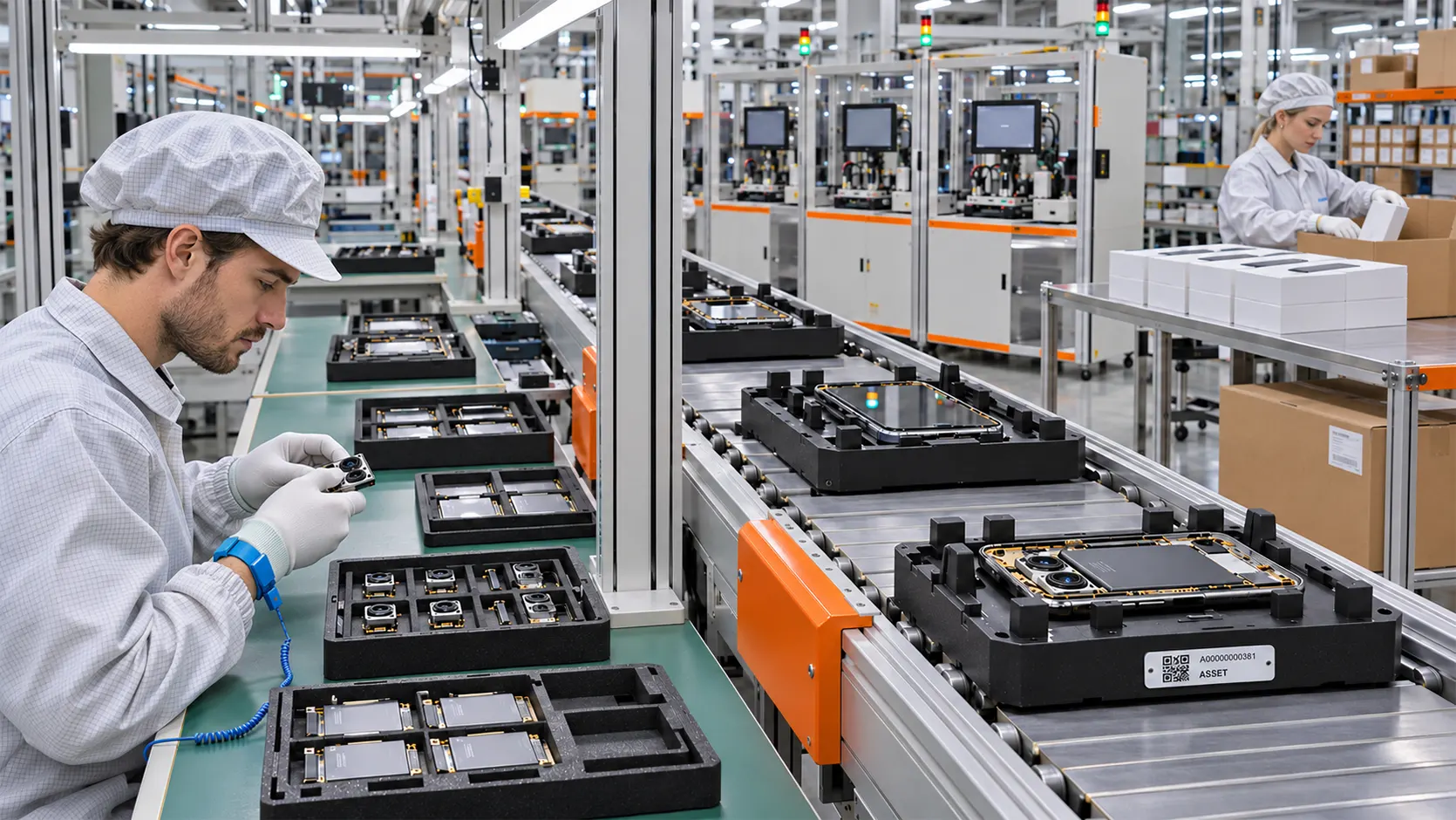
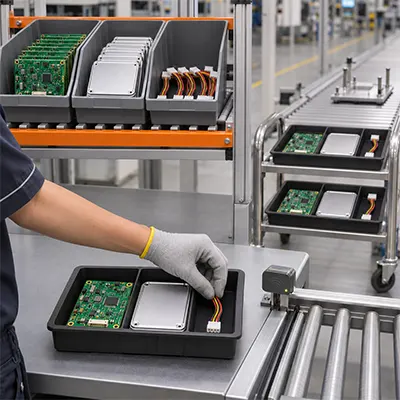
Illustrative application scene.

Manufacturing Challenges

Mixed-model production, component changes, and rework complicate process traceability; manual scans leave gaps between products, orders, equipment, operators, and test records. Metal housings and ESD-safe carriers make identification harder. Receiving and dispatch checks are labor-intensive; unrecorded movements create inventory discrepancies, while similar models and packaging increase wrong-item and quantity errors. Disconnected production, sales, and return records slow after-sales quality investigations.

RFID Solution Overview

Use reusable carrier tags for work in progress and suitable product or packaging tags for finished goods. Connect station reads to MES, ERP, WMS, and sales records, building product history around a consistent serial identity. DTB supplies tags, readers, printer encoders, and device integration support; business systems apply the process rules.
From Production to Sales

Materials → assembly and testing → packaging → warehouse → shipping → sales and service.

Bind each fixture or tray to the current product serial number, component IDs or lots, and order. For multi-position carriers, record each occupied slot. Update associations at unloading, carrier changes, or rework. At packing, link the finished-goods RFID identity to its serial number and case or pallet records.

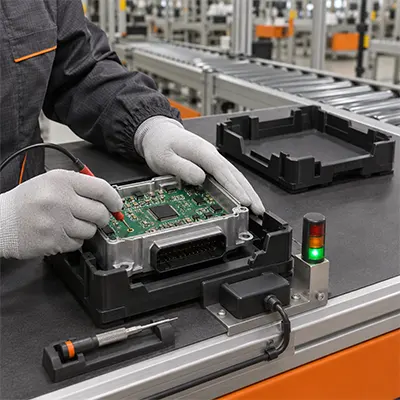
Manufacturing-2

Materials / line feeding

Manufacturing-3

Assembly / station checks

Manufacturing-4

Testing / rework

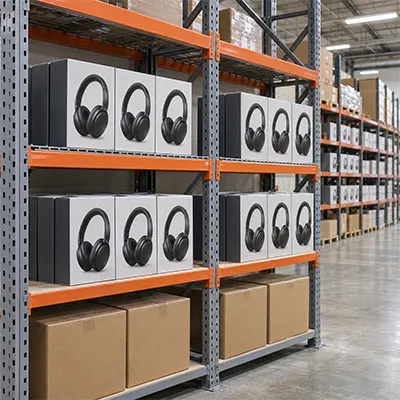
Manufacturing-5

Packing / warehousing

Manufacturing-6

Dispatch / fulfillment

Manufacturing-7

Sales / after-sales

Core stage RFID application Related products
Materials / line feeding Identify trays and fixtures; bind components, lots, orders, and product serials before assembly. ABS / PCB tags; desktop and station readers
Assembly / station checks Identify the carrier at each station. Link station, equipment, operator login, time, and route checks through MES. Integrated readers; multiport readers and antennas
Testing / rework Associate test results and release status with the current product; retain history after rework or carrier changes. Station readers; fixture tags
Packing / warehousing Encode finished-goods IDs; record receipts, counts, picking, and item-to-case associations. Adhesive / on-metal labels; printers and handhelds
Dispatch / fulfillment Verify tagged goods against orders for store, distributor, or e-commerce shipments. Handhelds; carton tunnels or pallet chambers
Sales / after-sales Link sales and return checks to serial and authorized-channel records; investigate unusual product movements. Handheld and desktop readers; product labels

RFID Tag Selection

Select for the mounting surface, process exposure, and product lifecycle.

DTB-C70M-chip

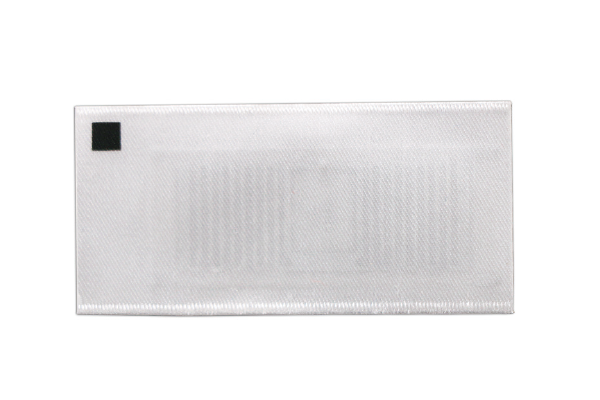
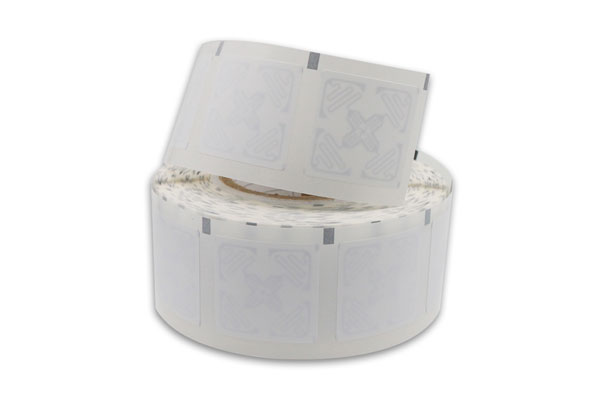
Adhesive UHF RFID labels

DTB-F7030-main

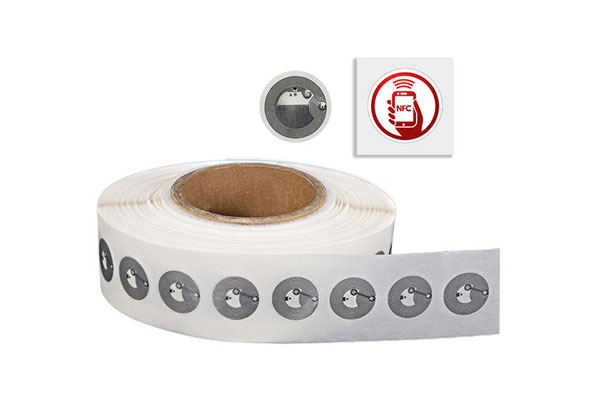
Flexible on-metal RFID labels

ABS8827UA-main

ABS RFID hard tags

PCB7020UA-main

PCB on-metal RFID tags

Form-factor illustrations: adhesive label / flexible on-metal label / ABS hard tag / PCB on-metal tag. Final appearance depends on the selected product.

Tag format Typical applications Selection priorities
Adhesive UHF RFID labels Finished-goods boxes, cartons, and suitable non-metal product surfaces. Actual contents, label placement, adhesive, print layout, and serial binding. Validate with the packaged device, battery, and accessories.
Flexible on-metal RFID labels Suitable metal housings, parts, and metal-backed surfaces. Mounting area, thickness, curvature, adhesion, and product appearance. Metal compatibility does not imply ESD suitability.
ABS RFID hard tags Reusable trays, small carriers, fixtures, and production logistics containers. Fixing, wear, cleaning, and temperature exposure. Choose a verified on-metal version for metal fixtures; confirm compatibility with ESD-safe carriers.
PCB on-metal RFID tags Metal fixtures, tool holders, and compact metal carrier structures. Size, clearance, orientation, fixing, and impact protection. Standard tags are not automatically suitable for soldering, reflow, or chemical processes.

Validate tags on actual devices, loaded trays, and packaged goods. Check metal interference, ESD requirements, process conditions, attachment durability, and regional UHF compatibility.

RFID Hardware Selection

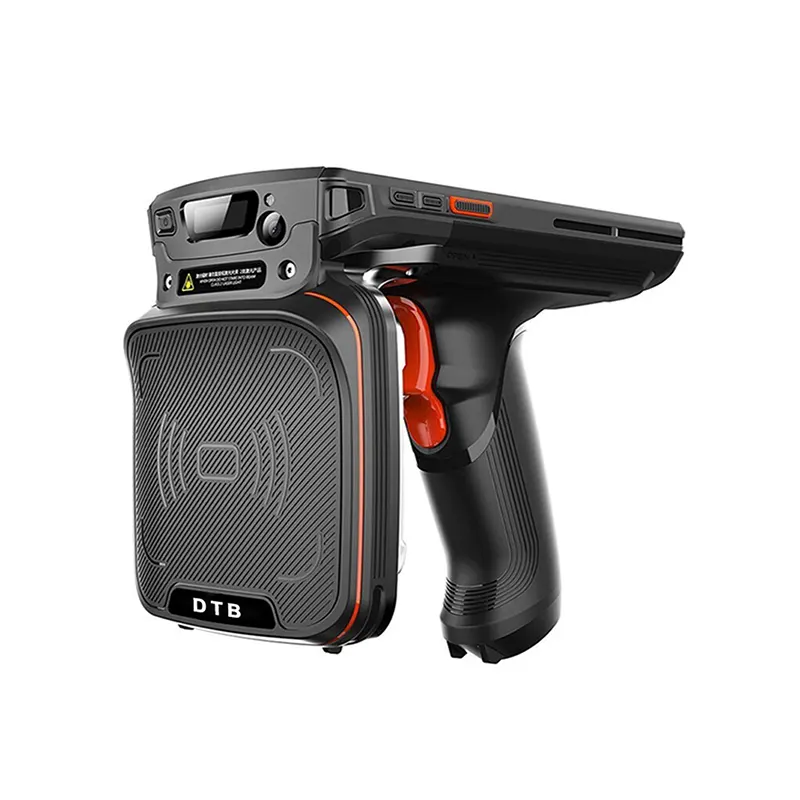
h20u-main-v3

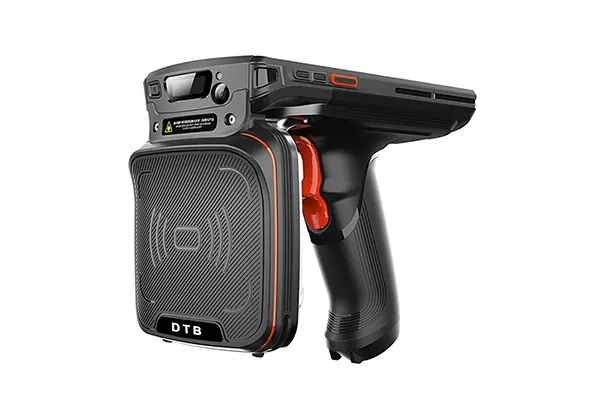
Handheld readers

QY-DR400U-main

Desktop reader / encoder

QY-UR08C-main

Multiport reader

QY-UR01F-main

Integrated reader

tx3r-main

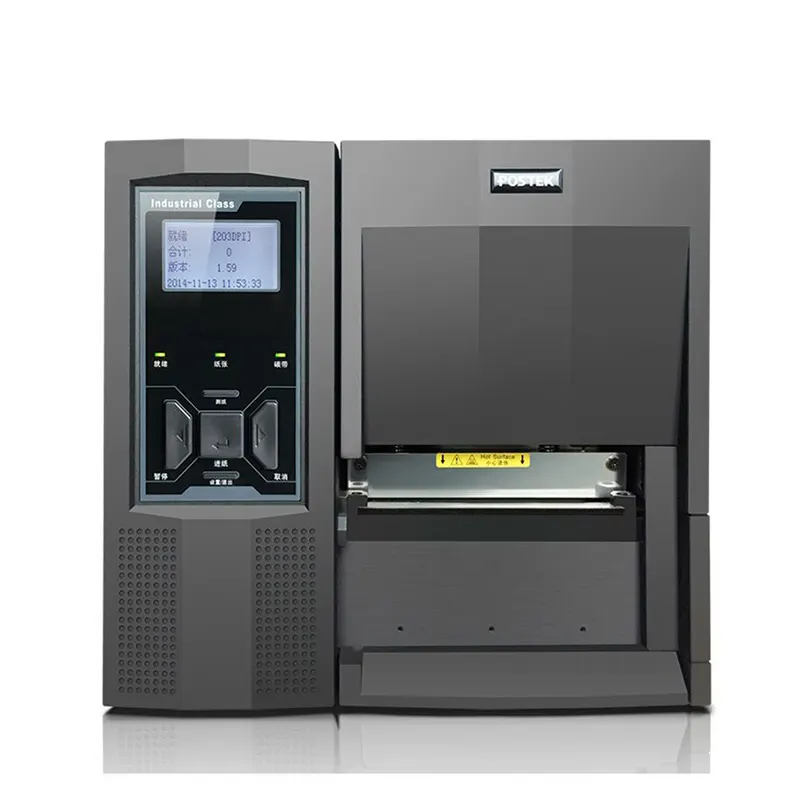
RFID printer

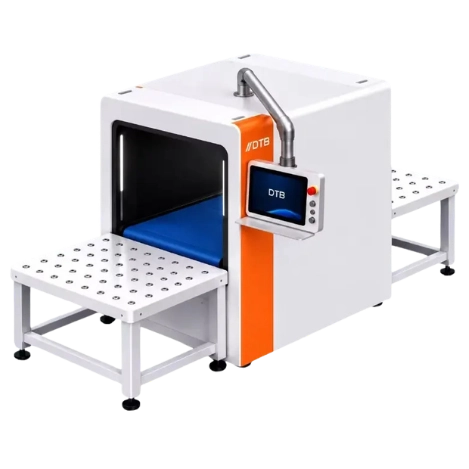
RFID tunnel

Carton RFID tunnel

food-13

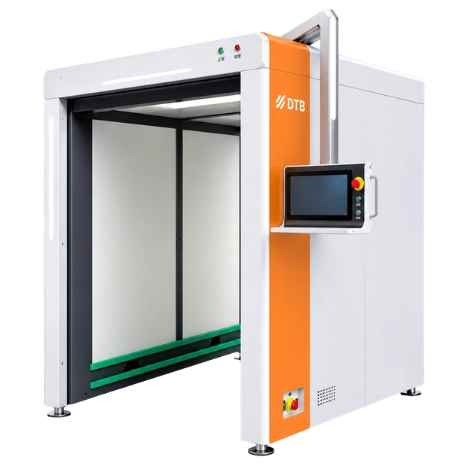
Pallet RFID chamber

Hardware Typical use Selection priorities
Handheld readers Counts, picking, finding goods, returns. Barcode support, battery, software compatibility.
Desktop readers / encoders ID encoding, binding, and single-item checks. Controlled read area, tag compatibility, interfaces.
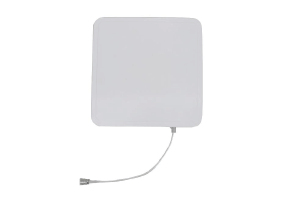
Multiport readers / antennas Several reading points on a line or dock. Antenna layout, adjacent stations, triggering.
Integrated RFID readers Compact station or conveyor checkpoints. Mounting, read-zone control, PLC / MES interfaces.
RFID printer encoders Print and encode compatible product labels. Media, encoding checks, print quality, serial data.
Carton tunnels / pallet chambers Larger-scale receiving and dispatch checks. Load size, density, shielding, and throughput.

Business Value

A stronger data foundation. Station identification reduces repetitive entry and connects physical production events with smart factory records.

Clearer process and quality history. Linked products, components, orders, equipment, operators, and test results support route checks, rework analysis, and targeted investigations.

More efficient warehouse execution. Batch identification supports receiving checks, counts, picking, and dispatch verification by product type, model, and quantity, helping improve inventory accuracy and reduce shipping discrepancies.

Better channel and after-sales visibility. Serial and shipment records support channel diversion checks and return verification. Authentication requires suitable secure tags and backend verification; an EPC alone is not proof of authenticity.

Measurable improvement. Track data completeness, exception-handling time, inventory accuracy, dispatch errors, and trace-back time against the original operating baseline.

Please enter your email