












Understanding RFID tag types: HF vs UHF (and sometimes LF)
First, it helps to understand the main categories of RFID tags used in commercial inventory settings. Generally, RFID tags are classified by operating frequency: low-frequency (LF), high-frequency (HF), and ultra-high-frequency (UHF). For most inventory management and warehousing applications, HF and UHF dominate.
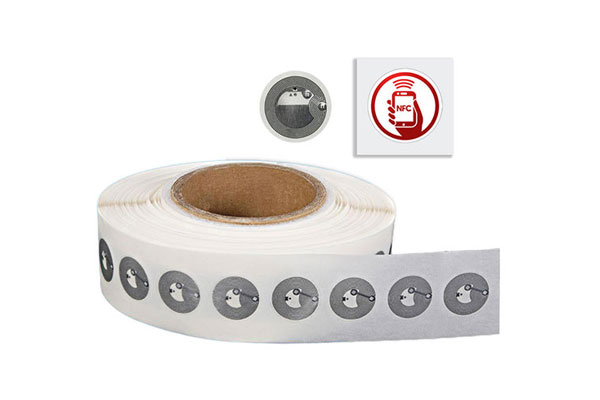
HF (High Frequency, ~13.56 MHz): These tags are based on electromagnetic induction coupling. Read distances are relatively short — typically from a few centimeters up to around 1 meter (though in practice often below that). HF tags are widely used in scenarios like library book management, retail apparel tagging, and other mid-sized inventory use cases.
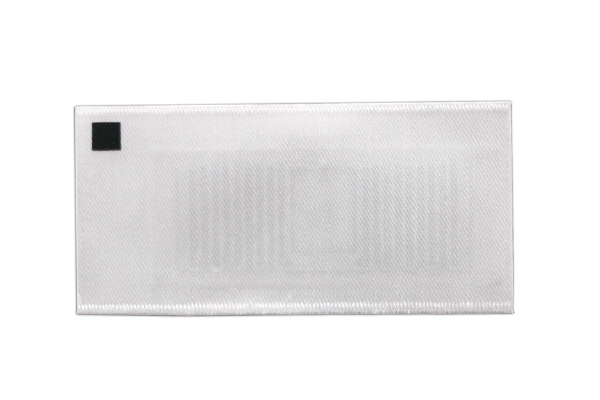
UHF (Ultra‑High Frequency, ~860–960 MHz worldwide, though exact sub-band depends on region): UHF tags work via far-field electromagnetic scattering (backscatter), enabling much longer read distances — from a few meters to 10 meters or more depending on reader antenna, tag type, and environment. UHF tags can support fast, bulk reading of many items at once, making them ideal for large-scale warehousing, supply-chain logistics, and high-volume inventory.
Some important tradeoffs neatly follow from these physical principles:
HF tags are less sensitive to interference from metal or liquid materials — because magnetic coupling is more robust in challenging environments.
UHF tags offer much faster scanning and longer-range reads, but are more vulnerable to environmental interference (e.g., metal racks, liquid containers) unless mitigations (like special inlays or tag placement) are adopted.
Given these tradeoffs, your first major decision point is whether HF or UHF fits your inventory’s nature and environment.

Inventory type and management goals: what you want to achieve
The type of items you manage — and what you expect RFID to do for you — strongly suggests one path or the other.
Large, bulk items; pallets; crates; boxes; mixed goods in storage; high‑turnover warehouses
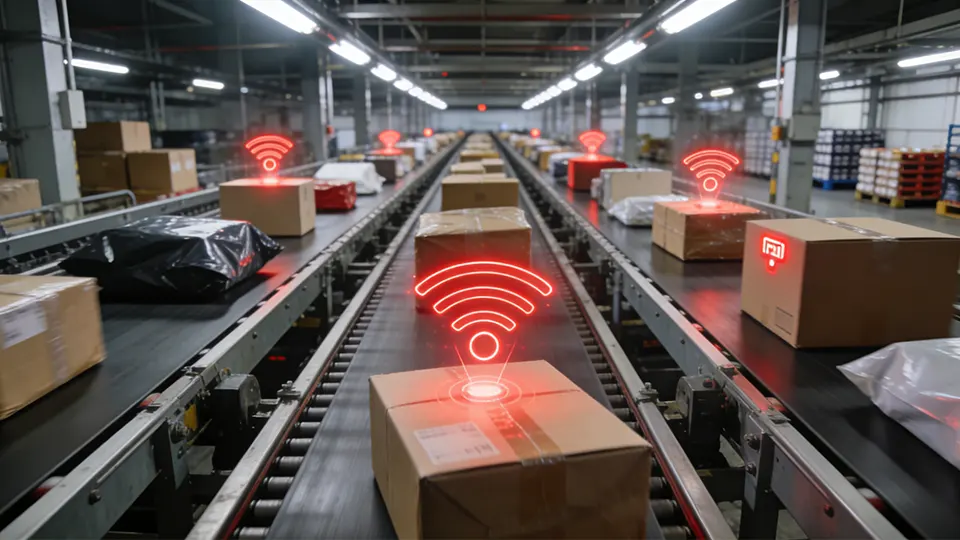
In these scenarios, you typically want to scan many items at once, often when items enter or leave the warehouse, or when they pass through checkpoints (e.g., docks, gates, conveyors). You may not need precise per-item tracking, but speed and coverage matter. UHF tags tend to shine here: they allow simultaneous batch reads, long-distance scanning and rapid inventory sweeps. Many logistics- and warehouse‑oriented RFID implementations rely on passive UHF tags for exactly this reason.
For example, when a pallet loaded with dozens of boxes moves out of a warehouse bay, a UHF reader at the exit can automatically “see” all tagged boxes — no manual scanning, no line-of-sight, no stopping the flow. That greatly reduces labor time, speeds up stock‑in/stock‑out logging, and helps maintain real-time inventory visibility.
Small items; high value or sensitive items; metal or liquid‑sensitive goods; controlled-access or high-security items; retail items with frequent picking and returns
If you are managing small tools, components, medicines, electronics, or other items stored closely together (e.g., on metal shelves or in bins), and if you care about precise identification rather than bulk batch scanning, HF tags can be more reliable. Because HF performance tends to degrade less in metal- or liquid-rich environments, and because HF systems excel at short-range precise reads, they reduce misreads and “lost tags.”
Another typical case: retail apparel or accessories, where each item carries its own tag, and inventory audits are done shelf-by-shelf or rack-by-rack — here HF can simplify tagging small individual items without worrying about interference.
Mixed inventory, or combination of bulk items and small items
In many businesses, you have a mix: pallets and crates on one hand, small parts or valuables on the other. Sometimes the optimal choice is to combine both HF and UHF tags (or even use hybrid approaches). But this adds complexity — requiring different readers, tag placement strategies, and perhaps custom inlays/labels for tricky surfaces (metal, liquids). Failure to match tag type, environment, and use-case is a common cause of system failure.
Environment conditions: materials, interference, shelving, movement
The physical environment and storage setup often dictate the success or failure of an RFID-based inventory system. Unfortunately, this is also where many systems go wrong — by underestimating interference, tag placement difficulties, or incompatibility between tags and shelves/containers.
Some typical environmental factors to examine:
Metal shelves, racks, or storage bins: Metal reflects or absorbs radio waves, especially at UHF frequencies. If you place passive UHF tags on metal pallets or near large metal racks, reads may fail or become highly inconsistent. In such cases, HF tags (which rely on magnetic coupling) are often more stable.
Liquid containers, products with high water content, or wet environments: Similar to metal, liquids can severely attenuate UHF signals. If your inventory includes beverages, chemicals, water-filled containers, or operates in humid or wet warehouses, HF (or specialized “anti-metal/liquid” tags) may be safer.
Tight shelving or dense stacking: When items are close together — e.g., small parts in bins, or books on shelves — the close proximity can cause reading errors due to tag collisions or signal blocking. HF’s short-range and induction-based coupling often gives more stable reads in those cases, while UHF may mis‑read or skip tags if antenna placement or reader configuration is not carefully planned.
Dynamic inventory: items moving in/out, loose crates or pallets, cross-docking, forklifts, gates: In high-turnover operations where goods flow in and out constantly — e.g., wholesale warehouses, logistics hubs — the long read range and batch-scanning capability of UHF make operations much more efficient. It enables “drive-through” scanning, quick stock counts, and real-time visibility without halting the flow.
Because of these environmental sensitivities, it’s often wise — before committing to a tag type — to do a real-world test: placing sample tags on typical items (metal, plastic, liquid containers, cartons) and testing read success under realistic conditions (shelved, stacked, moving). Many failures in RFID deployments stem from “wrong tag selection + poor placement + inadequate reader setup” rather than inherent flaws of RFID.
Cost and scalability — tags, readers, total cost of ownership
Cost often ends up being the decisive factor — especially for mid-size businesses or enterprises operating on thin margins. And cost has many dimensions: per‑tag cost, reader cost, installation cost, maintenance, and the hidden cost of failed reads or system downtime.
Per‑tag cost: Passive UHF tags tend to be cheaper than HF tags when produced in volume — and when the tag is a simple, standard label/inlay, the unit cost per tag can be quite low. For large-scale inventory (thousands or tens of thousands of items), this makes UHF attractive. On the other hand, HF tags often cost more per unit, especially if designed for industrial durability or for challenging surfaces.
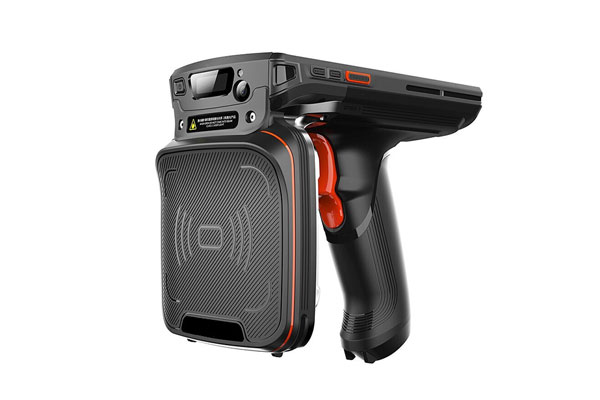
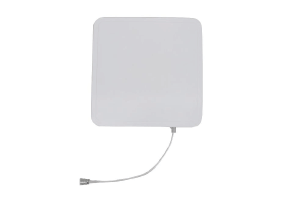
Reader & infrastructure cost: UHF systems often require fixed readers (gates, antennas), possibly multiple reading points to cover all entry/exit or storage locations, which adds upfront cost. HF systems can sometimes be simpler to deploy (handheld readers, fewer fixed antennas), especially if inventory size is modest and speed is less critical.
Scalability & long‑term ROI: If your operation handles large volumes, frequent throughput, or expects growth — more SKUs, more turnover, faster shipping — investing in UHF infrastructure may pay off quickly through labor savings, reduction in manual errors, faster audits and better real‑time inventory visibility. Conversely, for small/medium operations with fewer SKUs or slower turnover, the simplicity and reliability of HF — even if per‑tag cost is higher — might lead to lower total cost of ownership over time.
There is also an often-overlooked cost dimension: maintenance and failure cost. RFID doesn’t guarantee perfection. If tags are wrongly placed, readers are poorly positioned, or items are stored in unfavorable conditions (metal, liquids, damaged tags), the system may lose reliability — undermining the benefits.

Examples and use cases
To make this discussion more concrete, let’s consider a few real-world or typical use cases, referencing common tag configurations and when they make sense. (These are generic illustrations — actual vendor names or inlays may vary; treat these as archetypes rather than endorsements.)
Bulk warehouse / logistics center for general goods: A large warehouse storing boxes, cartons, pallets of diverse goods — perhaps a third-party logistics center (3PL), or a major retailer’s distribution hub. Here, passive UHF tags (e.g., inlay-based labels attached to cartons or pallets) are widely used. A single UHF reader at the loading dock or exit gate can scan entire pallets at once as they leave or enter. This gives huge efficiencies: inventory in/out is almost automatic, and manual barcode scanning becomes unnecessary. In such cases, the extra cost of UHF readers is justified by savings in labor and time, especially when inventory cycles are frequent and volume is high.
Metal‑shelved small-parts storage (e.g., components, tools, hardware): Suppose you run a parts warehouse storing screws, bolts, electronic components, perhaps in bins on metal shelving. Because of the metal environment and dense stacking, UHF signals may bounce or be blocked. In these scenarios, HF tags attached to each bin or small package may perform far more reliably. You may sacrifice long read distance and batch scanning speed, but you gain consistency and accuracy, reducing “ghost reads” or missed tags.
Retail store — individual garments or small consumer goods: Many retailers who tag individual items — clothes, accessories, small electronics — choose HF tags because of their compact size and stable performance near other tags. Alternately, some may choose UHF for stockroom/back-room management (inventory counts, restocking), while HF is used for point-of-sale or item-level control. This hybrid approach balances scalability with reliability.
Mixed inventory management with both bulk pallets and small items (e.g., a supply company): In real-world manufacturing or distribution companies, inventory often includes a diversity of item sizes and materials. For instance: raw-material boxes on pallets, small components in bins, metal parts, plastic parts, liquid containers, tools, etc. For such complexity, many companies adopt dual-frequency strategies: UHF for pallet-level tracking and bulk flows; HF (or specialized tags) for small, metal-heavy or liquid‑sensitive items. The key is to design appropriate workflows, tag placement, and reader infrastructure — and ensure your Warehouse Management System (WMS) or ERP integrates seamlessly with the RFID data.
Common pitfalls & mistakes — and how to avoid them
Given the complexity and variety of use cases, it’s perhaps unsurprising that many deployments fail or underperform. Based on industry experience, here are common mistakes — and what to watch out for:
Choosing the wrong tag type for the environment or item material. This is by far the most common cause of failed RFID rollouts. For example: using passive UHF tags on metal racks or liquid‑filled containers without appropriate anti-metal/liquid tag inlays or staggering tags properly can lead to poor read rates or complete failure.
Poor reader placement or insufficient reading coverage. Even with perfect tags, RFID won’t work if readers/antennas are positioned poorly — blind spots and missed reads are common. A well-planned layout, possibly with multiple fixed readers or handhelds, is often necessary, especially in large warehouses.
Ignoring integration with WMS / ERP systems. RFID is not just about reading tags — it’s about having that data feed directly into your inventory management software. Without proper integration, RFID becomes a manual or semi-manual process, and many of its advantages (real-time visibility, automation, analytics) are wasted.
Underestimating training, process changes, and maintenance. Switching from barcode/manual inventory to RFID means changing workflows: where and how items are tagged, how readers are used, how staff handles incoming/outgoing goods. Without proper training and standard operating procedures, RFID can create confusion or new errors instead of efficiency.
Overlooking long-term costs and total cost of ownership. While passive tags may seem cheap and RFID glamorous, ongoing maintenance, tag replacements, infrastructure upgrades, and handling edge cases (metal, liquids, damaged tags) can add up. It pays to run a small pilot, test in your actual environment, and project long-term costs carefully.
Practical guidelines: how to choose the right RFID tag strategy for your inventory
Based on the analysis above, here’s a practical decision-guiding checklist to help you choose an RFID tag strategy for inventory management:
Map out your inventory types and volumes.
Are you mostly dealing with pallets, boxes, and large containers, or small parts, individual items, and bins?
How many items (or SKUs) do you handle daily/weekly/monthly?
Is your inventory more or less static, or does it change rapidly (incoming/outgoing goods, cross-docking, shipping, returns)?
Analyze your storage environment.
Are your shelves/racks metal? Will many items include metal parts or liquid containers?
Are items densely packed or loosely placed?
Is there frequent movement (forklifts, conveyors), or mostly manual handling?
Clarify your management goals.
Do you need to count inventory in bulk quickly (e.g., pallet-level)?
Do you need precise item-level tracking (e.g., tools, small parts)?
Do you need real-time visibility, or periodic audits?
Estimate cost vs benefits (ROI).
For high-volume, fast-moving inventory: passive UHF often gives the best ROI, thanks to bulk read speed and lower per-tag cost.
For small or problematic items (metal, liquid, dense storage): HF (or specialized tags) may provide more stable results, potentially saving costs associated with misreads, lost items, or tag failures.
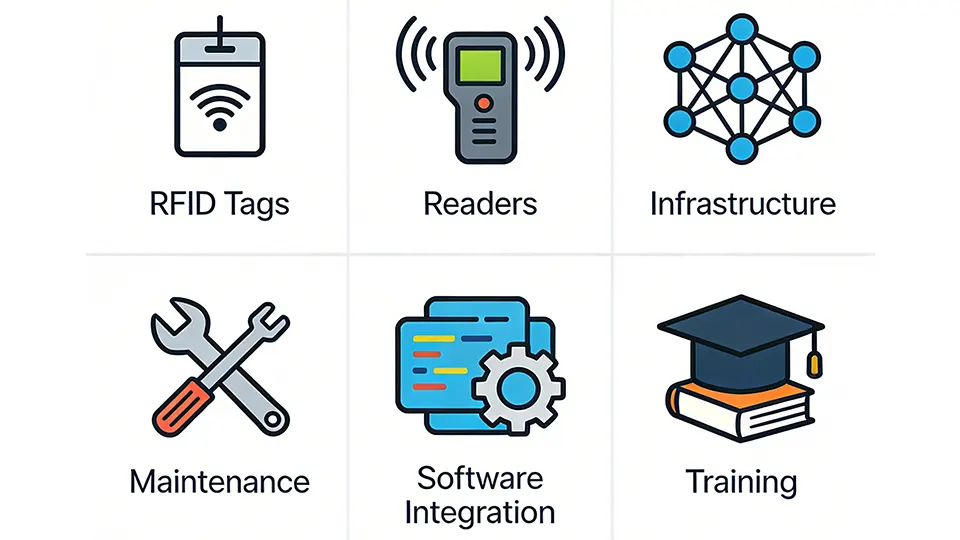
Consider total cost: tags + readers + infrastructure + maintenance + software integration + training.
Pilot test under real conditions.
Before full deployment: tag a representative sample of items (varied size, material, storage condition), test reading performance (fixed readers, handhelds, entry/exit points), and monitor read accuracy, failure rates, and ease of use.
Use results to refine which tags to use, where to place readers, and how to integrate with WMS/ERP.
If needed — consider hybrid or mixed-frequency tagging strategies.
For mixed inventory (bulk + small items): adopt both UHF and HF (or even LF in niche cases).
Segregate use by item type: e.g., UHF for cartons/pallets, HF for small or metal-based items.
Ensure your backend system supports multiple frequencies and manages tags appropriately.
Why many adopters of RFID (especially UHF) succeed — and why some fail
When done right, RFID systems transform inventory management. They can cut labor costs, drastically reduce human error, speed up stocktaking, and give near real-time visibility into stock movement. Many warehouses move from periodic manual stock counts (which might take hours or days) to rapid, even continuous, inventory tracking as items pass through checkpoints.
But many failures stem not from RFID technology itself — but from misunderstanding its limits, mis‑matching tags and environment, or neglecting the “ecosystem” around RFID: reader placement, software integration, workflow redesign, and staff training.
In short: RFID is powerful — but only when you treat it as a system, not just a tag.
Conclusion — there is no universal “best” RFID tag for inventory
Ultimately, the question “Which RFID tag should we pick for inventory?” doesn’t have a universally correct answer. The “best” depends entirely on what kinds of items you store, how you store them, what you want to achieve in inventory management, and how much you’re willing to invest in infrastructure and maintenance.
For large‑scale, high‑volume warehousing of pallets or cartons, passive UHF tags are often the most efficient and cost-effective. For small parts, metal-heavy or liquid‑sensitive inventory, or precise item-level tracking, HF tags may provide more stable and reliable performance. Many real-world deployments benefit from a hybrid approach — using both tag types appropriately.
Before committing to a particular RFID strategy, it pays to carefully map your inventory, environment, management goals — and run pilot tests under real-world conditions. Done right, RFID can bring dramatic improvements in efficiency, accuracy, and visibility. Done carelessly, it risks being expensive, unreliable, or underused.

