










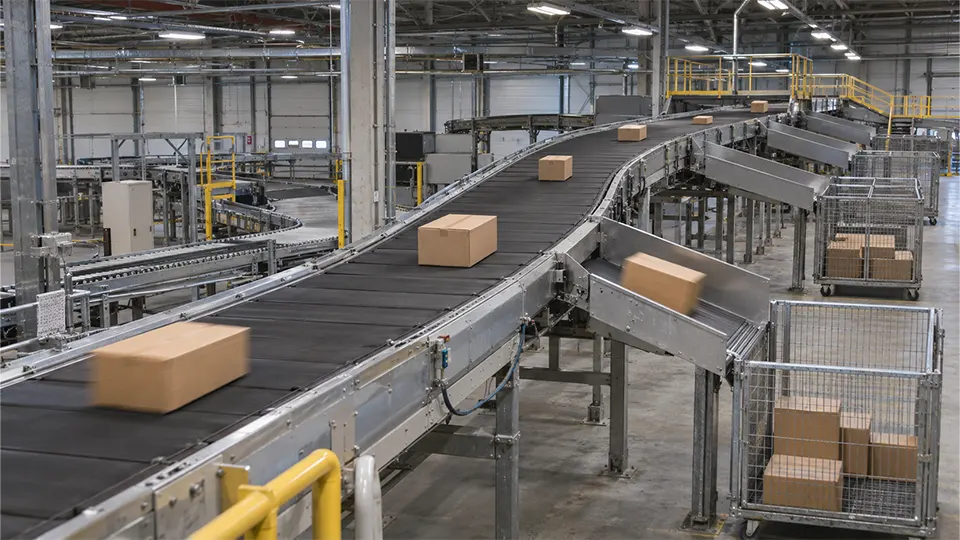
A shipping label reads reliably on a packing bench, then starts missing reads on the conveyor. The parcel has turned, its contents are closer to the antenna, and the available reading time has shrunk. Meanwhile, a reader picks up a second label from the neighbouring lane. Both events can leave the sorting system without a dependable parcel identity when it needs to act.
Selecting RFID tags for high-speed parcel sorting requires testing the finished label on representative packages, at operating speed, within a defined reading zone. Read distance, chip sensitivity and antenna size help shortlist candidates. Their suitability depends on whether the installation delivers the correct identifier before the parcel reaches its routing decision point.
UPS Brings Package-Level RFID Into Focus
On April 14, 2026, UPS announced an expansion of RFID package sensing across its US small-package network. The company reported deployments in its US package delivery vehicles and delivery facilities, with RFID applied to packages shipped through more than 5,500 The UPS Store locations, including returns. Its cumulative investment in developing and implementing the technology exceeded $100 million.
The announcement gives parcel identification a useful commercial context. Labels increasingly participate in several handovers, where package position, orientation and surrounding materials change. UPS did not publish conveyor speeds or tag acceptance criteria in that announcement, so it cannot establish a performance specification for another installation.
A distribution centre procuring labels still needs its own operating brief: package mix, conveyor arrangement, regional radio settings and identification deadlines. A label approved at one transfer point may require different placement or reader settings elsewhere.

Line Speed Sets the Reading Window
The first calculation concerns time. Dividing the effective reading-zone length by conveyor speed gives an initial estimate of how long a tag remains within that zone. As an illustrative calculation, a 0.6-metre zone at 3 metres per second provides 0.2 seconds of transit time. These figures are an engineering example, not a published speed rating for a particular tag.
The usable communication window may be shorter. A parcel can enter with its label facing away from the antenna, pass through a weak part of the field, or lose visibility behind another package. Trigger timing, reader inventory settings and communication retries consume part of the available interval.
The deadline also includes software processing. After the reader captures an identifier, the system must associate it with the correct parcel, retrieve routing information and deliver the result to the conveyor controller. A late read may appear in the tracking database after the useful decision window has closed.
- Establish the latest point at which the sorter needs a confirmed parcel identity.
- Measure the effective RF coverage at operating speed and realistic package spacing.
- Allocate time for acquisition, parcel association, data processing and control communication.
Test the Contents as Well as the Carton
An empty corrugated box is a convenient test object, but it provides little evidence about a shipment containing drinks, foil packaging or metal components. Liquids can absorb UHF energy, while nearby metal can detune the tag antenna and alter the field through reflection. Fill level, internal spacing and the position of the label relative to the contents affect the result.
Flexible mailers introduce another variable. The inlay may bend, fold or sit against the product rather than a consistent air gap. Labels applied over carton edges or seams also need examination. Placement instructions should reflect what packing staff can reproduce during normal production.
- Paperboard cartons: test filled packages, including realistic void fill and product positions.
- Plastic mailers: include curved, creased and compressed conditions encountered in handling.
- Liquid or metal contents: compare mounting positions and evaluate specialised labels where ordinary inlays remain unreliable.
Separate the parcel label from any item-level tags inside the shipment. A reader may detect both. The application needs an agreed identifier scheme and filtering logic so a tagged product is not mistaken for the outer shipping unit.
Choosing the Chip and Antenna Together
Impinj M730 and M830 are relevant chip families for logistics label evaluations. Chip specifications describe the IC under stated measurement conditions; the antenna, mounting surface and label construction determine how the finished product performs on a package.
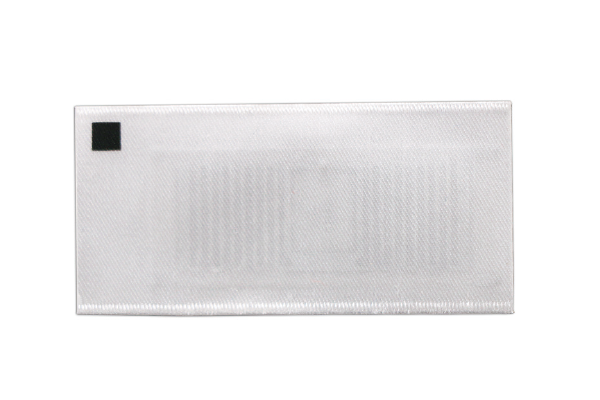
DTB RFID’s DTB-C70M label provides a concrete starting point for non-metal parcel trials: its published specifications list a 73 × 17 mm label, a 70 × 14 mm antenna and an Impinj M730 chip. Those dimensions help assess available placement space. Any quoted read range still needs validation against the regional configuration, package contents and conveyor geometry.
A useful comparison keeps reader settings and package conditions consistent while changing candidate labels. Record the chip and antenna revision, label position and sample batch. Where a supplier offers alternative ICs under a product family, confirm the exact construction being quoted and sampled.
Recent protocol developments also deserve precise treatment. GS1 published Gen2 version 3.0.1 on February 26, 2026. Impinj Gen2X adds standards-compatible enhancements, but it is not another name for that GS1 release. Available benefits depend on the combination of chip, reader hardware, firmware and enabled features.
A Read Must Belong to the Right Parcel
Increasing RF power may recover weak tags while also extending coverage into an adjacent lane or accumulation area. In a sorting installation, unwanted reads can attach the wrong identity to a parcel event. The reader output needs to be assessed alongside conveyor position and trigger information.
A June 2026 test published by Impinj illustrates how tightly defined conditions affect performance claims. Cartons containing 60 tagged metal eyeglass cases had to be verified in less than 1.5 seconds. The earlier configuration averaged 91.7% accuracy across 100 runs. The upgraded configuration achieved complete verification in 90 of 100 runs. This was item-level carton verification in a supplier laboratory, not a universal parcel-sortation benchmark.
The distinction matters when specifying acceptance measures. Tag-level completeness and the proportion of cartons verified in full describe different outcomes. A high average can conceal recurring failures on particular packages.
- Identification success: the required parcel identifier is captured within the assigned decision window.
- Association accuracy: the identifier is linked to the correct parcel event and lane.
- Exception frequency: missed, ambiguous and late identifications requiring diversion or manual handling.
Read-zone control may involve antenna positioning, shielding, power adjustment and filtering against expected identifiers. Signal strength alone is a weak basis for deciding which parcel owns a read. The chosen association method should be tested with short gaps, stopped belts, recirculation and parcels waiting nearby.
Turn the Trial Into a Purchasing Specification
Label qualification should use a documented package set representing everyday traffic and difficult shipments. Include normal label-placement variation, small mailers, densely packed cartons and parcels with existing retail tags inside. Run the set at the speeds and spacing expected in production.
- Record the label construction, encoding format, mounting position and regional reader configuration.
- Test representative packages across planned speeds, orientations and spacing, recording how many parcels passed and how many failed.
- Log missed reads, stray reads, late results and incorrect parcel associations separately.
- Repeat the agreed checks with production-batch samples and retain the approved configuration.
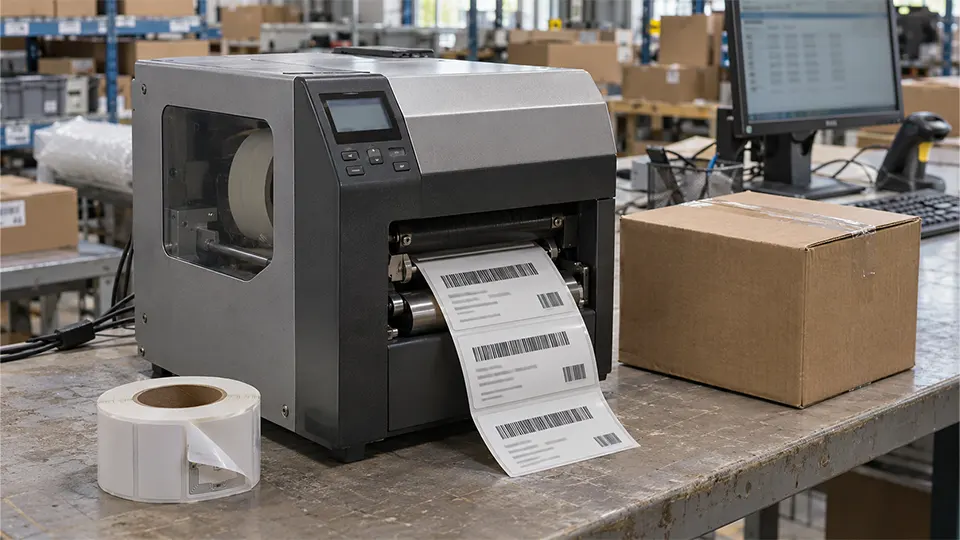
Printing and encoding need their own controls. Confirm that each EPC maps to the intended shipment record, that the printed barcode agrees with the electronic identity, and that duplicate or failed encodings are rejected before dispatch. A readable label carrying the wrong identifier can pass an RF test and still cause a sorting error.
The purchase specification should preserve the qualified antenna and chip combination, label materials and placement requirements. Acceptance records should include package conditions and system settings, allowing later batches to be compared on the same basis. When failures cluster around one packaging type or position, those records give the supplier and integrator a practical starting point for corrective trials.
