









Scope
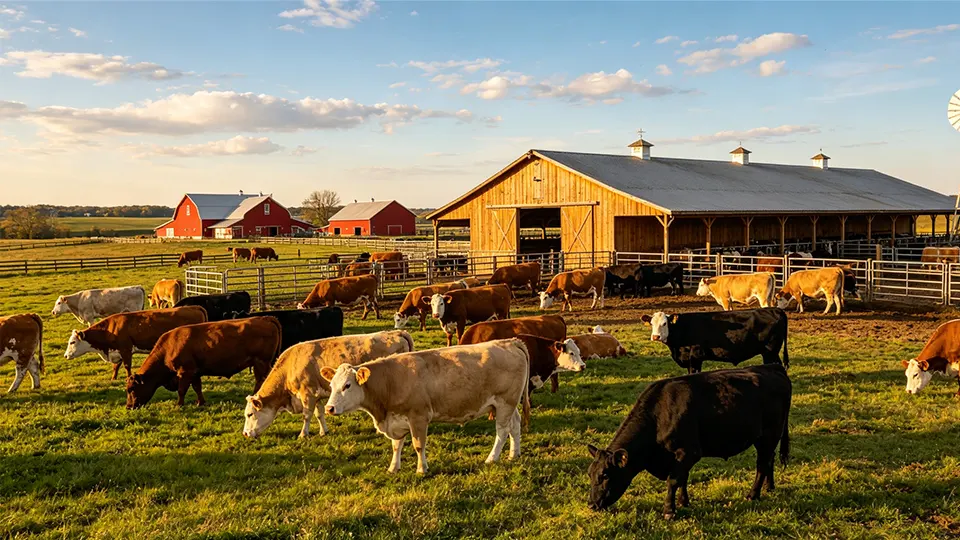
Selecting an RFID ear tag solution for livestock is rarely a matter of picking a chip and placing an order. In real deployments across cattle ranches, sheep farms, and pig operations, the decision defines not only identification accuracy but also long-term operational efficiency, compliance capability, and cost control. A well-chosen system can support more than “5 years of outdoor usage”, withstand temperatures from “-40°C to +85°C”, and maintain data integrity across “100,000 write cycles”, while a poorly selected one often fails within a single production cycle.
The practical approach begins with understanding that RFID ear tags are not isolated hardware. They are entry points into a broader livestock data ecosystem involving readers, management platforms, and regulatory traceability frameworks. For cattle, sheep, and pigs, differences in behavior, density, and environment lead to entirely different technical priorities.
Frequency
The most critical technical decision lies in frequency selection. In livestock RFID, the two dominant options are Low Frequency (LF) and Ultra High Frequency (UHF), each representing fundamentally different system philosophies.
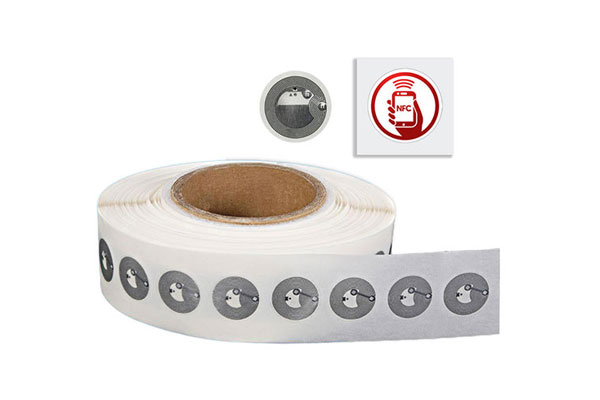
Low Frequency operates typically at “125 kHz or 134.2 kHz”, with the latter aligned to the globally recognized ISO 11784/11785 animal identification standard. This standard defines the electronic identification structure used in national livestock traceability systems. LF ear tags usually carry a “15-digit unique ID”, readable within “10–30 cm”, ensuring highly stable identification even in wet, dirty, or metallic environments.
Typical LF chips widely used in livestock include:
- EM4305 RFID chip
- TK4100 RFID chip
- HITAG S256 chip
These chips are favored because they maintain consistent readability even when attached to animal tissue, which contains high water content that interferes with higher frequencies.
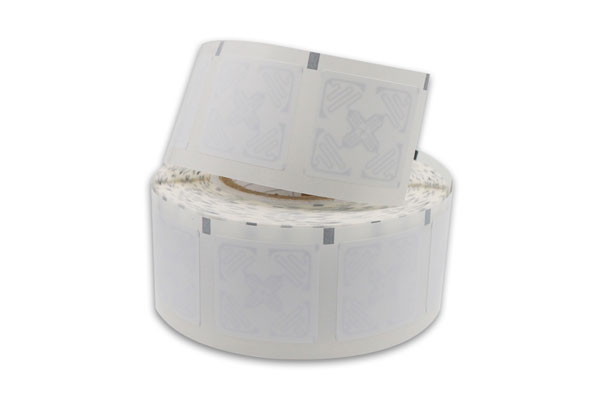
In contrast, UHF operates in the “860–960 MHz range”, following EPC Gen2 / ISO 18000-6C protocols. It enables read distances of “3–10 meters” and supports simultaneous identification of hundreds of animals. However, signal stability can degrade significantly due to water absorption and animal movement.
Typical UHF chips include:
- Impinj Monza R6 chip
- Alien Higgs-3 chip
The distinction is clear in practice: LF prioritizes reliability and compliance, while UHF prioritizes efficiency and automation.
Structure
Beyond frequency, the physical construction of the ear tag plays a decisive role in long-term performance. Livestock environments impose continuous mechanical stress, UV exposure, and chemical contact.
Modern ear tags are typically manufactured using thermoplastic polyurethane (TPU), a material capable of maintaining flexibility at “-30°C to +85°C” and resisting UV degradation for over “5 years” in outdoor conditions.
Design considerations include:
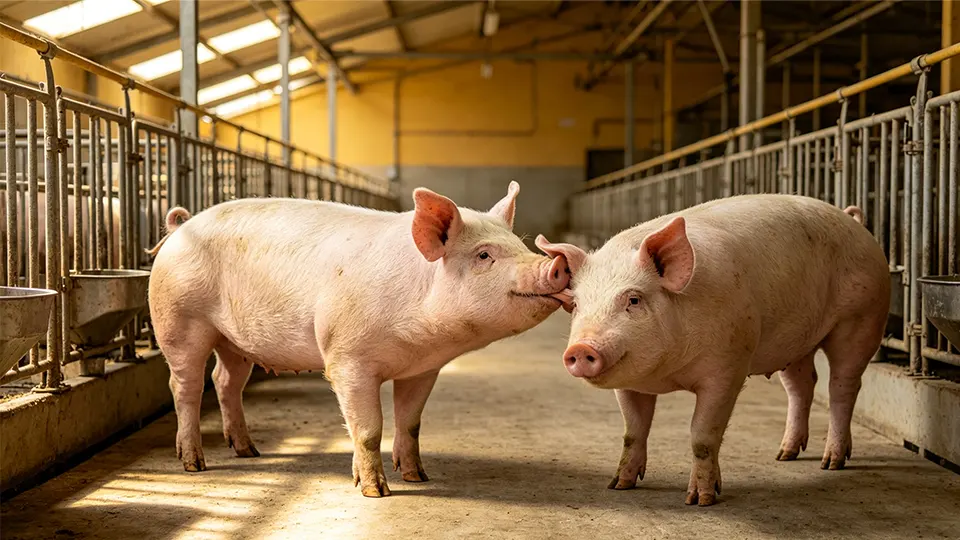
- Resistance to tearing and biting, especially in pigs where aggressive interaction is common
- Anti-drop locking mechanisms to reduce loss rates below typical industry thresholds
- Lightweight structures around “5 grams per tag” to minimize stress on the animal’s ear
Poor structural design often leads to hidden operational costs. A tag loss rate increase from “1% to 5%” can significantly impact herd tracking accuracy and labor workload, especially in herds exceeding “1,000 animals”.
Chip Selection
Chip selection is often underestimated, yet it directly determines data capability, compatibility, and system flexibility.
Two major chip categories dominate livestock applications:
- Read-only chips such as EM4100 or TK4100, typically offering “64-bit fixed IDs”. These are cost-effective and suitable for basic identification scenarios.
- Read-write chips such as EM4305 or HITAG series, supporting configurable memory and up to “512 bits of storage”, allowing additional data such as vaccination records or breeding information.
Selection criteria should consider:
- Whether data updates are required throughout the animal lifecycle
- Compatibility with existing readers and national systems
- Memory retention exceeding “10 years” for long breeding cycles
For advanced farms, read-write chips are increasingly preferred despite slightly higher costs, as they support integration into digital herd management systems.
Devices
The effectiveness of an RFID ear tag system depends heavily on reader deployment. Even the most advanced tag fails to deliver value without proper reading infrastructure.
Two primary device types dominate livestock operations:
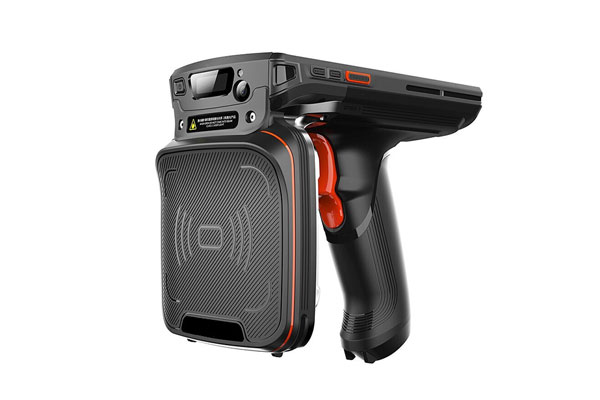
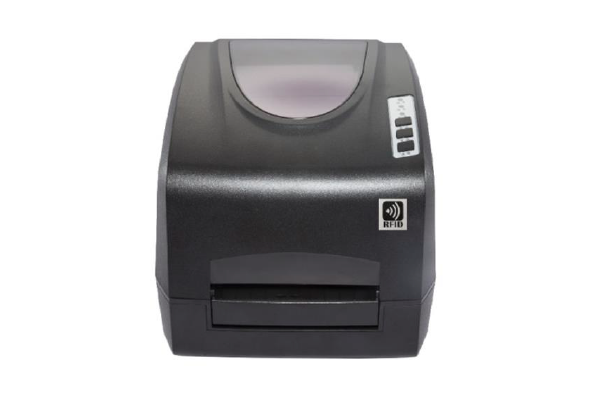
- Handheld readers for close-range identification, typically used in vaccination, inspection, and breeding management
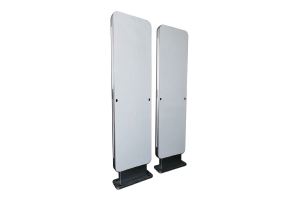
- Fixed readers installed in gates, feeding stations, or weighing systems for automated data capture
- Handheld devices generally operate within “10–30 cm” for LF systems, ensuring precise individual identification in controlled scenarios.
- Fixed UHF systems can capture data from animals passing through gates at speeds exceeding “200 tags per second”, enabling large-scale automation.
System design must align reader type with operational workflow. In pig farms with dense populations, handheld LF readers often outperform UHF due to reduced signal interference. Conversely, in open cattle ranches, UHF systems provide clear efficiency advantages.
Cost
Cost evaluation should extend beyond unit price. A complete RFID ear tag solution includes tags, readers, software, and operational overhead.
Typical cost components include:
- Tag cost ranging from approximately “$0.45 to $3.00 per unit”, depending on chip and material
- Reader infrastructure, which may vary from handheld units to fixed gate systems
- Software integration and data management platforms
- Maintenance and tag replacement over time
Return on investment is driven by measurable outcomes:
- Reduction in manual labor by up to “30–50%” in large-scale farms
- Decrease in identification errors, often below “1% error rate” when properly implemented
- Improved disease control through faster traceability and response
A low-cost tag that fails frequently often results in higher total cost of ownership than a slightly more expensive but durable solution.
System
A livestock RFID ear tag is ultimately a data carrier within a broader traceability ecosystem. Governments and international organizations emphasize the importance of animal identification for disease control and food safety.
Modern systems integrate:
- RFID identification
- Breeding and health databases
- Supply chain traceability platforms
In practical deployments, a product such as DTB RFID livestock ear tag models from dtbrfid.com is typically integrated into a full-stack solution including handheld readers and farm management software, ensuring that identification data flows seamlessly from farm to slaughterhouse and beyond.
The real value lies not in the tag itself but in the continuity of data it enables across the animal lifecycle.

Conclusion
Choosing an RFID ear tag solution for cattle, sheep, and pigs requires a balance between technical reliability, operational efficiency, and long-term cost control. LF solutions remain the backbone of compliant and stable identification systems, particularly where regulatory alignment is essential. UHF solutions, on the other hand, are reshaping large-scale livestock management by enabling automation and high-speed data capture.
The most effective deployments are those that align frequency, chip type, material design, and reader infrastructure with the realities of the farming environment. When properly selected, RFID ear tags transition from simple identification tools into foundational components of digital livestock management, supporting traceability, productivity, and biosecurity at scale.

