











Healthcare & Medical Tracking
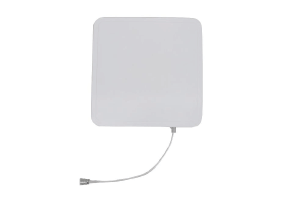
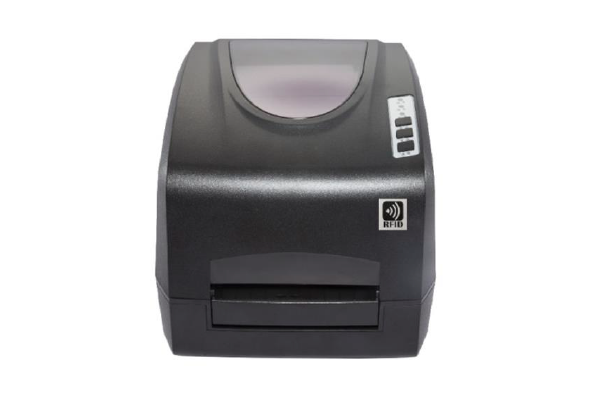
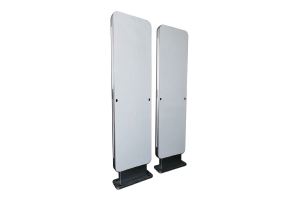
Anti-liquid RFID tags are deeply embedded in modern healthcare logistics where fluids, condensation, and sterilization cycles continuously disrupt traditional identification methods. Hospitals manage a dense ecosystem of blood bags, saline bottles, reagent containers, specimen tubes, and injectable medication packs, all requiring uninterrupted traceability from storage to bedside administration.
In large-scale hospital deployments, RFID-based medication management has improved dispensing accuracy from a typical 85–92% in manual barcode workflows to around 99.5% when integrated into pharmacy and nursing station systems. Inventory reconciliation time in these environments has been reduced by up to 70%, particularly in emergency and ICU departments where rapid turnover is constant. These improvements are strongly dependent on anti-liquid RFID tags maintaining readability under refrigeration and condensation conditions.
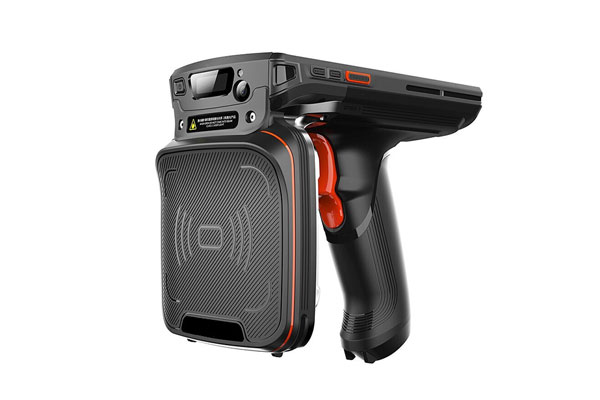
A representative hospital workflow typically operates in a continuous loop where tagged medical items are encoded at pharmacy preparation stations, tracked through RFID-enabled storage zones, and automatically verified at point-of-care using handheld readers or fixed bedside terminals. In blood bank systems, where storage temperatures remain between 2°C and 6°C, condensation can reduce standard tag readability by nearly 65%, while anti-liquid RFID structures consistently maintain read rates above 98% due to dielectric isolation and antenna stabilization layers.
A real-world deployment in a multi-ward hospital network demonstrated that RFID-enabled tracking reduced medication inventory discrepancies by over 40% and cut manual audit workload by nearly half. Chipsets such as NXP UCODE 9, Impinj Monza R6-P, and Alien Higgs-3 are widely used in these environments due to their high sensitivity and stable anti-collision performance under dense tag populations. These chips ensure reliable detection even when multiple fluid-based containers are scanned simultaneously in storage racks or transport carts.
Food Beverage Logistics
The food and beverage industry represents one of the highest-volume and most operationally demanding applications for anti-liquid RFID technology, as nearly every product category involves direct or indirect liquid content. Bottled water, dairy products, sauces, edible oils, and fermented beverages all create RF absorption challenges that significantly degrade conventional tagging performance.
In beverage logistics operations, RFID deployment has reduced inventory discrepancy rates from approximately 8–12% to below 2%, primarily through improved pallet-level visibility and automated scanning at warehouse checkpoints. Production lines operating at speeds between 2–4 meters per second routinely process over 12,000 bottles per hour, requiring RFID systems capable of maintaining 97–99% read accuracy under continuous motion and high humidity conditions.

Cold chain logistics adds further complexity, as storage environments ranging from -25°C to +4°C introduce condensation that directly impacts signal stability. Anti-liquid RFID tags mitigate this issue through structural isolation layers and optimized antenna tuning, ensuring consistent performance even when bottle surfaces are wet or partially frozen.
A large-scale bottling facility deployment illustrates this performance advantage clearly. After implementing anti-liquid RFID tagging across production and warehousing systems, batch identification errors were significantly reduced, while pallet tracking efficiency improved by more than 60%. The system maintained stable read performance even in high-speed conveyor environments, ensuring uninterrupted tracking across production, storage, and distribution stages.
In beverage and food logistics, commonly deployed chipsets include Impinj Monza R6, NXP UCODE 8, and UCODE 9, selected for their balance of sensitivity, cost efficiency, and multi-tag recognition capability in high-density scanning environments. These chips enable consistent identification across thousands of simultaneous reads, even in environments with high moisture and metallic pallet interference.
Industrial Chemical Systems
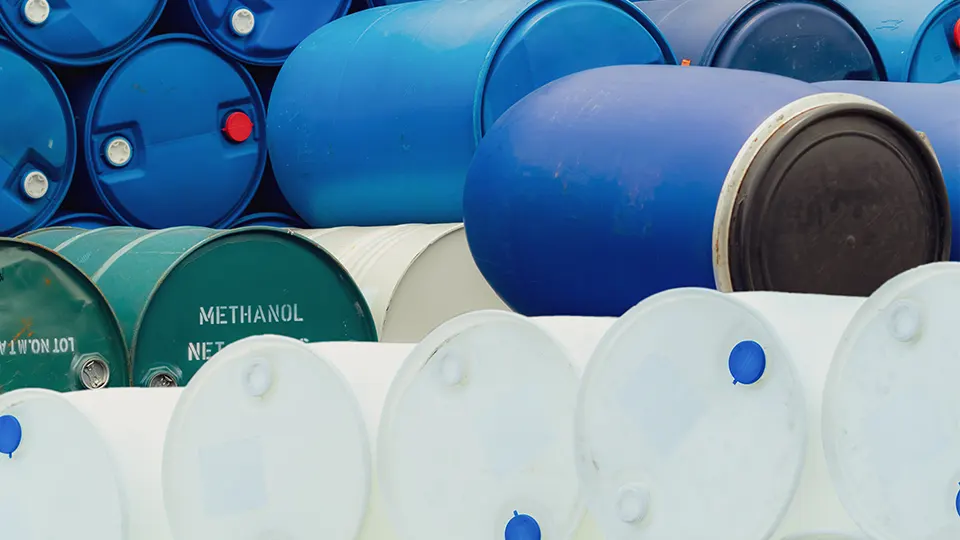
Industrial chemical environments present one of the most extreme operational contexts for RFID systems due to the combined presence of corrosive liquids, metallic storage structures, and variable temperature and pressure conditions. Chemical drums, lubricant barrels, and hazardous material containers require continuous lifecycle tracking from production to transportation and final disposal.
Anti-liquid RFID tags deployed in these environments typically operate within a temperature range of -40°C to 85°C, with certain industrial variants validated for short-term exposure up to 120°C. Field deployments have shown that RFID-based tracking systems can reduce container misplacement incidents by approximately 55% while improving regulatory reporting efficiency by over 65%.
A typical chemical logistics workflow includes encoding at filling stations, tagging at container sealing points, automated scanning during warehouse storage, and checkpoint validation during transportation. One large-scale deployment in a chemical distribution network demonstrated that integrating RFID tracking across storage yards and transport fleets significantly reduced manual inspection cycles and improved compliance reporting speed through real-time data synchronization.
Environmental interference is a critical factor in this sector. Metal racks combined with liquid-filled containers create severe RF reflection and detuning effects, which are mitigated through ferrite-backed tag structures and antenna compensation design. These engineering enhancements improve read stability by up to 40% in mixed-material environments.
A chemical logistics case involving industrial-grade RFID tags using Impinj Monza R6 chips demonstrated stable performance across multiple storage zones with high electromagnetic interference. The system maintained reliable identification even when containers were stacked in dense configurations or exposed to humidity levels exceeding 90%, ensuring uninterrupted traceability throughout the supply chain.
Others Application Scenarios
Beyond individual industries, anti-liquid RFID tags serve as a foundational technology across multiple liquid-intensive operational environments where traditional identification systems fail. These scenarios include reusable logistics containers, high-value liquid retail products, and industrial cleaning cycles where exposure to moisture, detergents, and pressure washing is unavoidable.
In reusable container logistics systems, anti-liquid RFID tags enable lifecycle tracking across hundreds of reuse cycles, including washing, sterilization, and redistribution. In large-scale logistics operations, this capability has reduced container loss rates by approximately 30–45%, while improving asset utilization efficiency. Industrial cleaning environments often expose containers to high-pressure water and chemical detergents, conditions under which conventional labels degrade rapidly, while anti-liquid RFID tags maintain structural integrity and identification reliability.
In retail and high-value liquid product sectors, RFID plays a key role in anti-counterfeiting and inventory automation. Products such as wine, perfume, and specialty oils benefit from embedded RFID identification that prevents unauthorized refilling or substitution. In distribution centers handling between 50,000 and 500,000 tagged items per facility, anti-liquid RFID systems maintain stable read performance even under humidity levels exceeding 80%.
A retail logistics deployment for bottled beverage distribution demonstrated that integrating anti-liquid RFID tagging improved shelf-level inventory accuracy to over 99% and significantly reduced manual scanning operations in warehouse environments. This improvement directly enhanced stock visibility and reduced shrinkage rates across multi-channel distribution networks.
Core System Value
The value of anti-liquid RFID technology lies in its ability to transform unreliable identification environments into fully automated, real-time traceable systems. Compared with barcode-based workflows, RFID significantly reduces manual intervention while improving operational accuracy and scalability.
In logistics environments, RFID adoption typically increases inventory accuracy from 85–90% in manual systems to over 99% in automated deployments. In pharmaceutical distribution, medication dispensing errors have been reduced by up to 41% following RFID integration, while administrative workload in inventory auditing has been reduced by nearly half.
A major value driver is real-time visibility across supply chains. Anti-liquid RFID enables continuous tracking of liquid-based goods, ensuring that movement, storage, and consumption events are automatically recorded without manual scanning dependency. In beverage logistics alone, stock discrepancy rates have been reduced from 8–12% to below 2%, improving financial predictability and reducing operational loss.
Key value outcomes include:
- Continuous real-time tracking of liquid-containing goods
- Reduction of manual scanning and verification workload
- Improved compliance reporting in healthcare and chemical industries
- Enhanced anti-counterfeiting protection for high-value liquids
- Integration readiness with warehouse management and IoT systems
These outcomes collectively support large-scale automation strategies, particularly in industries where liquid exposure previously made digital tracking unreliable or cost-prohibitive.
Key Selection Factors
Selecting anti-liquid RFID systems requires a structured evaluation of environmental conditions, operational requirements, and system integration constraints. Unlike standard RFID applications, liquid environments introduce unpredictable RF attenuation, requiring precise engineering alignment between tag structure and deployment context.
The selection process typically begins with liquid classification, distinguishing between water-based, oil-based, and chemically reactive substances. This is followed by defining required read range, where UHF systems are preferred for logistics-scale tracking, while HF systems are more suitable for close-range precision environments such as laboratories and medical wards.
Chip selection plays a critical role in system stability. NXP UCODE 9 is often chosen for its high sensitivity and consistent performance in detuned environments, while Impinj Monza R6-P is widely used in dense tag populations requiring enhanced anti-collision performance. In cost-sensitive applications, Alien Higgs-3 remains a widely adopted solution due to its balanced performance and reliability.
A structured selection sequence can be summarized as follows:
- Identify liquid type and environmental exposure conditions
- Define operational read range and scanning density requirements
- Select appropriate frequency band based on interference level
- Choose chipset based on sensitivity and environment tolerance
- Validate performance under humidity, temperature, and motion stress conditions
In industrial deployments, anti-liquid RFID tags are commonly validated under humidity levels exceeding 85% and temperature cycles ranging from -20°C to 60°C. Conveyor systems operating at speeds between 2–4 meters per second further require stable tag orientation and antenna tuning to maintain consistent read performance above 97%.

