












Sorting Pressure Points
Warehouse sorting is a deterministic control point in logistics execution. Its performance directly determines order cycle time and distribution accuracy. In high-throughput environments, especially e-commerce and 3PL operations processing 30,000–60,000 cartons per day, sorting deviation introduces cumulative downstream inefficiencies.
Barcode-based sorting systems rely on optical alignment and manual intervention. Conveyor speed is constrained by scanning conditions. Industry deployment data typically shows throughput reduction of 20%–35% under peak load due to scan congestion and re-alignment operations. Manual handling introduces variability in execution time, with per-unit processing differences ranging from 4 to 8 seconds depending on operator workflow.
RFID enables non-line-of-sight identification. UHF RFID systems in controlled industrial environments maintain read accuracy above 99.5%. Identification becomes continuous rather than event-driven, which reduces dependency on physical positioning and manual confirmation.
System Layout
An RFID sorting system consists of tag layer, reader infrastructure, antenna network, and middleware integration layer. The architecture is designed for continuous data acquisition in motion environments.
Core system components:
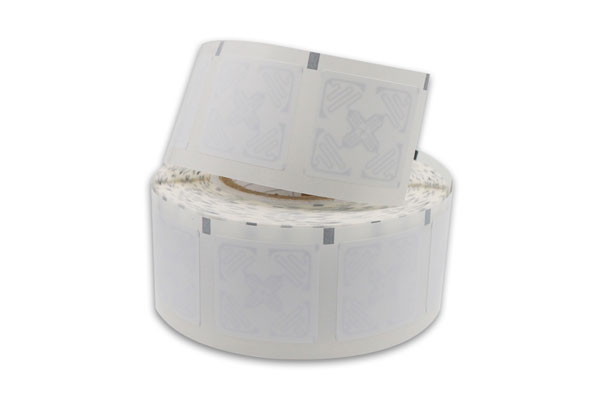
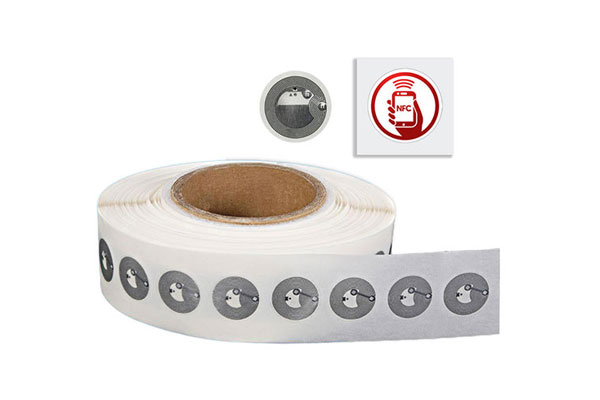
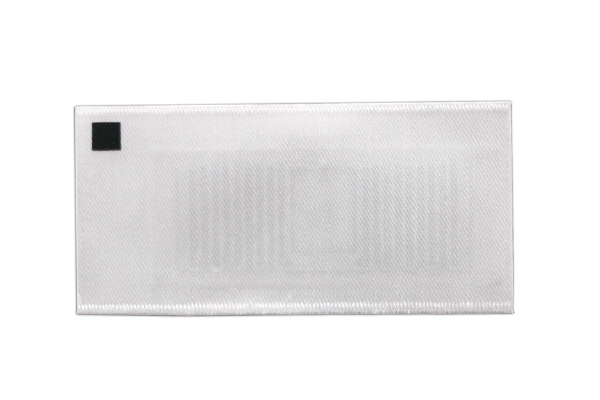
- UHF RFID tags attached to cartons, totes, or pallets
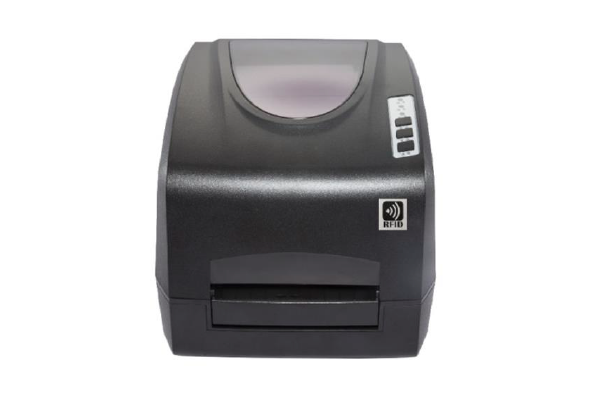
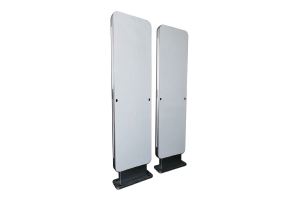
- Fixed RFID readers deployed at conveyor nodes and sorting gates
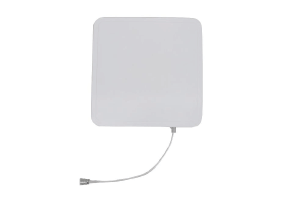
- Circular or linear polarized antennas configured for overlapping read zones
- Edge processing modules for filtering and anti-collision handling
- Middleware integrated with WMS/ERP systems
Chipset selection determines read stability and encoding performance under dense flow conditions. Common industrial ICs include Impinj Monza R6, Impinj Monza R6-P, NXP UCODE 8, NXP UCODE 9, and Alien Higgs-3. Monza R6-P provides stable encoding performance in high-speed labeling environments. UCODE 9 demonstrates improved anti-collision performance in high-density tag clusters. Higgs-3 remains widely deployed in standard logistics labeling due to balanced sensitivity and cost efficiency.
Flow on the Line
RFID sorting workflow is executed as a continuous identification pipeline. Sorting decisions are generated from real-time tag acquisition events without physical scanning interruption.
Standard process sequence:
- RFID tag encoding linked to order and routing data in WMS
- Conveyor entry without stop-and-scan requirement
- RFID readers capture tag IDs within 0.3–0.8 seconds per read window
- Middleware performs de-duplication and collision filtering
- WMS generates routing instructions and activates sorting actuators
In optimized systems, conveyor velocity ranges from 2.0 to 3.5 m/s while maintaining stable read performance. Single read zones process approximately 2,500–3,200 tag events per second depending on antenna density and tag orientation distribution.
System output is event-driven and deterministic. Sorting decisions are executed based on validated tag-to-order mapping without manual verification steps.
Warehouse Scenarios
RFID sorting systems are deployed in logistics environments with high SKU variability and throughput volatility. Performance requirements differ based on operational structure.
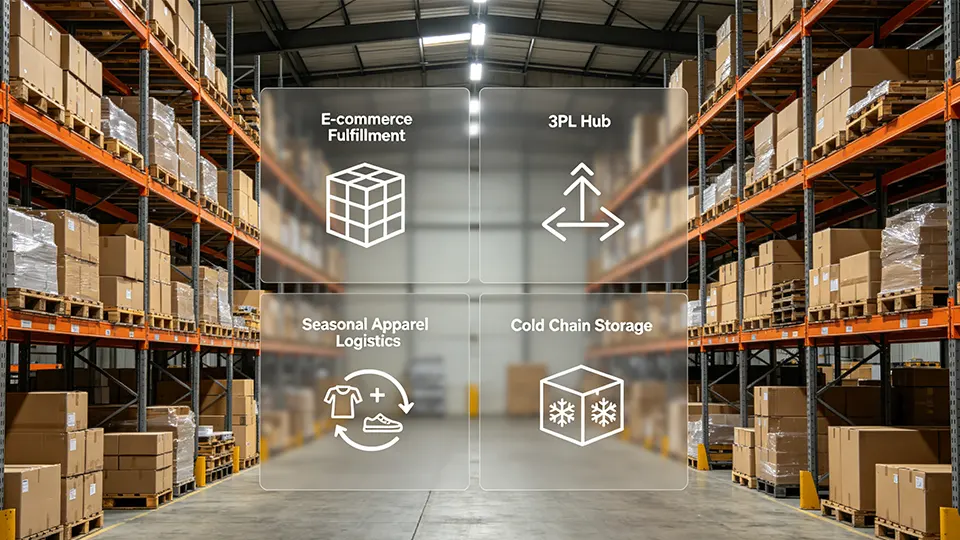
Primary deployment scenarios include:
- E-commerce fulfillment centers with high SKU fragmentation
- 3PL distribution hubs with multi-client routing logic
- Apparel and footwear logistics with seasonal SKU rotation
- Cold chain warehouses with environmental constraints on optical scanning
In apparel distribution, mis-sorting rates in barcode-dependent systems typically range between 1% and 3%, with return rates reaching 8%–12% in uncontrolled workflows. RFID reduces dependency on visual label verification and stabilizes identification across mixed packaging conditions.
In cold chain logistics, environmental conditions between -25°C and 5°C reduce barcode readability due to condensation and surface fogging. RFID maintains identification stability under these conditions when tag material and antenna configuration are properly selected.
WMS Integration
RFID sorting value is realized through system-level integration rather than hardware deployment alone. Reader outputs are processed as structured events and mapped into warehouse execution logic.
Middleware performs real-time filtering of redundant reads, signal collision resolution, and data normalization. Processed events are transmitted to WMS through API or message queue architecture.
System latency in optimized deployments is maintained below 1 second from tag detection to WMS update. This enables near real-time inventory synchronization across sorting zones.
Chip-level performance influences read stability under dense environments. NXP UCODE 9 improves performance in multi-tag collision scenarios. Impinj Monza R6 maintains consistent encoding reliability under high-speed labeling conditions, where encoding error thresholds must remain below 0.1% to avoid downstream routing inconsistencies.
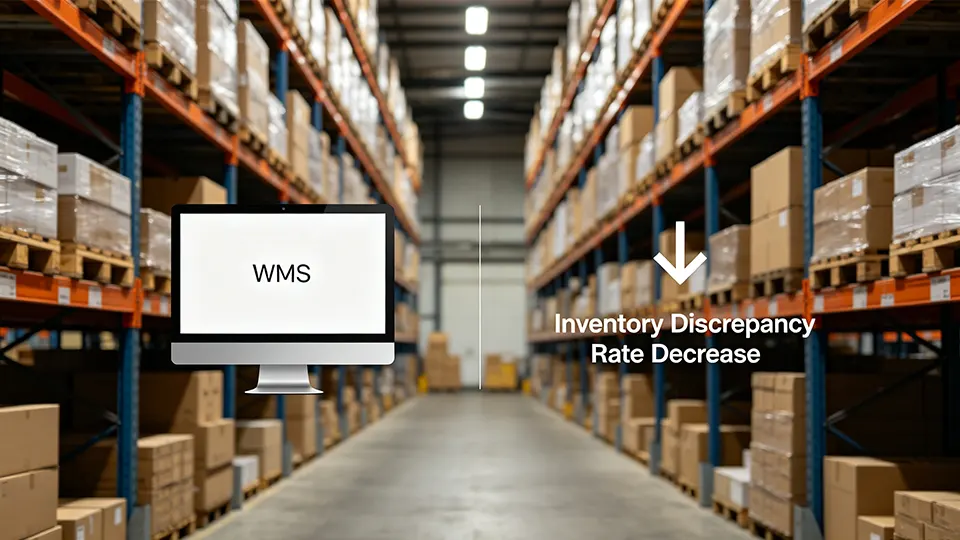
RFID-enabled WMS integration reduces inventory discrepancy rates by 30%–60% depending on baseline operational maturity. Labor allocation for manual verification decreases by approximately 25%–45% in stabilized deployments.
Field Reality
RFID sorting performance is determined by physical deployment accuracy. System behavior is sensitive to antenna geometry, environmental reflection, and tag placement strategy.
Deployment sequence follows engineering validation logic:
- Flow mapping under peak throughput conditions
- Antenna layout design based on conveyor structure and RF environment
- Single-line pilot deployment with controlled load testing
- Full system integration with WMS synchronization
- Power tuning and anti-collision parameter optimization
System validation is typically performed at 90%–120% of expected peak throughput. Performance degradation under stress conditions is primarily caused by signal overlap, metallic reflection, or insufficient tag spacing design.
Environmental factors include metal racks, dense carton stacking, and liquid packaging materials. These factors affect RF propagation characteristics and require compensation through antenna positioning and power calibration.
RFID sorting systems, once stabilized, function as fixed infrastructure within warehouse operations, replacing manual variability with deterministic identification logic.

