




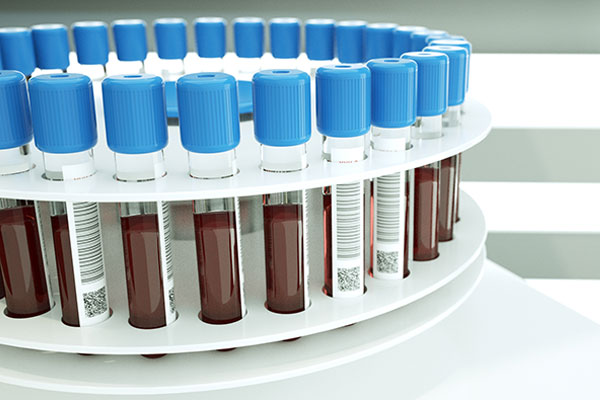





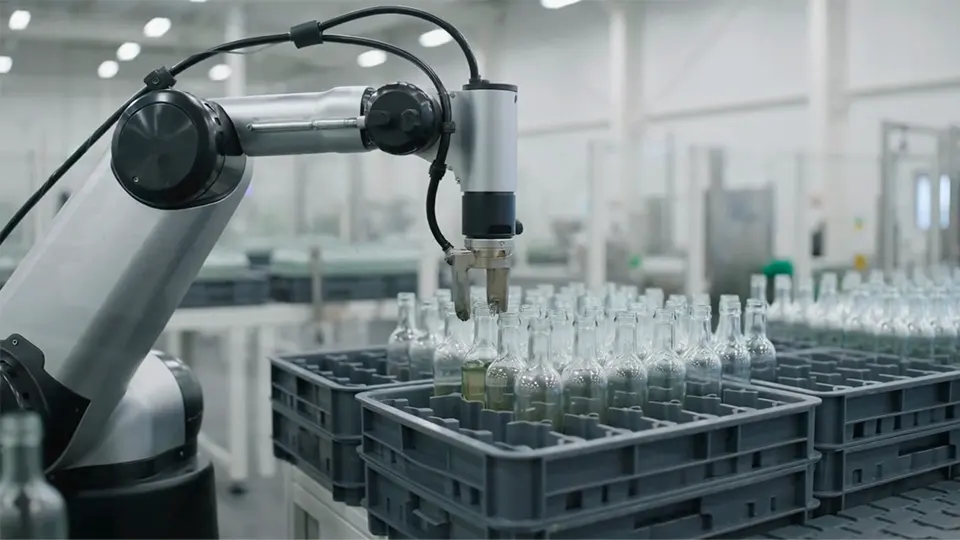
Medical laboratories, hospitals and pharmaceutical companies manage a large number of liquid containers every day, including reagent bottles, blood sample tubes, vaccine containers, biological specimens and pharmaceutical liquids. Each container carries critical information such as product identity, batch number, expiration date, storage conditions and usage history.
As healthcare operations become increasingly connected, accurate identification of liquid containers has become an essential requirement for modern medical management. Manual recording methods and traditional printed labels often create difficulties in environments where containers are frequently moved, refrigerated, disinfected or exposed to moisture. A damaged label or incomplete record can affect laboratory efficiency and reduce visibility across the medical supply chain.
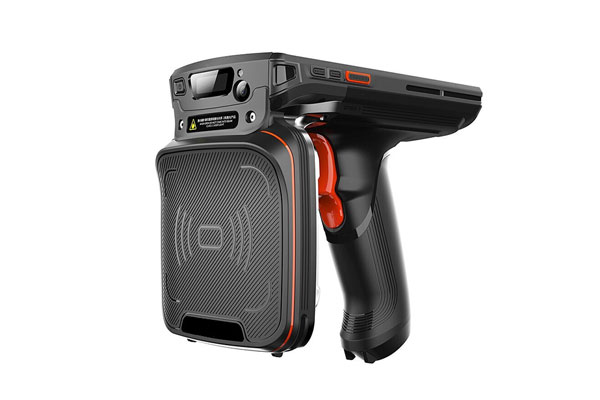
NFC liquid bottle tracking provides a digital identification method that connects physical containers with electronic information through NFC technology. By attaching an NFC tag to a bottle or container, healthcare professionals can access related information through NFC-enabled smartphones or professional readers. This creates a direct connection between the physical product and its digital record throughout storage, testing and usage processes.
NFC technology operates at 13.56 MHz and follows international communication standards including ISO/IEC 14443 and ISO/IEC 15693. Compared with traditional identification methods, NFC provides fast contactless data access while maintaining controlled reading distance, which is suitable for medical environments where accurate identification and secure information access are required.
For medical liquid applications, NFC tags can store or link information including:
- Container identification number, product details and batch information
- Laboratory records, storage conditions and expiration management
- Operator history, inspection results and usage information
The selection of NFC chips depends on the amount of information required and the application environment. For example, the NTAG213 NFC chip provides 144 bytes of user memory and is widely used for basic identification applications. NTAG215 NFC chip provides 504 bytes of memory, while NTAG216 NFC chip offers 888 bytes, making it suitable for storing more detailed product information or linking to cloud-based records.
For industrial laboratories requiring longer reading distances and compatibility with professional tracking systems, ISO 15693-based solutions such as ICODE SLIX2 can provide reliable identification performance. These different chip options allow NFC tag manufacturers to develop customized solutions according to bottle size, material, data requirements and operating conditions.
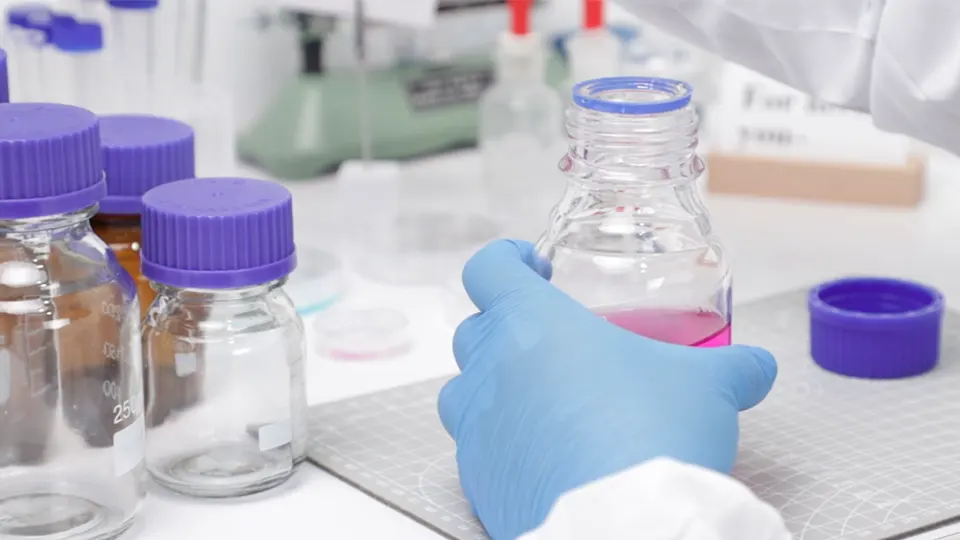
How NFC Labels Create Reliable Digital Records for Medical Liquid Containers
Medical sample management depends on accurate information at every stage. A blood sample tube, reagent bottle or pharmaceutical container may pass through multiple departments before reaching its final destination. During this process, maintaining correct identification is essential for laboratory workflow and quality management.
An NFC medical bottle label creates a unique digital identity for each container. When a tag is attached, the NFC identifier can be connected with a database containing detailed product information. Healthcare workers can then retrieve the required information by tapping the tag with a compatible device.
A typical NFC liquid tracking process includes three important stages:
1. Tag registration and data connection
Each bottle receives a unique NFC identification tag. Information such as product name, supplier, batch number, manufacturing date and storage requirements is associated with the tag.
2. Daily identification and information updates
Laboratory staff can check bottle information during receiving, storage, testing and inventory operations. Updated records can be synchronized with laboratory management software.
3. Lifecycle traceability management
The complete history of each container can be maintained from arrival to final use, supporting better inventory control and documentation.
This approach is particularly valuable for laboratories managing thousands of samples or reagents. According to healthcare laboratory management practices, large facilities may process thousands of biological samples every day, while pharmaceutical research centers can maintain inventories containing tens of thousands of individual chemical and biological materials.
NFC identification reduces dependence on manual searches and improves the connection between physical products and digital systems. When combined with laboratory information management systems (LIMS), enterprise resource planning platforms and cloud databases, NFC tags become an important component of connected healthcare infrastructure.
Hospitals can apply NFC liquid tracking to medication management, laboratory departments can use it for reagent identification, and pharmaceutical companies can integrate it into product authentication and supply chain management.
Waterproof NFC Labels Designed for Medical and Laboratory Liquid Environments
Medical and laboratory containers operate under demanding conditions. Liquid bottles may be stored in refrigerators, transported through different departments, exposed to disinfectants or handled repeatedly during daily operations. These conditions require identification solutions that maintain stable performance over long periods.
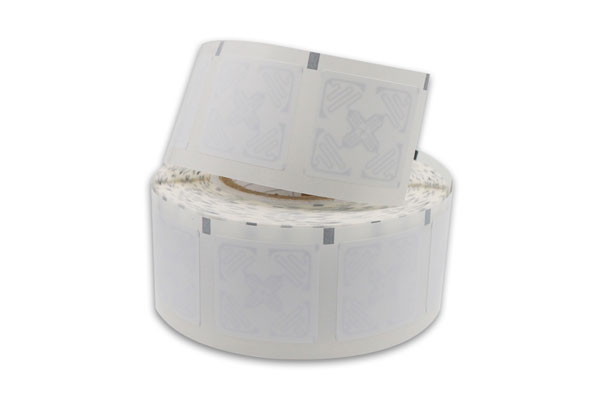
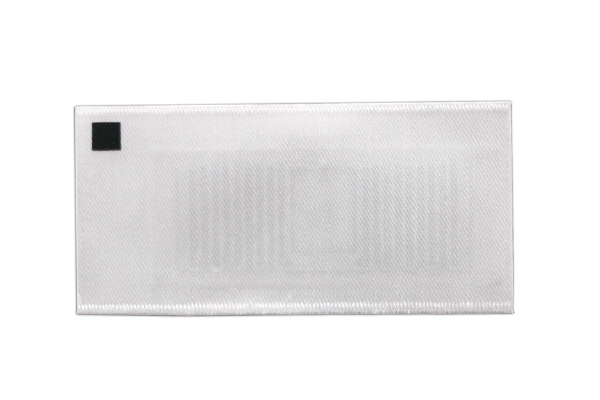
A waterproof NFC label for medical applications typically combines a suitable NFC chip with protective materials such as PET, synthetic paper, PVC or specialized coatings. The label structure needs to provide reliable adhesion on different surfaces, including glass bottles, plastic containers and curved laboratory tubes.
For liquid bottle management, durability is an important factor because information loss can interrupt workflow continuity. A label that becomes unreadable due to moisture or chemical exposure may require manual replacement and additional verification procedures. Professional NFC tag manufacturers therefore evaluate material compatibility, adhesive strength and communication performance before developing healthcare solutions.
Important characteristics of NFC medical labels include:
- Resistance to water, humidity and common laboratory cleaning processes
- Stable attachment on glass, plastic and curved container surfaces
- Compatibility with cold storage environments and repeated handling
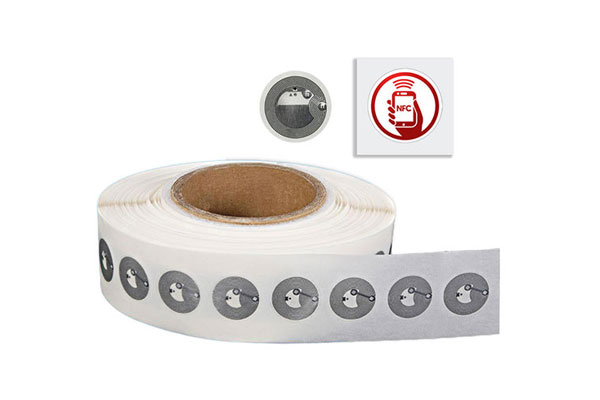
Different healthcare applications require different tag designs. A small pharmaceutical bottle may require a compact flexible NFC sticker, while a laboratory sample container may require stronger protection against chemicals or temperature variation. The antenna design, adhesive layer and protective surface all influence the final performance of the NFC solution.
The development of customized NFC medical labels allows hospitals, laboratories and pharmaceutical companies to select suitable combinations of chip type, memory capacity, label size and protective structure. This flexibility makes NFC suitable for different container types, from small medicine bottles to larger laboratory reagent containers.
Choosing the Right NFC Technology for Laboratory Reagent and Sample Management
Selecting an NFC solution for laboratory applications requires consideration of both technical performance and operational requirements. The most suitable NFC tag depends on the information volume, security requirements, reading environment and integration system.
Many healthcare identification projects use NFC Forum Type 2 tags because they offer broad smartphone compatibility and cost-effective deployment. Chips such as NTAG213, NTAG215 and NTAG216 are commonly selected for applications requiring digital identification, product information access and database connection.
For environments requiring additional security features, higher-level NFC solutions may be considered. MIFARE DESFire chips support advanced security functions and encrypted communication, making them suitable for applications where access control and data protection are important.
Laboratory and pharmaceutical organizations usually evaluate several technical factors before selecting an NFC label supplier:
1. Chip performance and memory capacity
The NFC chip should provide sufficient memory for identification data, authentication information or links to digital platforms. The required capacity depends on whether the tag stores basic identification or detailed product records.
2. Material structure and environmental compatibility
The label should maintain reliable performance under storage conditions, including refrigeration, humidity exposure and contact with laboratory substances.
The NFC tag itself usually stores a unique identifier or a small amount of information, while larger records are maintained in a connected software system. This approach allows organizations to manage large amounts of medical data without increasing the physical size of the label.
The global healthcare industry manages a significant volume of medical products and samples every year. The World Health Organization has highlighted the importance of improving healthcare supply chain visibility, especially for products requiring accurate storage and handling records. Digital identification technologies such as NFC contribute to better information management by connecting physical items with electronic systems.
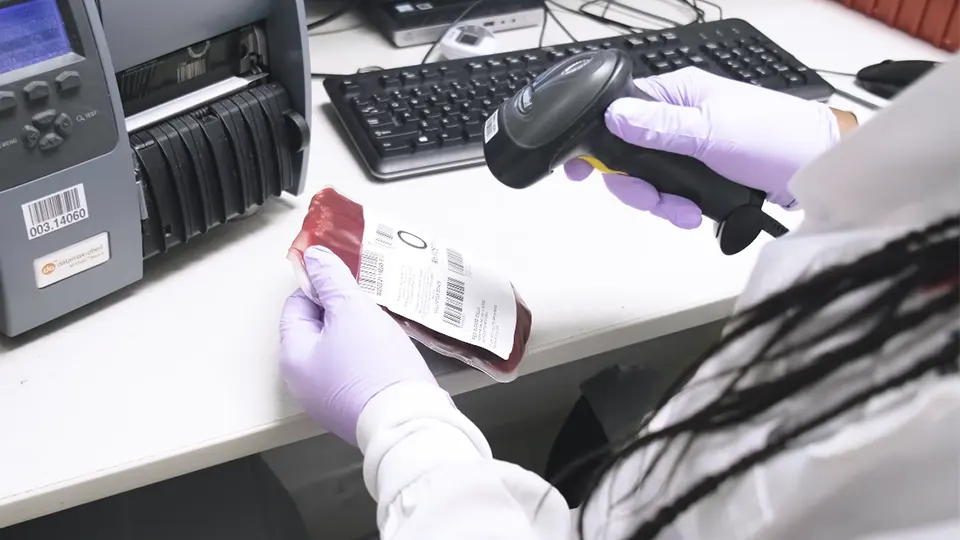
NFC Traceability Connects Medical Supply Chains with Digital Healthcare Systems
Medical supply chains involve multiple stages, including manufacturing, transportation, storage and final use. Each stage requires accurate product information to maintain quality and operational efficiency.
NFC-based traceability allows organizations to follow the movement of liquid containers through different processes. Pharmaceutical manufacturers can connect product information with digital records, hospitals can improve inventory visibility, and laboratories can maintain more complete sample histories.
NFC identification supports several practical applications:
- Pharmaceutical liquid authentication and product information access
- Laboratory reagent inventory management
- Biological sample identification and storage tracking
- Vaccine and cold-chain product monitoring
Cold-chain applications represent an important area for NFC-enabled medical management. Many vaccines and biological products require controlled storage conditions, with common refrigeration requirements between 2°C and 8°C. NFC tags combined with temperature sensors can provide additional information about environmental conditions during transportation and storage.
The combination of NFC hardware, cloud platforms and healthcare software creates a flexible management system. A small laboratory may use NFC tags for basic bottle identification, while a large pharmaceutical company may connect NFC data with enterprise systems, quality management platforms and supply chain databases.
This flexibility allows NFC technology to support different levels of digital transformation. The same identification principle can be applied to individual sample tracking or large-scale pharmaceutical operations.
Why NFC-Based Liquid Identification Is Becoming Essential for Modern Healthcare Management
Medical laboratories and healthcare organizations require accurate, efficient and reliable information management. Every liquid container represents valuable data that needs to remain accessible throughout its lifecycle.
NFC liquid bottle tracking provides a practical method for improving identification accuracy, reducing manual recording workload and creating stronger connections between physical products and digital systems. With suitable NFC chips, durable label materials and integrated software platforms, organizations can improve the management of medical liquids, laboratory reagents and biological samples.
The technology also supports future digital healthcare development. NFC-enabled containers can become connected data points within broader healthcare ecosystems, working together with cloud platforms, analytics systems and automated inventory management solutions.
For organizations evaluating NFC medical labels, the key factors include chip selection, environmental resistance, customization capability and supplier experience. A professional NFC tag manufacturer can help develop solutions that match specific container types, workflow requirements and industry standards.
NFC technology has already demonstrated strong value in healthcare identification scenarios. From laboratory reagent bottles to pharmaceutical packaging, NFC-enabled traceability provides a reliable connection between physical containers and digital information, helping medical organizations achieve more transparent and efficient management.
Frequently Asked Questions About NFC Liquid Bottle Tracking
Can NFC tags be attached to liquid bottles?
Yes. Waterproof NFC labels can be designed for glass, plastic and other medical container surfaces. With suitable materials and adhesive structures, NFC tags can maintain stable performance in humid, refrigerated and laboratory environments.
Which NFC chip is suitable for medical bottle identification?
The suitable chip depends on the application. NTAG213 is commonly used for basic identification, while NTAG215 and NTAG216 provide larger memory capacity. Applications requiring advanced security or industrial compatibility may consider MIFARE DESFire or ISO 15693-based chips.
Are NFC medical labels suitable for laboratory reagent tracking?
Yes. NFC laboratory labels can help track reagent information, storage conditions, usage history and inventory status. They are widely suitable for research laboratories, pharmaceutical companies and healthcare facilities requiring reliable traceability.

