











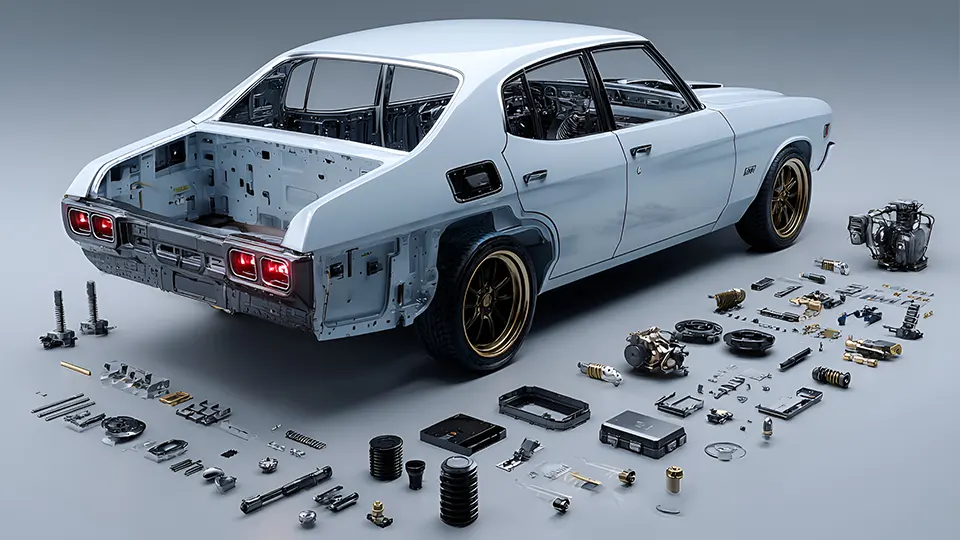
The automotive industry depends on accurate identification across thousands of components, suppliers and production processes. A modern vehicle may contain more than 30,000 individual parts, with components moving through multiple stages before final assembly. For OEM manufacturers, Tier 1 suppliers and logistics providers, maintaining clear visibility of materials has become essential for improving production efficiency and quality management.
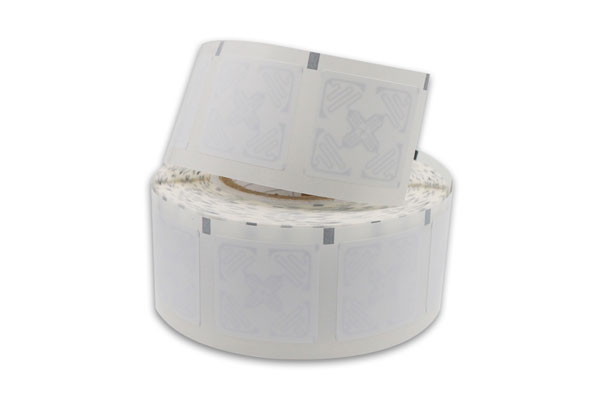
RFID tags provide automotive companies with a reliable identification method that connects physical components with digital information. From incoming parts inspection and warehouse management to production tracking and vehicle traceability, RFID technology helps manufacturers collect real-time data throughout the automotive lifecycle.
Compared with traditional barcode systems, RFID allows automatic identification without direct scanning. This makes RFID tags suitable for complex automotive environments where components may be stored in containers, attached to metal surfaces or moved continuously between production areas.
RFID in Automotive Manufacturing: From Parts Flow to Production Control
Automotive manufacturing involves highly coordinated processes where every component needs to arrive at the correct location at the right time. Production delays caused by missing parts, inaccurate inventory records or inefficient asset management can affect the entire assembly process.
RFID tags are commonly used on work-in-progress materials, production fixtures, reusable containers and industrial tools. By connecting RFID readers with manufacturing systems such as MES and ERP platforms, factories can automatically collect information about component movement and production status.
Typical automotive RFID applications include:
- Tracking engines, transmissions, electronic modules and mechanical components during production
- Managing production tools, fixtures and inspection equipment
- Monitoring reusable containers, pallets and transportation racks
- Recording manufacturing history for quality management
In large automotive factories, thousands of components may move through hundreds of production stations every day. RFID-based identification improves production visibility by reducing manual recording and providing more accurate location information.
For example, when a component enters a machining process, an RFID system can automatically record the production stage, processing time and inspection results. Engineers can quickly review the history of a specific part when quality analysis is required.
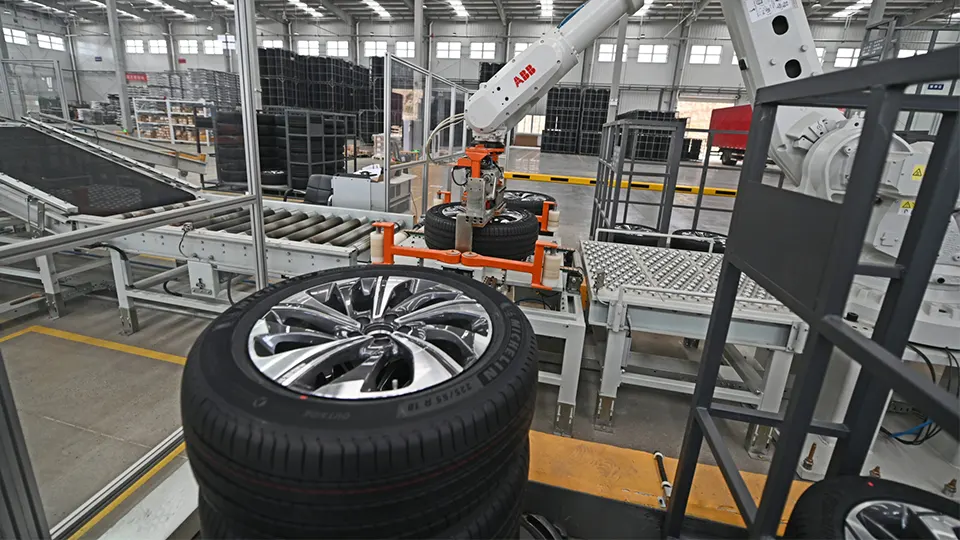
This capability is especially valuable for automotive manufacturers operating automated production lines. RFID data can support better material planning, reduce searching time and improve coordination between warehouses and assembly areas.
Tracking Automotive Components Across Global Supply Chains
Automotive supply chains involve multiple companies, including raw material suppliers, Tier 2 manufacturers, Tier 1 suppliers and vehicle manufacturers. A single component may travel hundreds or thousands of kilometers before reaching the final assembly plant.
RFID tags help companies maintain traceability throughout this complex network. Parts can be identified automatically during receiving, storage, transportation and production processes, creating a continuous information chain from supplier to vehicle.
Metal components require special attention during RFID implementation. Many automotive parts, such as engine housings, transmission components and industrial tooling, are manufactured from steel or aluminum. These materials can interfere with standard RFID communication and reduce reading performance.
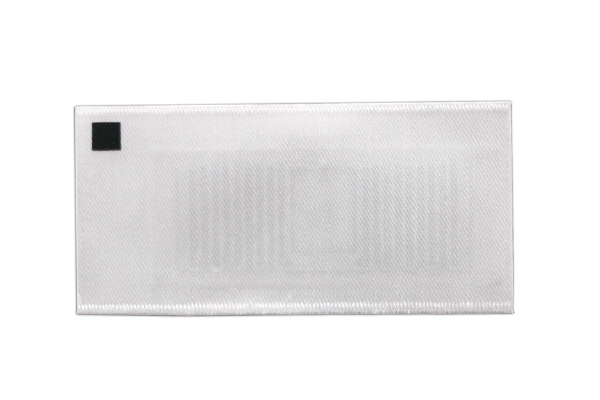
For metal applications, industrial anti-metal RFID tags are designed with specialized structures that maintain stable performance when attached to metallic surfaces. The DTB-ABS8827UA RFID anti-metal tag is one example of an industrial RFID solution designed for applications such as automotive asset tracking, equipment identification and supply chain management.
When selecting RFID tags for automotive parts, engineers usually evaluate several factors:
- The installation surface, including metal, plastic or composite materials
- Environmental conditions such as temperature, vibration, moisture and chemical exposure
- Required reading distance and RFID frequency specifications
- Integration requirements with existing manufacturing and logistics systems
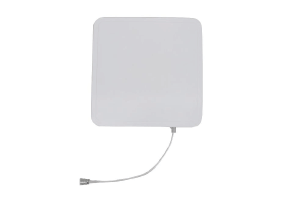
UHF RFID technology based on EPC Gen2 standards is widely used in automotive manufacturing because it supports longer reading distances and multiple tag identification. In optimized environments, UHF RFID systems can read multiple tagged items within several meters, improving warehouse and production efficiency.
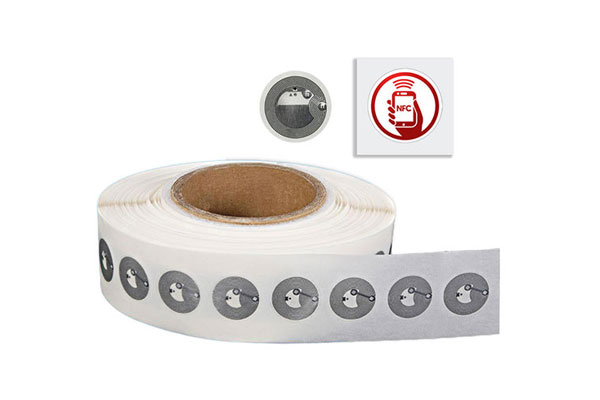
Chip selection also influences RFID system performance. Impinj Monza series chips are widely used in industrial RFID applications requiring stable identification performance. NXP UCODE series chips are commonly selected for logistics, supply chain and asset tracking projects. For NFC-based applications, NXP NTAG213, NTAG215 and NTAG216 chips provide flexible options for authentication and digital information access.
Managing Tools, Containers and Factory Assets
Automotive production depends on thousands of tools and reusable assets. Production fixtures, inspection equipment, torque tools and transport containers frequently move between different areas of a factory. Without accurate tracking, companies may spend significant time locating equipment or updating records manually.
RFID asset management provides each item with a unique digital identity. The system can record asset location, usage history and maintenance information automatically, helping production teams improve equipment availability.
Reusable transport items are another important RFID application. Automotive suppliers and OEM manufacturers often operate closed-loop logistics systems involving plastic containers, metal racks and pallets. A large automotive supply chain may manage more than 100,000 reusable containers across multiple locations.
RFID tracking allows companies to monitor container circulation, reduce losses and improve logistics efficiency. When a container enters a warehouse or production facility, RFID readers can automatically capture identification data and update inventory systems.
For automotive companies, improving visibility of these assets can reduce unnecessary replacement costs and support better resource planning.
Vehicle Traceability and Quality Management With RFID Data
Quality control is a critical part of automotive manufacturing. Every vehicle requires detailed records about components, suppliers and production processes. RFID technology helps manufacturers connect physical parts with digital production information.
A complete RFID traceability system can provide information about component origin, production history, inspection records and assembly status. This information allows manufacturers to respond faster when quality issues occur.
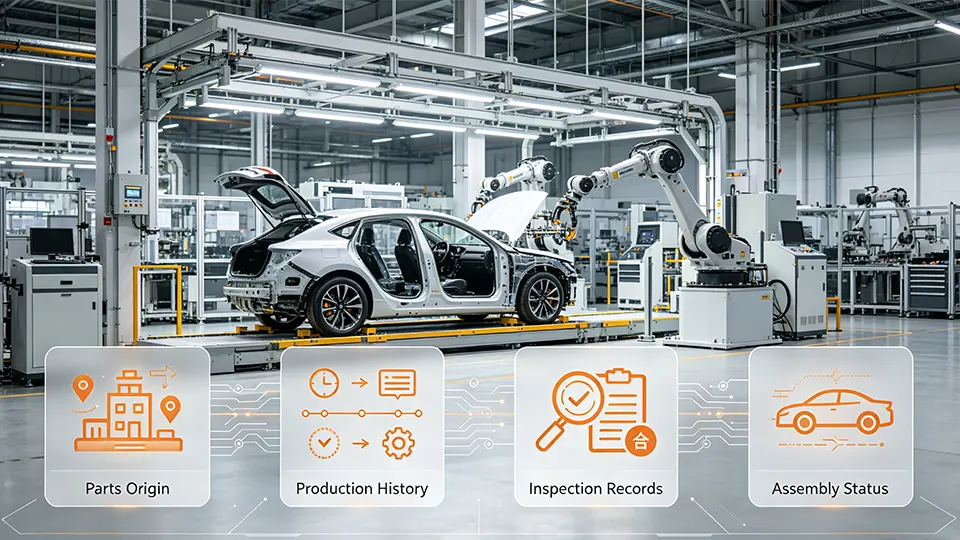
RFID-based traceability can support several important processes:
- Identifying the supplier and production history of specific components
- Connecting parts with vehicle assembly records
- Supporting inspection and maintenance information management
Electric vehicle manufacturing has increased the importance of component traceability. Battery systems contain large numbers of cells and modules that require accurate lifecycle management. RFID can help identify battery components during production, testing, transportation and maintenance.
Some battery production facilities process thousands of units daily. Reliable identification helps manufacturers maintain accurate records and improve quality management throughout the battery lifecycle.
Selecting RFID Tags for Automotive Applications
Automotive environments require RFID tags with reliable performance under demanding conditions. The correct RFID solution depends on the installation location, operating environment and required communication performance.
Metal compatibility is one of the most important considerations. Standard RFID labels may experience signal interference when attached directly to metal surfaces. Anti-metal RFID tags, PCB RFID tags and ABS encapsulated RFID tags are designed for applications where durability and stable communication are required.
Environmental resistance is also important. Automotive RFID tags may need to operate in conditions involving:
- Temperatures from approximately -40°C to 85°C
- Dust, moisture and mechanical vibration
- Long-term attachment during manufacturing and transportation
UHF RFID tags are commonly used for automotive logistics, warehouse management and production tracking because of their longer reading distance and fast identification capability. HF and NFC RFID tags are suitable for applications requiring short-range communication and product interaction.
The RFID chip should match the application requirements. Impinj Monza chips provide strong performance for industrial UHF identification. NXP UCODE chips are widely adopted in supply chain and logistics applications. NXP NTAG213, NTAG215 and NTAG216 chips support NFC applications requiring authentication or digital information access.
Selecting an RFID tag requires consideration of the complete application environment rather than only the tag specification. Material compatibility, installation method, reading performance and system integration all influence the final result.
RFID Builds a More Visible Automotive Supply Chain
Automotive manufacturers are continuously improving production visibility, supply chain coordination and asset management efficiency. RFID tags provide the identification foundation required to connect physical components with digital systems.
From automotive parts tracking and factory asset management to vehicle traceability and electric vehicle production, RFID technology supports more accurate and efficient operations.
For OEM manufacturers, Tier 1 suppliers and automotive system integrators, choosing suitable RFID tags based on application requirements is essential. With the combination of industrial RFID tags, reliable RFID chips and integrated management platforms, companies can achieve better control over complex manufacturing and logistics processes.
