










Decathlon began testing RFID in 2008. By 2019, every product was tagged at the manufacturing stage, and by 2024, its global operations included nearly 50,000 RFID readers. What started as an investment in product identification has become part of the retailer’s everyday infrastructure, supporting stock visibility across factories, warehouses and stores.
That experience is increasingly relevant as the European Union prepares to introduce Digital Product Passport (DPP) requirements for different product groups. Retailers with established RFID systems may already have an important part of the infrastructure in place. Yet identifying a product and maintaining a reliable digital record of that product are two different tasks.
For businesses planning product digitalisation, the real work lies in connecting physical goods to accurate information, keeping that information current, and making sure the connection remains reliable as products move through the supply chain.
What Decathlon’s RFID Network Reveals
Decathlon’s RFID deployment illustrates what changes when item identification becomes part of routine retail operations. Tags can be applied during manufacturing and read at goods receiving, in warehouses, during stocktaking and at store checkout. Unlike conventional barcode scanning, UHF RFID can identify multiple tagged items without requiring a direct line of sight to each label.
The scale of Decathlon’s deployment is notable. Its RFID journey began in 2008, expanded significantly in 2014, and reached full product tagging at the manufacturing stage by 2019. The company reported close to 50,000 RFID readers across its global operations in 2024. These milestones represent years of work integrating identification technology into physical products and business processes.
That integration also requires attention to product design. Metal, liquids, packaging materials and tag placement can all affect radio-frequency performance. A label that reads consistently on a paper hangtag may behave differently when attached to a product containing metal components or packaged alongside liquid goods. Testing therefore needs to reflect the actual product and operating environment.
For retailers, the lesson is practical: product identification has to work throughout the supply chain, not just at a single reading point.
RFID infrastructure can provide a useful foundation for DPP implementation, but it does not automatically satisfy DPP requirements. A retailer may know where an item was received and dispatched while still lacking complete information about its materials, repair instructions or end-of-life handling. Those details depend on product data, supplier cooperation and the systems responsible for maintaining the records.
A Product Identifier Is Not a Digital Product Passport
A DPP connects a physical product to information about that product. The identifier provides the link; the digital record contains the information. Keeping these two functions separate is essential when designing a traceability system.
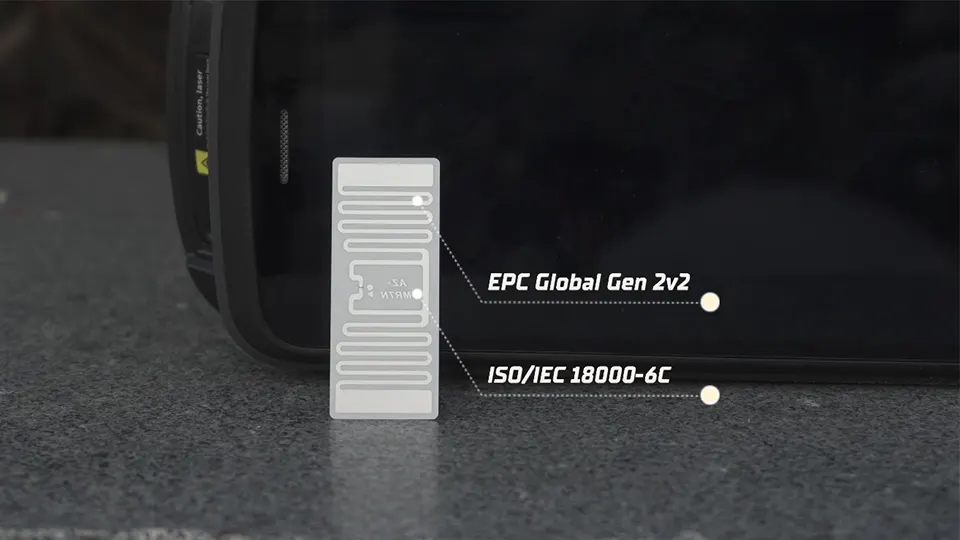
An Electronic Product Code (EPC) stored on a UHF RFID tag can identify a product class, a batch or an individual item, depending on the numbering scheme. A Tag Identifier (TID), meanwhile, is associated with the RFID chip itself. Neither field should be mistaken for a complete digital product record.
Consider a distribution centre receiving 2,000 jackets. RFID readers detect the tags as the shipment passes through the receiving area. The readings are successful, but a batch of identifiers has been linked to the wrong product record in the inventory system. The system has identified the tags correctly; the business is still working with incorrect product information.
This kind of mismatch can affect inventory accuracy, traceability and downstream access to product data. Improving radio-frequency performance will not correct a database relationship that was configured incorrectly.
Before scaling a DPP programme, retailers need clear answers to four questions:
- What does the identifier represent? A model, a production batch and an individual item require different identification rules.
- Who maintains the data? Manufacturers, brands, importers and retailers may control different parts of the product record.
- How are updates managed? Changes to material composition, supplier details or repair information must be reflected in the appropriate records.
- What happens when something goes wrong? Duplicate identifiers, missing records and incorrect associations need a defined correction process.
These decisions influence supplier onboarding, software integration and daily operations. They should be settled before a retailer commits to large-scale tag production.
Test the Data Chain Before Expanding the Deployment
A pilot can demonstrate that RFID tags are readable without proving that the entire product information process works. The more useful test follows identifiers through the systems that create, store and retrieve product records.
A representative pilot should include different product types, packaging formats and operational checkpoints. It should also test exceptions, rather than measuring only successful reads.
- Audit the existing product data. Identify where product codes, batch details, material information and supplier records are held. Check for missing fields, duplicated entries and inconsistent naming.
- Set the identification rules. Decide whether each use case needs model-level, batch-level or item-level identification. Define how identifiers are assigned, validated and checked for duplicates.
- Test actual products. Include representative materials, dimensions and packaging. Where metal or liquid may affect performance, test suitable tag designs and attachment positions on the products themselves.
- Follow the identifiers across systems. Verify that the same product is recognised correctly during receiving, storage, dispatch and retail operations. Include tests for missing records and incorrect product associations.
- Measure the results. Record read consistency, data mismatches, manual corrections and exception-resolution time. Use the findings to determine what needs to change before a wider rollout.
The results should show more than whether a reader can detect a tag. They should demonstrate that the identifier retrieves the right record, that information remains consistent between systems, and that staff can resolve errors without creating new discrepancies.
Supplier responsibilities deserve the same attention as technical integration. If one party assigns identifiers, another maintains material information and a third hosts the digital record, the handover process must be explicit. Without clear ownership, records can become outdated even when the RFID infrastructure continues to operate normally.
Choosing the Right Access Technology for the Product
Not every DPP use case requires the same data carrier. UHF RFID, NFC and QR codes serve different operational needs, and the right choice depends on how products move, who needs access to the information and how the product is constructed.
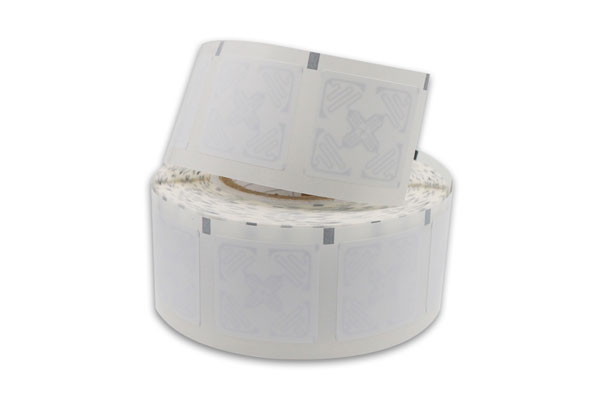
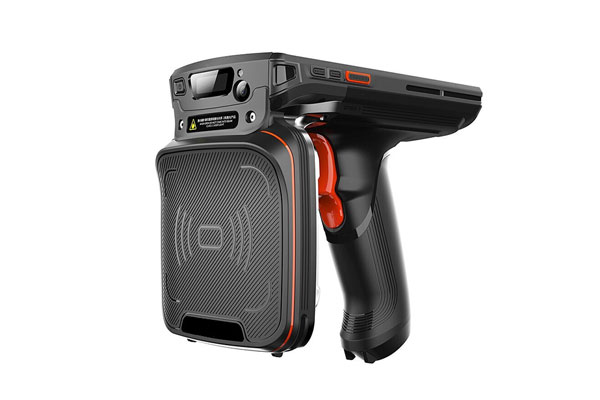
UHF RAIN RFID is particularly useful for supply-chain operations involving high item volumes. It can support receiving, stocktaking, sorting and dispatch without requiring each label to be scanned individually. Retailers with existing RFID readers and encoding processes may be able to build on that infrastructure.
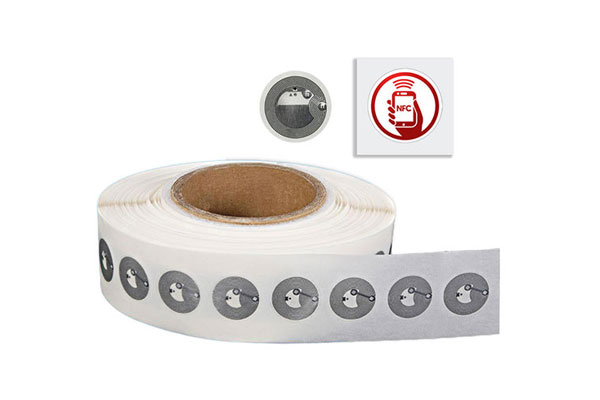
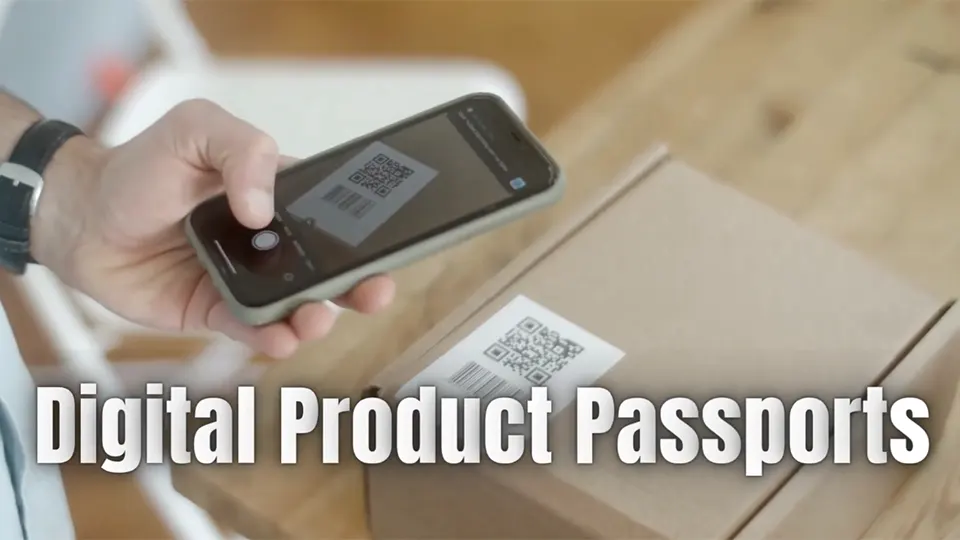
NFC supports close-range interaction, making it suitable for situations where consumers or service personnel tap a product using a compatible smartphone. QR codes offer another accessible route: they can be scanned with a phone camera, although the code generally needs to remain visible and readable.
Before selecting a carrier, retailers should assess:
- Operational volume: How many products must be identified, and how quickly?
- User access: Is the information intended for warehouse staff, consumers, service teams or several groups?
- Product materials: Could metal, liquid, packaging or the attachment position affect performance?
- Product lifecycle: Must identification remain useful during resale, repair, rental or recycling?
- Existing infrastructure: Which readers, encoding tools and data interfaces are already available?
These technologies are not necessarily competing alternatives. A product may use UHF RFID for logistics and inventory while providing a QR code or NFC tag for customer-facing access. What matters is that each route connects users to the correct, appropriately maintained product information.
Tag Selection Requires More Than a Chip Specification
Once the identification scheme and data process are defined, tag selection becomes a question of application fit. Chip memory, antenna design, label dimensions, adhesive, mounting position and reader configuration all influence performance. The lowest-cost label may not be the most economical choice if it produces inconsistent reads or requires frequent manual intervention.
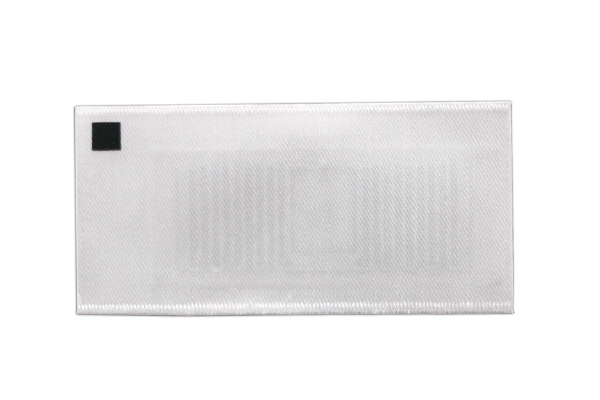
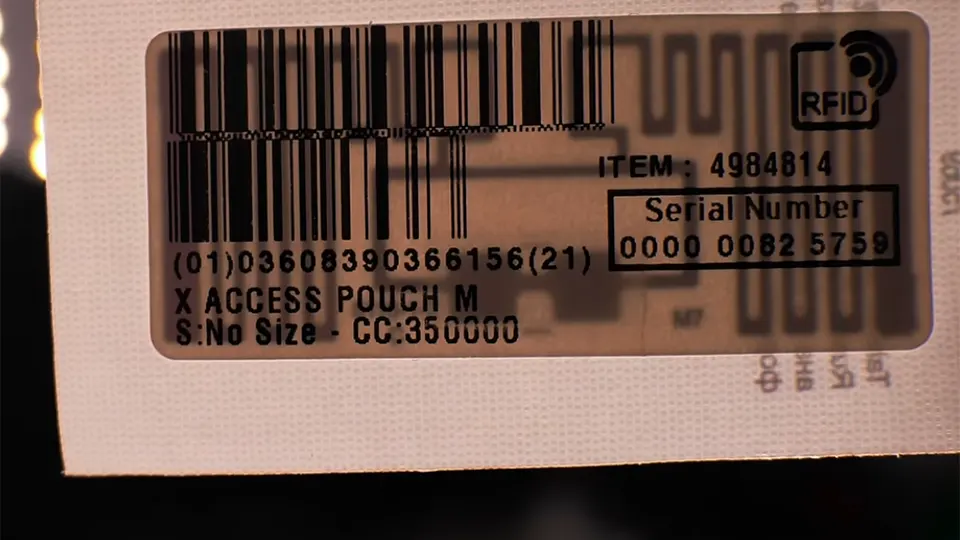
For example, the DTB-C40M UHF RFID Label from DTB RFID uses an Impinj M730 chip and measures 44 × 18 mm. Its listed memory configuration includes a 128-bit EPC and a 96-bit TID, with no user memory. The product specification gives a reading distance of approximately 8 metres under a stated test condition involving a handheld reader operating at 1 W under the US standard.
That figure is a reference for the specified test setup, not a guarantee of the same reading distance on every product. Actual performance depends on the reader, antenna, environment, product materials, tag orientation and installation position.
The Impinj M730 is the chip; the finished RFID label also depends on its antenna and construction. Retailers should therefore test the complete label on the intended product rather than selecting it on chip name or nominal reading distance alone.
Before approving a tag for volume production, the technical evaluation should cover four areas:
- Confirm that the chip and memory configuration support the chosen identifier scheme and encoding requirements.
- Test read consistency on the actual product, packaging and intended attachment location.
- Verify that encoding is accurate and each identifier retrieves the correct product record.
- Check durability and reading performance at the operational checkpoints where the tag will be used.
For DPP-related applications, the objective is dependable identification throughout the intended process. A tag with impressive laboratory performance is of limited value if it cannot be read consistently on the finished product or if its identifier is incorrectly associated with the digital record.
The EU Timeline Makes Early Preparation Sensible
The Ecodesign for Sustainable Products Regulation (ESPR) establishes the framework for Digital Product Passports, with detailed requirements introduced through product-specific measures. The European Commission’s indicative planning has placed adoption of the textiles delegated act in the fourth quarter of 2027. The Commission has also identified 20 July 2026 as the operational date for the DPP Registry.
These dates should not be interpreted as a universal compliance deadline for all textile products. The applicable obligations depend on the relevant delegated act and subsequent implementation arrangements, and the indicative timeline may change as the legislative process progresses.
Retailers can still prepare without waiting for every technical detail to be finalised. Existing product codes, supplier records, traceability systems and RFID deployments provide a starting point for assessing data quality and integration needs. The immediate task is to identify gaps in product information, establish clear ownership and check whether current identifiers can support the intended level of traceability.
Decathlon’s experience shows the value of embedding product identification into everyday operations. For retailers preparing for DPP, the next step is to ensure that the information behind each identifier is accurate, accessible and maintainable. RFID can help connect physical products to digital records, but the value of that connection depends on the quality of the data and the processes supporting it.
