








In premium consumer goods markets—such as tobacco, fine tea, and alcoholic beverages—brand value is built slowly but can be destroyed in an instant. A single counterfeit product entering the market is often enough to damage years of reputation, especially when consumers begin to question product authenticity.
As global supply chains expand and distribution channels become increasingly complex, brand owners face growing challenges: counterfeit goods are easier to produce, unauthorized cross-region sales are harder to control, and traditional identification methods no longer provide sufficient visibility. For high-value products, these risks directly translate into lost revenue, weakened dealer relationships, and declining consumer trust.
Against this backdrop, RFID technology has emerged as a practical and scalable solution. This article explores how RFID-based anti-counterfeiting and traceability systems help premium brands establish full lifecycle visibility, enforce channel compliance, and restore confidence across the supply chain.
Why Traditional Anti-Counterfeiting Methods Are No Longer Enough
For years, brands have relied on printed labels, holograms, barcodes, and QR codes to protect their products. While these methods still play a role, they share several fundamental limitations.
Printed labels are easy to replicate. Barcodes and QR codes can be copied, photographed, or reused. Once a counterfeit enters circulation, it becomes extremely difficult to distinguish it from a genuine product using visual inspection alone. In many cases, even distributors and retailers are unable to identify the difference.
At the same time, channel diversion—often referred to as gray-market trading—has become more frequent. Products intended for one region are resold in another, causing price distortion and dealer conflict. Without reliable item-level tracking, brands are forced to rely on manual audits and after-the-fact investigations, which are costly and slow.
Operationally, many companies still depend on manual record-keeping or barcode scanning. These processes are labor-intensive, prone to errors, and poorly suited for real-time decision-making. Data is fragmented across systems, making it difficult to gain a clear picture of inventory movement or product status.
For high-value goods, these limitations create an unacceptable level of risk.

RFID as the Foundation of Item-Level Anti-Counterfeiting
RFID fundamentally changes how products are identified and managed. Unlike printed codes, RFID tags contain an embedded chip with a globally unique identifier, often referred to as a TID (Tag Identifier). This identifier cannot be duplicated or altered, making it a reliable digital identity for each individual item.
In an RFID-based anti-counterfeiting system, every product is assigned its own unique digital identity at the production stage. This identity is then linked to key product information, including manufacturing data, batch numbers, authorized distribution channels, and logistics records.
Because RFID tags can be read wirelessly and without line-of-sight, data collection becomes faster, more accurate, and far less dependent on manual intervention. This capability is what enables true item-level traceability at scale.
Building Full Supply Chain Traceability with RFID
An effective RFID anti-counterfeiting solution is not limited to tagging products. It requires the integration of tags, hardware, and software into a unified system.
Item-Level Identification from the Factory
At the manufacturing stage, each product is embedded or labeled with an RFID tag. During encoding, the tag’s unique ID is bound to the product’s digital record in the system. From this point forward, the product carries a permanent, verifiable identity throughout its lifecycle.
This approach ensures that every individual item—not just a batch or pallet—can be tracked and verified.
Automated Warehousing and Inventory Operations
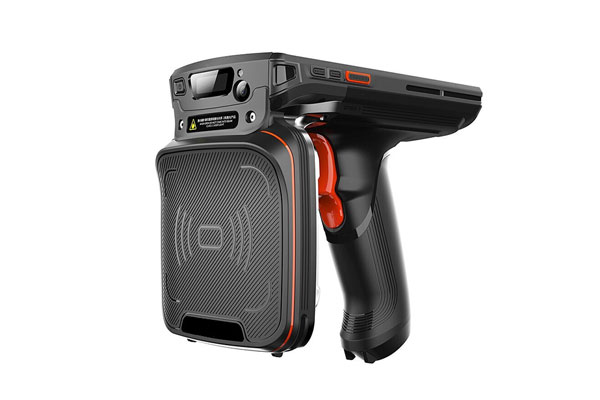
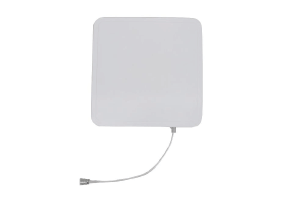
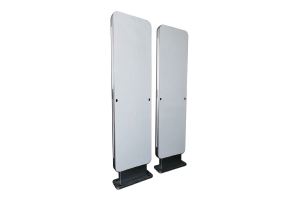
In warehouses and distribution centers, RFID handheld readers and fixed-position antennas enable rapid, contactless scanning. Hundreds of items can be identified within seconds, dramatically improving the efficiency of inbound, outbound, and inventory-check processes.
Every scan automatically updates the backend system, eliminating manual data entry and reducing the risk of human error. Inventory accuracy typically exceeds 99%, even in high-volume environments.
Real-Time Logistics and Channel Monitoring
As products move through logistics hubs and regional distribution networks, RFID data is continuously captured and uploaded to a centralized platform. Brand owners gain real-time visibility into product flow across regions, allowing them to detect anomalies such as unauthorized transfers or unexpected route changes.
This level of transparency makes it significantly easier to enforce channel agreements and address gray-market activity before it escalates.
Consumer Authentication and Brand Engagement
While RFID primarily serves backend operations, it also plays an important role at the consumer level.
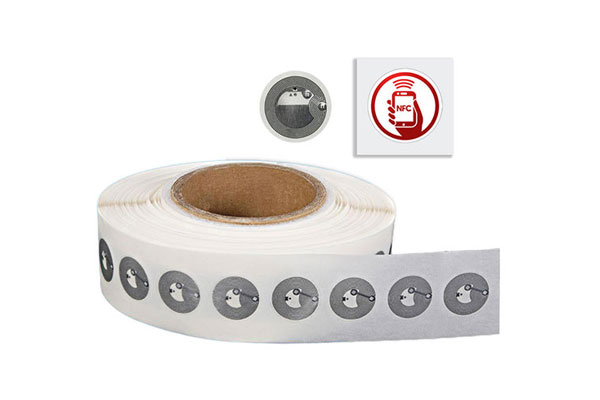
For products that reach the end customer, brands may choose to combine RFID with NFC or printed QR codes. Consumers can scan the product using a smartphone to verify authenticity, view origin information, and access brand content.
This interaction does more than confirm legitimacy. It creates a direct communication channel between the brand and the consumer, reinforcing trust and enhancing the overall brand experience.
DTB RFID F1: A Centralized Platform for Anti-Counterfeiting and Traceability
At the core of the solution is the DTB RFID F1 platform, which acts as the central data hub for all RFID-generated information.
Whenever an RFID device reads a product tag, the data is synchronized to the platform in real time. Managers can view product movement histories, inventory status, and regional distribution data through a unified interface.
Cross-region product management, which is traditionally complex and opaque, becomes significantly more transparent. Decision-makers are able to respond quickly to irregularities, reduce compliance risks, and improve overall operational efficiency.
RFID Tags and Hardware: Practical Tools for High-Value Retail
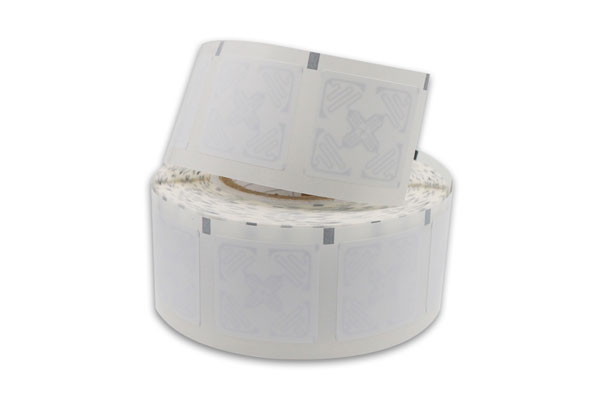
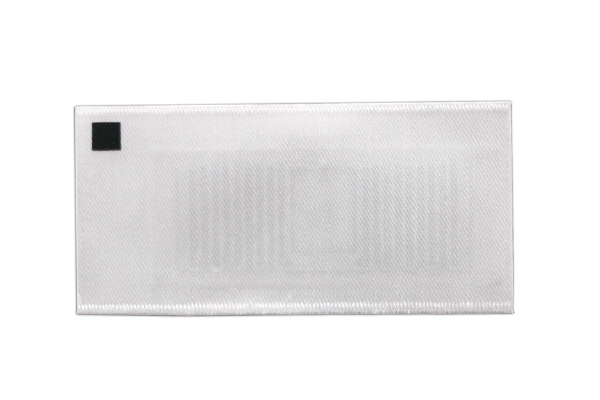
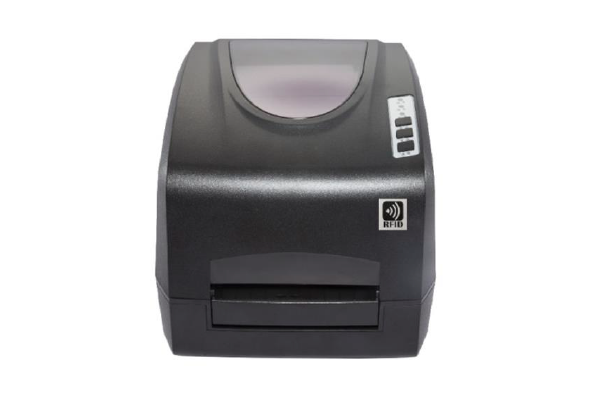
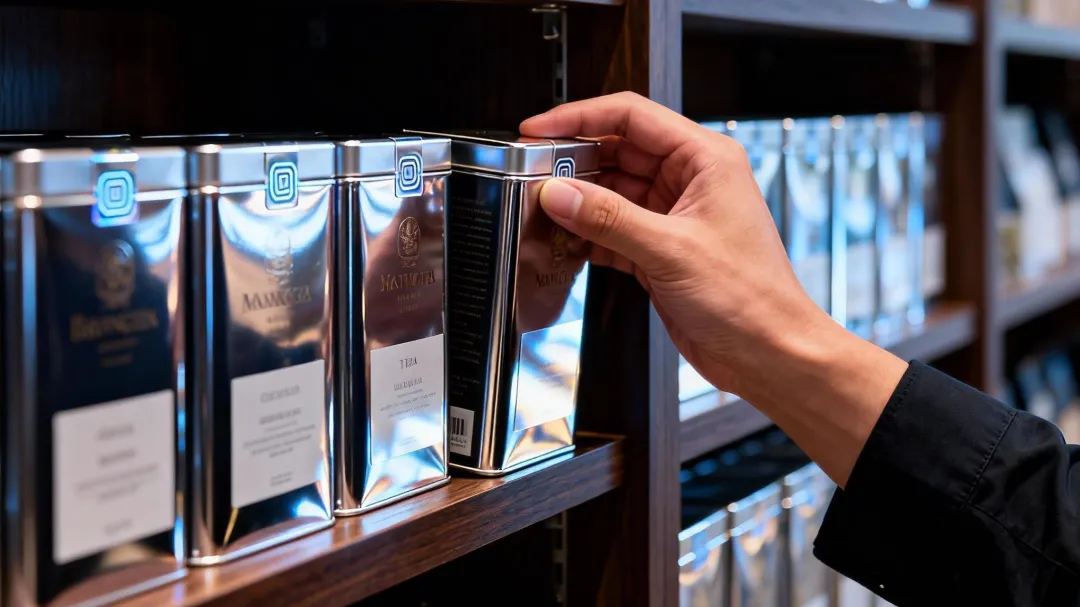
In retail environments, adhesive RFID labels are commonly used due to their flexibility and ease of integration. Each tag functions as a digital “passport” providing a secure identity that is extremely difficult to counterfeit.
On the hardware side, RFID readers enable bulk scanning at speeds far beyond barcode systems. After deployment, many brands report more than a tenfold improvement in inventory and logistics efficiency, along with substantial reductions in labor costs.
Long-Term Value Beyond Anti-Counterfeiting
While anti-counterfeiting is often the primary driver for RFID adoption, the long-term value extends well beyond product authentication.
By collecting accurate, item-level data across the supply chain, brands gain insights that support better forecasting, inventory optimization, and strategic planning. Over time, this data becomes a valuable asset, helping companies operate more efficiently and respond more effectively to market changes.
Creating a Transparent and Trustworthy Retail Ecosystem
For high-value products, trust is not optional—it is essential. RFID-based anti-counterfeiting and traceability systems provide brands with the tools needed to protect their products, control their channels, and rebuild consumer confidence.
DTB RFID continues to work with premium brands to implement practical, scalable solutions that combine secure identification with real-world operational efficiency. By leveraging RFID technology, brands can move toward a more transparent, compliant, and trustworthy retail ecosystem

