











Securing the pharmaceutical supply chain has become less about “tracking” and more about proving control—over inventory, temperature exposure, custody events, and recall readiness. Between global distribution complexity and regulatory pressure, pharma manufacturers and logistics partners are expected to maintain end-to-end traceability with fewer manual touchpoints and tighter error tolerance.
RFID has moved from pilot curiosity to a practical infrastructure layer in many pharmaceutical networks. When deployed correctly, it improves inventory accuracy, exception handling, throughput, and compliance evidence, especially in high-volume distribution environments.
This article focuses on where RFID creates measurable value in pharma, what causes deployments to underperform, and how teams build implementations that remain stable after the “go-live honeymoon.”
RFID in Pharma: Not a Gadget, a Data Capture Layer
In pharmaceutical operations, RFID is best understood as an automated data capture layer that creates reliable, time-stamped events across physical workflows—receiving, put-away, replenishment, packing, shipping, and returns. The goal isn’t just to “read tags,” but to reduce manual scanning dependency and make movement and status changes system-verifiable.
RFID is typically deployed at different packaging levels depending on the workflow:
· Pallet / case-level for bulk identification at dock doors and conveyor choke points
· Unit-level for controlled workflows, high-value SKUs, or compliance-sensitive handling
Compared with line-of-sight barcode processes, RFID can support faster verification at operational bottlenecks, reduce labor spent on repetitive scans, and improve inventory confidence—provided that tag selection, placement, and read zone control are engineered for real packaging and real behavior.
Regulatory Drivers: Why RFID Keeps Showing Up in Pharma Programs
Pharmaceutical RFID adoption is heavily influenced by traceability and product integrity requirements.
In the United States, the Drug Supply Chain Security Act (DSCSA) established a framework for serialization and traceability intended to reduce counterfeit risk and strengthen supply chain security. RFID is not mandated under DSCSA, but it is often selected as a practical accelerator for automation—especially where barcode-only workflows create throughput limits or exception backlogs.

Serialization—assigning a unique identity to each saleable unit—has become standard in many pharma networks. RFID adds operational leverage by enabling faster, less error-prone verification across logistics touchpoints.
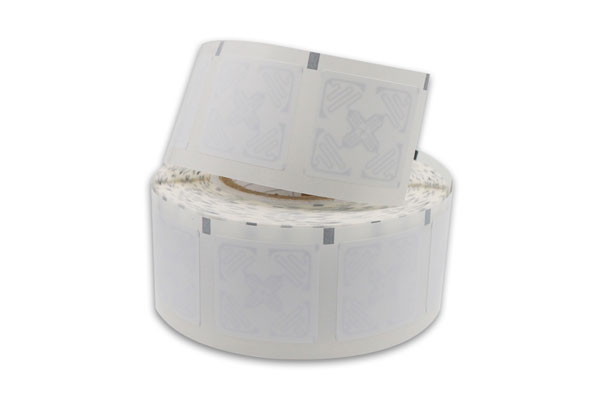
Practical reality (what works in the field): For distribution workflows, EPC Gen2 UHF RFID (RAIN RFID, 860–960 MHz) is typically strongest for case- and pallet-level automation. Unit-level RFID becomes more sensitive when products involve foil blister packs, metal crimps, or liquid-filled glass vials, which can detune antennas and reduce read consistency. In those scenarios, performance usually improves through controlled read zones and verified event capture (often aligned with GS1 EPCIS) rather than simply increasing transmit power.
The Problems That Make Pharma RFID Projects Underperform
RFID rarely fails because “the technology isn’t ready.” More often, it underperforms because the deployment assumptions don’t survive real operations.
1) Cold chain conditions and label durability
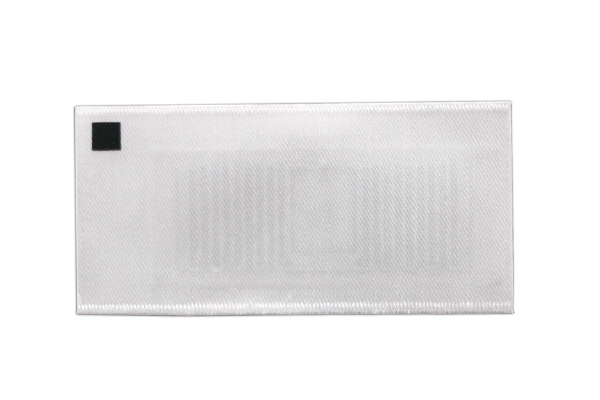
Vaccines, biologics, and other temperature-sensitive products introduce constraints that basic labels aren’t designed for: low temperatures, condensation, humidity, and frequent handling. Adhesive failure, label edge lift, or cracked inlays quickly become operational exceptions.
2) Packaging interference (the silent killer)
Pharmaceutical packaging is not RF-friendly by default:
· Aluminum foil blister packs
· Metal caps, crimps, and closures
· Glass containers filled with liquid
· Dense carton stacking and mixed materials
These conditions can reduce read range, create orientation sensitivity, and produce inconsistent read zones that operators learn to distrust.
3) Integration and event quality
RFID is only as valuable as the event stream it produces. If reads don’t translate into clean business events—receiving confirmation, shipping validation, exception flags—teams end up with “RF noise” instead of operational truth.
Most pharma deployments must integrate with:
· WMS (Warehouse Management System)
· ERP platforms
· Serialization repositories and traceability services
· Exception handling workflows and audit trails
4) Workflow reality vs. workflow design
RFID systems are often designed around ideal behavior: perfect label placement, consistent orientation, and smooth movement through read zones. Warehouses don’t operate that way. Operators move fast, pallets rotate, cartons get reworked, and staging areas evolve.
If the system produces frequent “maybe reads,” people will compensate with manual checks. That’s where trust erodes—and ROI disappears.
Implementation Checklist
RFID Implementation Checklist (Pharma DC): define tagging level (pallet/case/unit); validate packaging interference (foil, metal, liquids); pilot one workflow (receiving or shipping); design controlled read zones (directional antennas, portals); integrate WMS + serialization events (GS1 EPCIS); set exception rules (missed reads, rework); train operators with simple placement/orientation standards; measure KPIs (read rate, exceptions, cycle time, accuracy); scale by repeating the same proven pattern.
Do’s
1. Do pilot with real packaging and real workflows — don’t just test on clean demo pallets.
2. Do control read zones — directional antennas or portal placement reduces ambiguous reads.
3. Do integrate with ERP/WMS and traceability services (GS1 EPCIS) for accurate event capture.
4. Do train operators with simple placement/orientation rules — human behavior drives system reliability.
5. Do measure KPIs continuously — read rates, exceptions, cycle times, and recall speed.
Don’ts
1. Don’t increase reader power indiscriminately — this often causes RF reflections and phantom reads.
2. Don’t ignore packaging material effects — metal, foil, and liquids can block or detune reads.
3. Don’t treat RFID as optional or temporary — trust erodes if operators must constantly double-check.

Recommended Architecture
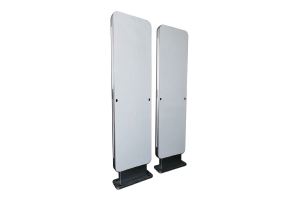
A proven pharma DC pattern is UHF case/pallet tagging + fixed readers at dock doors + handheld readers for exceptions, with events published to WMS/ERP and traceability services via GS1 EPCIS. Read zones should be directional and physically controlled (portals, tunnels, or choke points), so the system produces fewer ambiguous reads. Unit-level verification can be added selectively for high-value SKUs or compliance-critical workflows.
A Practical RFID Implementation Strategy That Scales
Start with a pilot that proves reliability—not a demo
A strong pilot is narrow, measurable, and operationally real. The best pilots focus on one facility and one workflow where RFID can reduce manual verification:
· Dock door receiving validation
· Case-level put-away confirmation
· Outbound shipping verification
· Cycle count acceleration in one zone
Pilot testing should cover:
· Read performance with real packaging and real stacking
· Cold storage handling and label durability
· Reader placement at true choke points
· Exception handling rules (what happens when reads are missed)
H4 Expand with deployment patterns that stay stable
After proving performance, scale in phases using repeatable patterns:
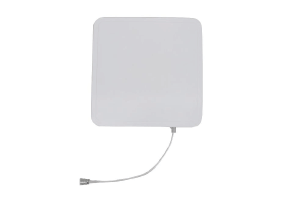
· Fixed readers at dock doors, conveyors, and controlled portals
· Handheld RFID scanners for exception resolution, QA, and audits
· Mobile readers where internal movement needs visibility
Scaling works best when the design reduces ambiguity: controlled read zones, predictable orientation expectations, and clear exception paths.
Measure and continuously tune
RFID programs that last treat measurement as part of operations—not a one-time project task.
Track metrics such as:
Inventory accuracy
· Fulfillment error rate
· Order cycle time
· Dock-to-stock time
· Exception rate (manual overrides, missed reads)
· Recall response speed and trace completion rate
If exception rates climb over time, that’s a signal that the environment or workflow has drifted—and the system needs tuning.
High-Value RFID Applications in Pharmaceutical Supply Chains
Inventory accuracy and cycle counting
RFID reduces the labor burden of counting and verification. In fast-moving distribution centers, it can improve inventory confidence without requiring constant manual reconciliation.
Better inventory accuracy also reduces a costly pharma issue: expired inventory and write-offs caused by poor visibility and delayed rotation.
Cold chain monitoring (when paired with sensors)
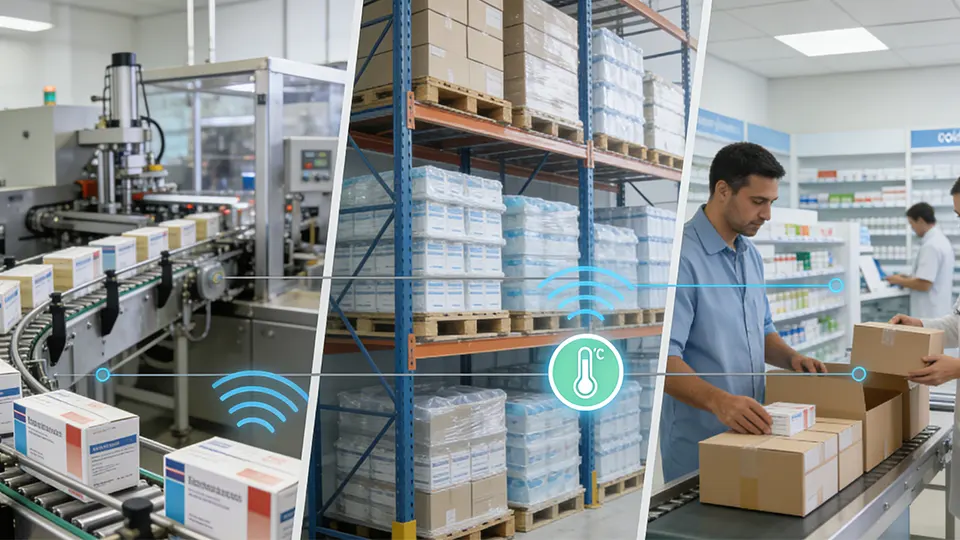
RFID becomes more powerful when combined with IoT sensors for temperature-sensitive products. Teams can monitor storage and transit conditions, generate deviation alerts, and strengthen compliance evidence for audits and quality investigations.
Serialization support and anti-counterfeiting workflows
Counterfeit risk and diversion remain major threats. RFID can strengthen unit-level identity workflows and improve verification at distribution handoffs—especially for high-value SKUs and controlled products.
Logistics throughput and shipping validation
RFID enables faster verification at packing and shipping points. Bulk reads reduce dependence on manual scanning and help prevent wrong-ship errors in high-volume environments.
Faster, more precise recall execution
When recalls occur, speed matters. RFID-based traceability can help teams locate affected lots faster, validate what moved, and reduce the time spent searching across facilities and partners.

Choosing the Right RFID Technology in Pharma
There is no universal “best RFID.” The right choice depends on packaging, workflow, and the control level required.
UHF RFID (RAIN RFID, 860–960 MHz)
Best for:
· Pallet and case-level tracking
· Bulk reads at dock doors and portals
· High-throughput distribution operations
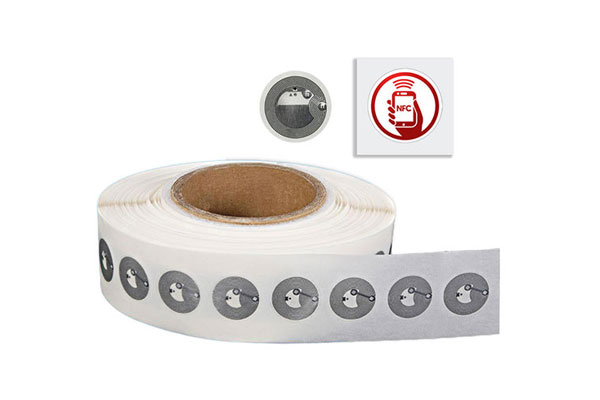
HF / NFC (13.56 MHz)
Best for:
· Short-range verification steps
· Controlled unit-level interactions
· Environments where UHF performance is constrained by materials
In pharma, the biggest success factor is rarely the reader. It’s the combination of tag type + placement + packaging + read zone design, validated under real operating conditions.
What’s Next: RFID as Part of a Broader Traceability Stack
RFID is increasingly deployed alongside other technologies that improve resilience and decision-making:
· IoT + AI analytics for proactive cold chain intervention and demand planning
· Blockchain-based traceability for stronger data integrity across partners
· Smart packaging for authentication, patient engagement, and post-distribution insights
As these systems mature, RFID becomes less of a standalone project and more of a core supply chain infrastructure component.
Conclusion
RFID has become a practical advantage for pharmaceutical supply chains that need speed, accuracy, and compliance-ready evidence. The teams that see lasting results treat RFID as part of the physical workflow—not a layer added on top of it.
Start with a pilot that survives real packaging and real behavior. Control the read zones. Integrate cleanly with WMS and traceability events. Then scale using repeatable patterns and measurable KPIs.
That’s how RFID becomes trusted infrastructure—not just another warehouse technology rollout.
FAQ: RFID in Pharmaceutical Supply Chains
Q1: Is RFID required for DSCSA compliance?
No. DSCSA requires serialization and traceability, but it does not mandate RFID. Many organizations use 2D barcodes as the baseline, while RFID is adopted to improve automation and reduce manual scanning in high-volume workflows.
Q2: What RFID frequency is best for pharmaceutical distribution centers?
For most warehouse operations, UHF RFID (RAIN RFID, 860–960 MHz) is preferred for pallet and case tracking due to long range and bulk read capability. HF/NFC (13.56 MHz) can be better for short-range unit-level workflows depending on packaging and materials.
Q3: Why does RFID struggle with foil blister packs and liquid-filled products?
Foil, metal, and liquids absorb or reflect RF energy, reducing read consistency. Reliable performance depends on tag placement, orientation, and controlled read zones—more than raw transmit power.
Q4: What’s the best way to start an RFID pilot in pharma?
Pick one facility and one workflow (like receiving or shipping validation), test with real packaging, and validate integration with WMS/ERP and traceability event capture before scaling.
Q5: What KPIs best demonstrate RFID ROI in pharma supply chains?
Common KPIs include inventory accuracy, fulfillment errors, cycle count time reduction, dock-to-stock time, exception rate, and recall response speed.

