










Heat Effects
High-temperature RFID projects rarely fail because of the RFID chip alone. In most industrial environments, heat gradually affects the entire tag assembly, including the antenna, substrate, encapsulation, adhesive, and the surface where the tag is mounted. A label that performs well during a laboratory demonstration may begin to lose reading consistency after repeated exposure to production temperatures, thermal cycling, cleaning chemicals, or mechanical vibration. This explains why the same RFID tag can produce excellent results in one factory and disappointing performance in another.
Industrial temperatures vary considerably depending on the production process. Electronics manufacturing may expose tags to short soldering cycles above 240°C, while powder coating lines typically operate between 180°C and 220°C. Automotive paint shops, steel processing plants, aluminum extrusion facilities, and glass manufacturing lines each create different combinations of heat, pressure, dust, and humidity. Selecting an RFID tag simply because it survives a published maximum temperature often leads to poor long-term reliability.
Another factor frequently overlooked is thermal cycling. A tag that tolerates 250°C for several minutes may behave very differently after hundreds of heating and cooling cycles. Expansion and contraction gradually place stress on bonding materials, antenna structures, and encapsulation, eventually reducing read stability even when no visible damage appears. In many production facilities, durability is measured over 500, 1,000, or even 2,000 thermal cycles rather than a single exposure to peak temperature.
The RFID chip itself is only one component within a much larger system. Modern UHF ICs such as NXP UCODE 8 and Impinj M780 provide excellent sensitivity and fast inventory performance, but their capabilities depend heavily on antenna efficiency and environmental conditions. Heat changes the electrical characteristics of surrounding materials, and even small variations in antenna impedance can reduce communication distance. For engineers responsible for industrial deployments, understanding this interaction is often more valuable than comparing chip specifications alone.
Successful high-temperature projects usually evaluate several environmental factors together before selecting a tag:
* Maximum operating temperature, exposure duration, thermal cycling frequency, mounting surface, nearby metal, vibration, pressure washing, chemical exposure, and expected service life.
Considering these variables together produces a far more reliable deployment than focusing only on temperature ratings listed in a datasheet.
Material Choice
Material selection determines whether an RFID installation remains stable after months of industrial use. Different encapsulation materials are designed for different environments, and each represents a compromise between durability, size, cost, and radio performance.
Paper and PET labels perform well in standard logistics and warehouse applications, yet prolonged exposure above 80°C usually exceeds their intended operating range. Polyimide materials are commonly selected for printed circuit board manufacturing because they tolerate soldering processes while remaining thin and flexible. PPS encapsulation has become a preferred option in industrial laundry, medical sterilization, and reusable container management where repeated exposure to 180°C steam or hot water is expected. Ceramic housings are frequently chosen for foundries, heat treatment plants, and steel production because dimensional stability remains high even under continuous thermal stress.
Material selection also affects reading performance. Ceramic provides excellent heat resistance but generally increases tag thickness and weight. Thin flexible constructions simplify installation but may sacrifice mechanical strength under aggressive industrial conditions. The engineering objective is therefore to balance environmental durability with radio performance rather than maximizing a single specification.
Metal introduces another layer of complexity. High-temperature environments frequently involve molds, engine blocks, machining fixtures, metal pallets, pipe assemblies, and production tooling. These assets reflect RF energy, altering antenna behavior and reducing reading distance if conventional labels are used. Anti-metal tag designs compensate for this effect by introducing carefully engineered spacing between the antenna and the mounting surface.
A practical selection process usually follows several engineering steps:
- Define the highest continuous operating temperature rather than the highest short-term temperature.
- Evaluate the complete operating environment, including steam, oil, chemicals, vibration, and cleaning procedures.
- Select encapsulation materials that match the expected service life instead of the initial installation cost.
- Verify read performance on the actual asset before approving large-scale production.
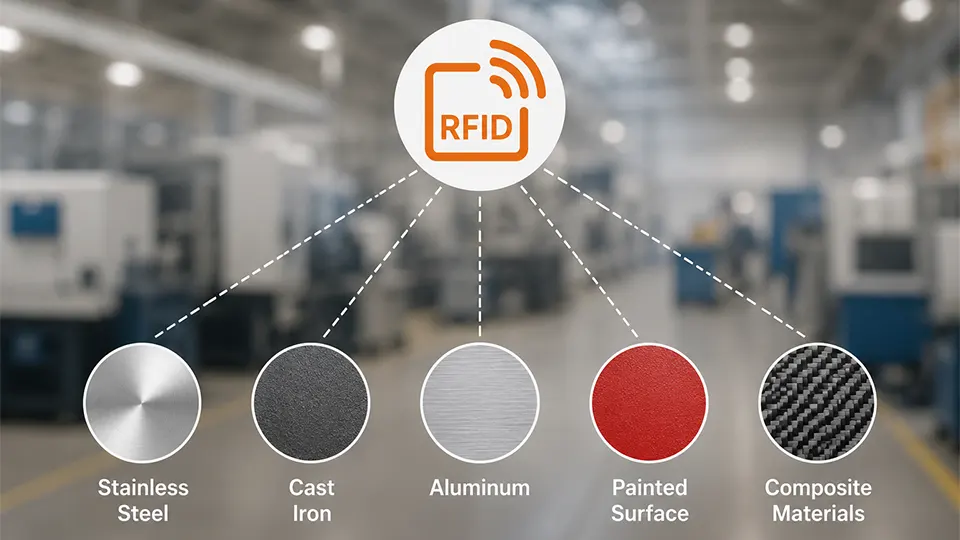
Prototype testing remains essential because identical tags often perform differently on stainless steel, cast iron, aluminum, painted surfaces, or composite materials. Laboratory measurements provide useful reference data, but production equipment introduces additional variables that are difficult to reproduce during controlled testing.
Read Performance
Reading distance is often treated as the primary performance indicator, yet industrial RFID deployments depend on consistency rather than maximum range. A tag that reads 8 meters under ideal conditions but becomes unreliable after repeated heat exposure creates more operational disruption than a tag maintaining a stable 4-meter reading throughout several years of service.
High temperatures influence RF performance in several indirect ways. Antenna tuning shifts as surrounding materials expand. Protective housings may introduce additional dielectric effects. Metal components surrounding the tag can redirect electromagnetic energy, producing dead zones that were absent during initial testing. These changes are usually gradual, making them difficult to identify until inventory accuracy begins to decline.
Reader configuration also contributes significantly to performance. Increasing transmit power does not always improve read reliability. Antenna polarization, installation height, beam direction, and interrogation angle frequently have greater influence than power output alone. Industrial environments containing conveyors, rotating fixtures, cranes, or automated guided vehicles introduce continuously changing tag orientations, making antenna placement an equally important part of system design.
Asset geometry deserves careful attention during site surveys. Flat metal surfaces generally produce more predictable RF behavior than curved pipes or irregular cast components. Deep cavities, heavy machinery, and densely packed tooling racks can block or scatter RF signals, creating inconsistent reading zones. Positioning a tag only 20 to 30 mm away from an obstruction may noticeably improve performance without changing hardware.
For applications involving reusable industrial tools and metal fixtures, products specifically designed for metallic environments provide better long-term stability. One example is the DTB-PCB7020UA anti-metal RFID tag, developed for industrial asset identification where compact dimensions, durable construction, and reliable performance on metal surfaces are required. Selecting a purpose-built industrial tag early in the project often reduces repeated adjustments after deployment because the antenna structure has already been optimized for conductive mounting surfaces.
Field validation should therefore focus on repeatability instead of isolated performance measurements. Stable reading across thousands of operating hours delivers greater operational value than occasional long-distance reads recorded under ideal laboratory conditions.
Field Setup
Selecting an appropriate RFID tag is only the beginning of a successful deployment. Installation methods have an equally important influence on long-term system stability, especially in facilities where equipment experiences continuous heating, cooling, vibration, and routine maintenance. Many performance issues reported after installation can be traced back to mounting methods rather than tag design or reader configuration.
Adhesives are often the first component to degrade under elevated temperatures. Even when a label remains electrically functional, softened adhesive layers can shift the tag position or introduce small air gaps between the antenna and the mounting surface. These seemingly minor changes may alter antenna tuning enough to reduce read consistency. For applications above 150°C, mechanical fastening methods generally provide better long-term reliability than standard industrial adhesives.
Different assets require different installation approaches. Engine blocks, casting molds, reusable steel racks, machining fixtures, and industrial pallets all present unique mechanical constraints. Successful projects usually match the mounting method to both the operating environment and maintenance procedures.
Common installation options include:
- High-temperature epoxy for controlled environments with moderate thermal exposure.
- Stainless-steel rivets for reusable containers, tooling, and production fixtures.
- Screws or threaded fasteners for equipment requiring periodic tag replacement.
- Welded brackets where direct fastening is impractical and long service life is expected.
- Protective recessed mounting for assets exposed to impact, abrasion, or heavy material handling.
Reader deployment deserves the same level of planning. High-temperature production lines often contain motors, conveyors, steel frames, and electrical equipment that influence RF propagation. Reader antennas positioned solely for maximum coverage may unintentionally create overlapping interrogation zones or inconsistent reading windows. Site surveys should therefore include operating equipment rather than empty production areas, since moving machinery frequently changes the RF environment.
Environmental testing should also represent normal operating conditions instead of ideal laboratory scenarios. A production line may operate continuously for 16 to 24 hours each day, exposing RFID equipment to temperature fluctuations that never occur during short validation tests. Evaluating performance across complete production shifts provides a much more realistic understanding of long-term stability.
Plant Lessons
Industrial RFID projects often reveal patterns that cannot be predicted from technical specifications alone. Facilities processing forged steel, aluminum castings, automotive components, or aerospace parts frequently encounter combinations of heat, metal, moisture, and mechanical shock that place continuous stress on RFID infrastructure. The most successful deployments generally share one characteristic: system validation begins with the production process rather than the tag datasheet.
Several practical observations appear repeatedly across industrial installations.
The first is that thermal exposure should always be evaluated together with production cycles. A tag exposed to 220°C for two minutes behaves differently from one operating continuously at 120°C throughout an entire shift. Total accumulated heat frequently has more influence on service life than occasional peak temperatures.
The second observation involves asset movement. Production tooling transported by forklifts, overhead cranes, or automated guided vehicles changes orientation throughout the manufacturing process. Reader placement should therefore accommodate multiple tag angles instead of assuming a fixed position.
The third lesson concerns maintenance planning. RFID systems require periodic inspection just like other industrial equipment. Routine verification of damaged housings, loose fasteners, contaminated antennas, and physical wear helps maintain high read accuracy over extended operating periods.
A structured validation program normally includes the following steps:
- Test several candidate tags on actual production assets before final selection.
- Measure read performance after repeated thermal cycles rather than immediately after installation.
- Verify inventory accuracy during normal production instead of scheduled maintenance shutdowns.
- Inspect tags periodically and replace damaged units before read reliability declines.
Following this approach generally produces more consistent results than selecting hardware based solely on published temperature specifications.
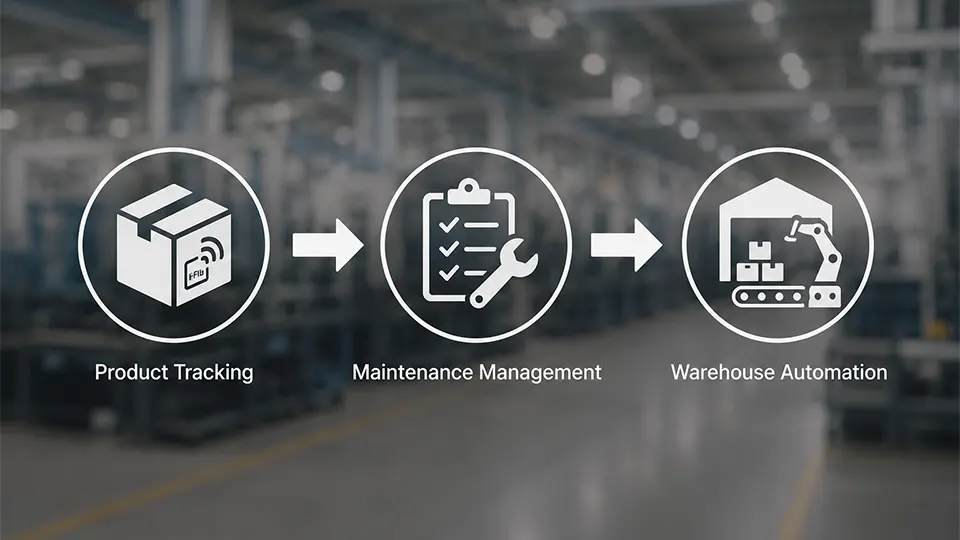
Another important consideration is future scalability. Many factories initially deploy RFID for tool identification or work-in-progress tracking before expanding into maintenance management, warehouse automation, or digital manufacturing initiatives. Selecting industrial-grade hardware from the beginning simplifies later expansion because the same infrastructure can support additional applications without extensive redesign.
Long Service
High-temperature RFID applications demand a balance between material science, RF engineering, and practical manufacturing experience. Temperature ratings alone provide only part of the information needed for successful deployment. Mechanical design, installation quality, environmental exposure, and production workflows all influence long-term system performance.
As industrial facilities continue adopting automation, digital traceability, and real-time asset visibility, RFID has become an important data collection technology across sectors including automotive manufacturing, aerospace, metal processing, electronics production, energy, and heavy equipment maintenance. Reliable identification under demanding operating conditions depends on selecting tags designed for the complete environment rather than a single performance parameter.
Projects that achieve stable results over several years generally follow the same engineering principles. Environmental conditions are carefully evaluated before hardware selection. Installation methods are matched to the asset rather than chosen for convenience. Reader locations are validated under real operating conditions. Performance is measured over time instead of during a single acceptance test.
When these engineering practices are combined with appropriate industrial RFID hardware, high-temperature identification becomes a dependable component of modern manufacturing operations. The outcome extends beyond faster inventory counts or automated data capture. Production assets remain traceable throughout their service life, maintenance records become more accurate, and operational decisions are supported by consistent data collected directly from the factory floor. These long-term benefits explain why high-temperature RFID has become an increasingly important technology for manufacturers seeking greater efficiency, traceability, and equipment visibility in demanding industrial environments.

