









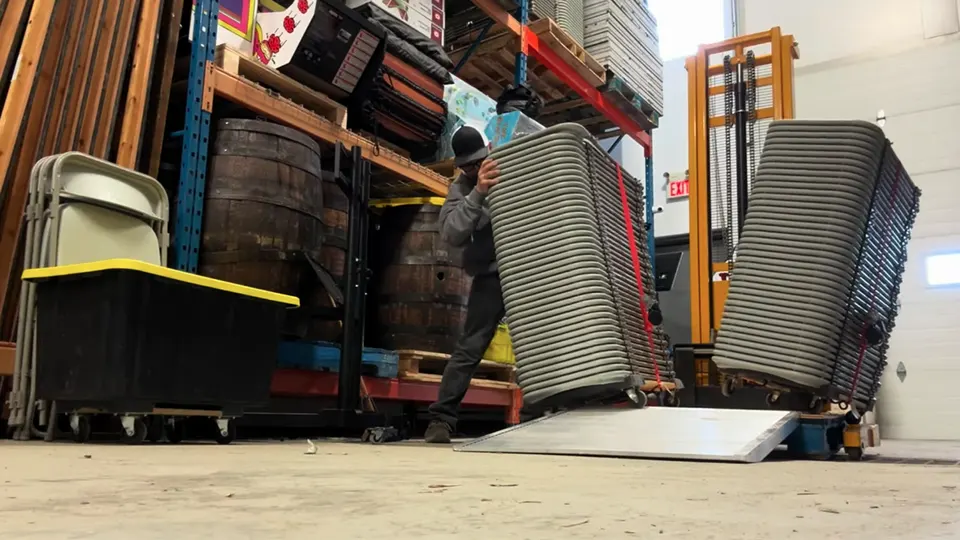
A rental business can own thousands of assets and still struggle to answer two basic questions: Where is each asset, and when will it be available for the next rental?
Rental equipment moves through a constant cycle of order preparation, dispatch, customer use, return, inspection, maintenance and re-rental. When hundreds or thousands of items move through this cycle every week, manual identification can create bottlenecks in the warehouse and delay the return of equipment to available inventory.
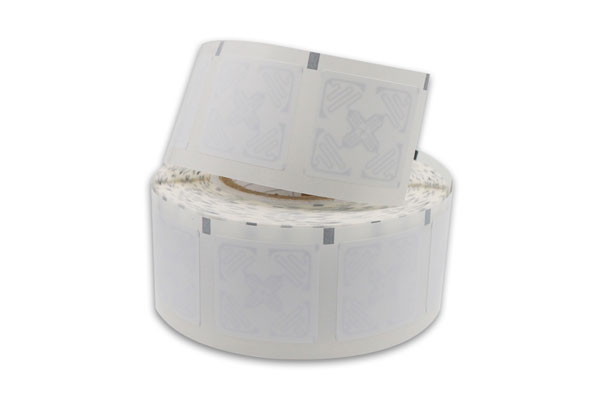
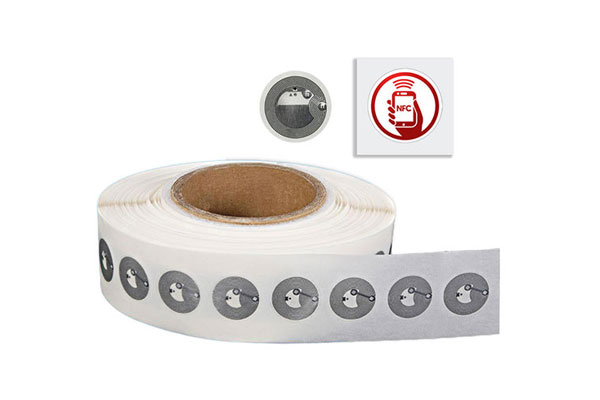
RFID rental asset tracking gives each physical item a unique digital identity. UHF RFID tags and readers capture that identity as equipment moves through key operational points, while rental management software connects RFID events with orders, locations and asset status.
In practice, this means faster check-in and check-out, quicker inventory checks, easier asset searches and better visibility across the rental cycle.
Rental Assets Are Always Moving
Rental inventory behaves differently from conventional warehouse stock. A stock count can show how many units are on hand, but rental operations also need to know which assets are reserved, dispatched, with customers, returned, awaiting inspection, under repair or ready for the next order.
That distinction matters even more when the same equipment is rented repeatedly. A projector returned after an event may still need to be inspected before it can go back out. A missing cable can hold up an entire equipment package. A machine at another branch may appear available in the system but still be unavailable for immediate local use.
Barcode scanning can support these processes, but employees generally have to identify assets one at a time. The workload quickly adds up when large numbers of items return together.
In one large RFID deployment, approximately 200,000 rental assets were tagged across 10 locations. A workflow that previously required two employees for 2.5 hours was reduced to a single employee working for just 15 minutes, cutting processing time and labor costs by a reported 95%. In a separate check-in process, processing time fell from 22 minutes to just 10 seconds—a reported 99.24% reduction.
At this scale, even small time savings per item can add up to significant labor savings over the course of a shift, a week or an entire rental season.
Each asset record can link its RFID identity to information such as:
- Unique EPC, asset type and serial number
- Rental order, location and dispatch or return status
- Inspection, maintenance and availability history
Every RFID read can then become another event in the asset’s rental history.
Start With Check-In and Check-Out
Dispatch and return areas are natural starting points for RFID because equipment already moves through defined operational points.
During check-out, a rental order may contain dozens of pieces of equipment. With barcode scanning, employees typically scan each item separately. UHF RFID can identify multiple tagged assets within a suitable read zone, allowing groups of items to be verified in a single operation.
This is particularly useful for AV equipment, lighting systems, tools, cables and accessories stored in cases or containers. In one large-scale deployment, RFID was used to identify tagged assets inside boxes and containers, reducing the need for employees to open them simply to confirm their contents.
The return process presents another major opportunity. A fixed RFID reader or portal can capture asset IDs as equipment enters the warehouse. The rental system can then compare those IDs against the expected order and flag missing or unexpected items.
At a basic level, the workflow is straightforward:
- Assign each rental asset a unique UHF RFID tag and associate its EPC with the corresponding digital asset record.
- Capture the RFID identity during dispatch, return or inventory operations and synchronize the event with the rental management system.
The benefit goes beyond faster counting. A returned asset can enter the inspection workflow sooner, while exceptions can be flagged for manual verification.
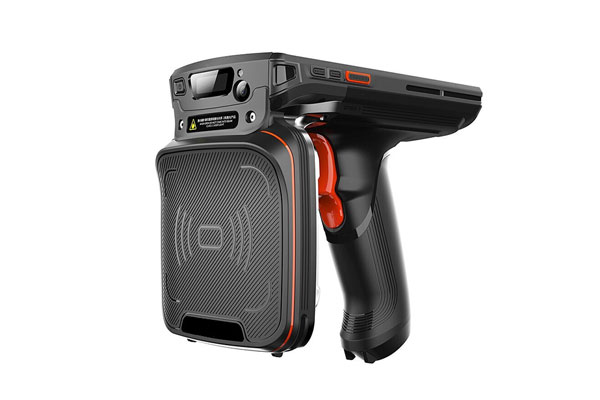
Handheld RFID readers add another layer of flexibility for inventory searches. When a specific cable, projector or tool is difficult to locate among similar items, staff can search for its RFID identity instead of checking every shelf manually.
For high-volume rental operations, the return area can become one of the most valuable RFID checkpoints because it connects the physical arrival of equipment with the next stage of the rental cycle.
The RFID Tag Must Match the Asset
RFID performance depends heavily on the asset carrying the tag.
A standard UHF RFID label may perform well on cardboard and some plastic surfaces. Direct installation on metal can alter antenna behavior and reduce read performance. Cables, curved surfaces, outdoor equipment and washable textiles create different tagging requirements.
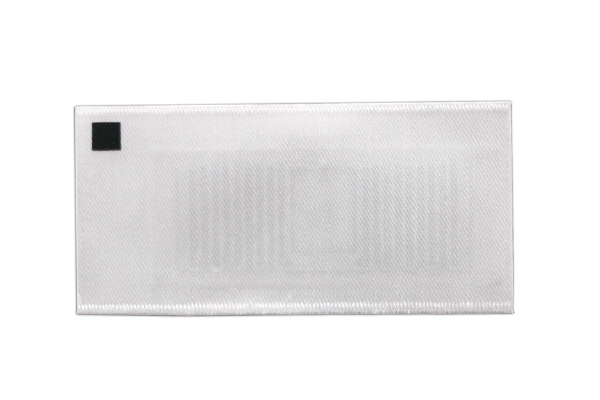
Rental operations may therefore use several tag constructions. On-metal RFID tags are designed for metal equipment, while rugged ABS tags can be used on equipment exposed to impact, moisture and repeated handling. Flexible tags work well on curved surfaces and cables, while washable RFID tags are designed for reusable textile assets.
The RFID chip is another consideration. Impinj M750 is a RAIN RFID tag IC with 96-bit EPC memory and 32-bit user memory. Impinj M730 provides 128-bit EPC memory and is also used in high-volume UHF RFID applications. NXP UCODE 8 is another widely used UHF RFID IC family with 128-bit EPC memory.
The chip is only one part of the equation. Antenna design, tag dimensions, mounting position, reader configuration and surrounding materials can all affect read performance.
A practical tag evaluation should consider:
- Asset material and surface geometry
- Exposure to water, dust, chemicals, heat or outdoor conditions
- Impact, abrasion, bending and repeated handling
- Required read distance and expected service life
A tag designed for a metal generator should be tested differently from one attached to a plastic equipment case. A cable tag may need to withstand repeated coiling, while a textile tag must tolerate repeated washing.
Testing representative rental equipment before deployment is essential. Actual warehouse conditions can differ considerably from laboratory specifications, particularly when assets are densely packed or made from mixed materials.
From Return to Ready-to-Rent
A returned asset is not automatically ready for another customer.
Depending on the equipment, the return may trigger inspection, cleaning, charging, calibration, repair or repacking. RFID can provide the asset identity as it moves through these stages, while the software records the corresponding status.
A typical lifecycle might look like:
Returned → Inspection Pending → Cleaning or Repair → Ready for Rental → Dispatched
This distinction helps rental teams separate equipment that is physically back in the warehouse from equipment that is actually available for the next order.
RFID also creates a more complete utilization history. Dispatches, returns and maintenance events can be associated with the same asset identity, allowing rental managers to see how often equipment is used, how long it remains outside the warehouse and how frequently it requires service.
A large lighting rental operation provides another example. Its warehouses can contain hundreds of thousands of items, including cables, connectors and lighting equipment. Before RAIN RFID was introduced, teams could spend more than eight hours with four employees manually scanning returned equipment after major shows. After deployment, the same process could be completed by two people in one hour. The company also reported being able to hold 20% more stock without increasing manpower or warehouse space.
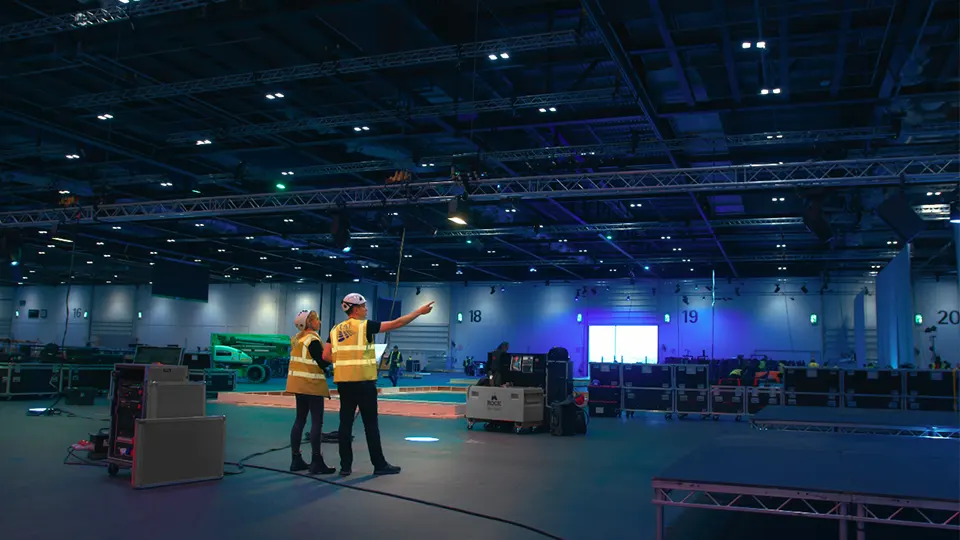
The connection between return processing and asset utilization is important. Equipment that moves through receiving, inspection and preparation faster can return to rentable inventory sooner.
Build RFID Around the Rental Workflow
RFID deployment should start with how assets move, not with the hardware.
The first step is to identify where employees repeatedly scan, count, search for or verify equipment. These points typically include dispatch, return, inventory checks, inspection and branch transfers.
A practical implementation can follow this sequence:
- Map the rental lifecycle and identify the highest-volume manual identification points.
- Group assets according to material, size, environment and handling conditions.
- Test RFID tags and mounting positions on representative equipment.
- Position fixed readers and antennas around predictable movement points.
- Connect RFID events with rental, inventory and maintenance software.
Fixed readers are well suited to controlled entry and exit points, while handheld readers provide flexibility for inventory checks and asset searches. Many rental environments benefit from using both.
The physical environment also needs attention. Metal shelving, tightly packed equipment, large cable bundles and mixed materials can affect UHF RFID performance. Reader antenna placement and read zones should therefore be tested with actual rental assets rather than relying solely on theoretical read ranges.
Software integration completes the workflow. The RFID reader captures an EPC, while the rental platform determines what that EPC represents and what should happen next. A return event, for example, can update the asset status and place the equipment into an inspection queue.
This makes RFID the physical identification layer of the rental system, turning equipment movements into reliable digital events that can support inventory, order and maintenance processes.
Shorter Turnaround, Better Asset Utilization
The business value of RFID rental asset tracking comes from repeated operational improvements rather than a single scanning task.
In one deployment, a workflow dropped from 150 minutes to 15 minutes, while another check-in process fell from 1,320 seconds to 10 seconds. The deployment covered approximately 200,000 assets across 10 locations, demonstrating how RFID can support rental operations at substantial scale.
For a rental business, faster identification can reduce repetitive labor, improve inventory visibility and shorten the time between asset return and the next available rental.
RFID can also reveal patterns that are difficult to identify through manual records. Equipment that remains idle for long periods, assets that frequently require maintenance and inventory that repeatedly moves between branches all become easier to analyze when physical movements are recorded automatically.
For businesses managing equipment, tools, AV systems, cables, containers, textiles or other reusable assets, the combination of suitable RFID tags, strategically positioned readers and integrated software can turn repetitive identification tasks into structured operational data.
Effective rental asset tracking comes down to three things: identify each asset quickly, keep its status accurate and minimize the time it spends waiting between rental cycles.

