













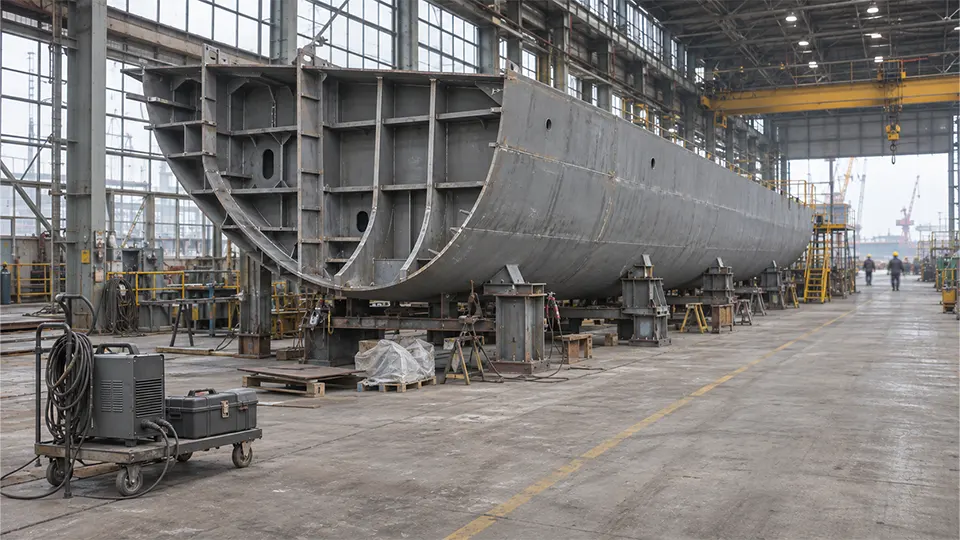
Large commercial shipyards contain thousands of mobile assets, ranging from portable welding machines and power tools to lifting accessories, electrical distribution equipment and temporary piping systems. These assets circulate between workshops, storage facilities, assembly areas and dry docks throughout the construction of a vessel. Equipment availability, inspection status and maintenance history have a direct bearing on production costs.
Radio frequency identification (RFID) has become an established method of managing industrial assets in such environments. In shipbuilding, however, the extensive presence of steel structures, metallic equipment and environmental exposure places additional demands on RFID hardware, particularly the design and durability of on-metal RFID tags.
The Scale of Modern Shipbuilding
According to UN Trade and Development’s *Review of Maritime Transport 2025*, global shipyards delivered approximately 71.7 million gross tons of new vessels in 2024, with the number of vessels delivered increasing by 8.8% compared with the previous year.
China accounted for 54.6% of delivered gross tonnage, followed by South Korea at 28% and Japan at 12.6%. Container ships represented 41.3% of global deliveries by tonnage, reflecting substantial manufacturing activity across large commercial shipyards.
The construction of these vessels requires extensive coordination between equipment suppliers, subcontractors, fabrication workshops and assembly teams. Temporary installations are frequently dismantled, relocated and reassigned as construction progresses. Equipment purchased for one vessel may subsequently enter service on several other projects.
Common categories of assets circulating within commercial shipyards include:
- Portable welding machines, power tools and testing instruments.
- Lifting accessories, industrial pumps and hydraulic equipment.
- Temporary electrical distribution units and fluid supply installations.
- Metal transport containers, fixtures and reusable production equipment.
Many of these assets remain in service for years. Their physical location and operating condition may change considerably faster than conventional inventory records, particularly when several vessels are under construction simultaneously.
Thousands of Assets Between Projects
At Chantiers de l’Atlantique in Saint-Nazaire, France, RFID has been deployed to support the identification and maintenance monitoring of temporary equipment used in ship construction.
The project covered approximately 60,000 assets associated with electrical and fluid distribution networks. These installations provide essential services during construction and are regularly reassigned between working areas and vessels. Their availability and maintenance condition therefore affect several production activities.
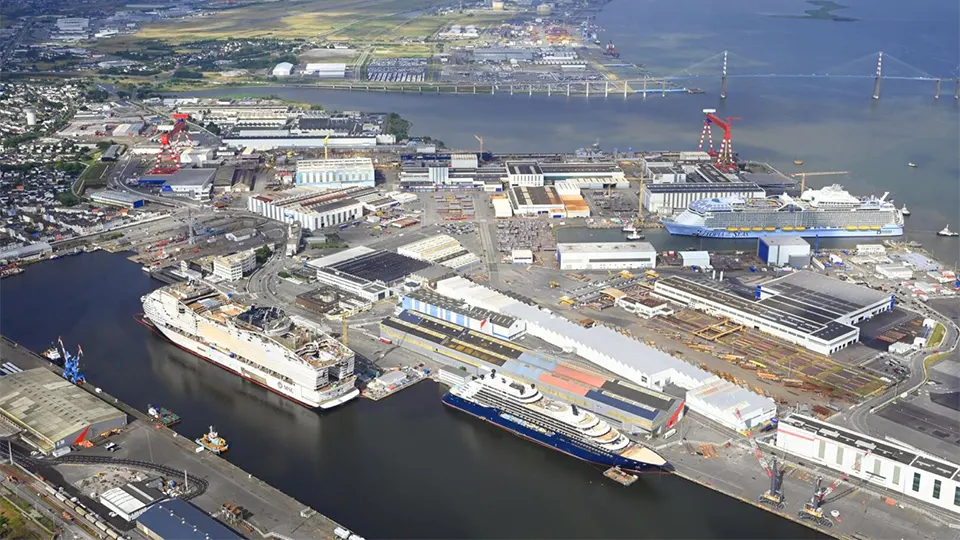
According to the project provider, Storkcom, the deployment improved equipment availability visibility, reduced replenishment expenditure and helped control maintenance costs. The provider reported a return on investment within six months, although detailed financial calculations were not publicly disclosed.
A comparable application was documented at Singapore’s Sembcorp Marine, where RFID and barcode technologies were introduced to improve maintenance tool management. Previously, identifying and recording large quantities of tools involved substantial manual work.
RFID-based asset identification supports several recurring administrative processes within commercial shipyards:
- Asset registration and assignment of individual identification records.
- Documentation of equipment issuance, return and departmental allocation.
- Reconciliation of physical assets with central inventory records.
- Association of equipment with maintenance and inspection histories.
The main operational value lies in the continuity of these records. A portable machine may be used by different contractors over several construction stages, while its purchase details, maintenance requirements and inspection history remain associated with the same asset identity.
Why Metal Changes RFID Performance
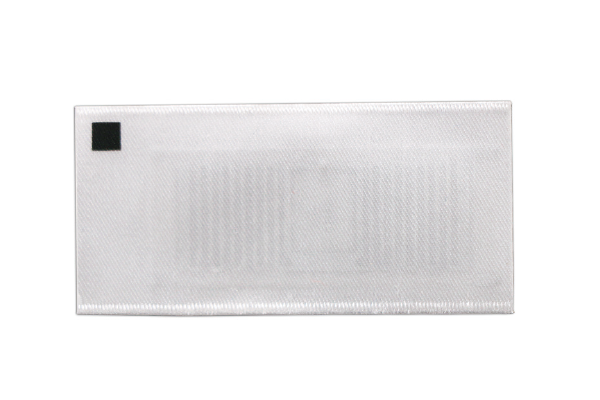
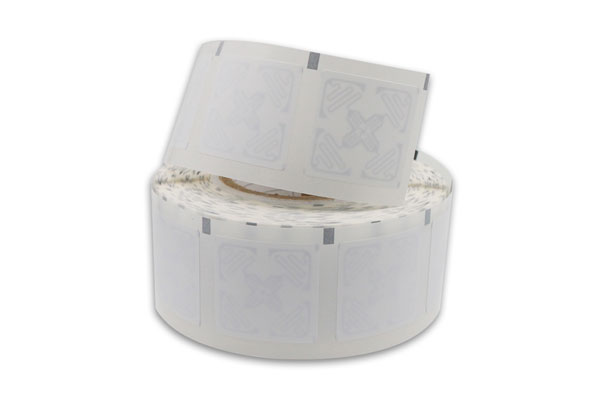
Passive UHF RFID operates through electromagnetic communication between a reader and the antenna embedded in an RFID tag. Conventional UHF labels are generally designed for materials such as paper, plastic and cardboard. Direct attachment to conductive metal can substantially alter their electrical characteristics.
Steel surfaces affect the electromagnetic field surrounding a tag and may detune its antenna from the intended operating frequency. The resulting impedance mismatch reduces the energy transferred to the chip and can weaken the signal returned to the reader.
On-metal RFID tags incorporate antenna structures and insulating materials specifically engineered for operation on conductive surfaces. Depending on the design, the underlying metal can form part of the antenna’s effective electromagnetic environment.
Shipyards present particularly complex conditions because large metallic objects introduce radio-frequency reflections and physical obstructions. Steel panels, machinery and structural assemblies can influence reading performance even when the tags themselves are designed for metallic surfaces.
Consequently, the nominal reading distance of an anti-metal RFID tag represents performance under specified test conditions. Actual performance varies with the mounting surface, antenna orientation, reader configuration and surrounding materials. Conductive enclosures also remain substantial barriers to UHF communication.
In the United States, industrial UHF RFID commonly operates within the 902–928 MHz band. Passive tags compliant with EPC Class 1 Gen 2 and ISO/IEC 18000-63 provide a standardized communication interface for asset identification across compatible industrial RFID systems.
Industrial Tags for Marine Environments
Durability is an important consideration in shipyard asset tracking. Equipment may encounter moisture, salt-laden air, oil, vibration, abrasive contact and repeated handling. The physical construction of the RFID tag must remain compatible with these conditions throughout its working life.
Several categories of industrial on-metal RFID tags address different asset characteristics:
- PCB RFID tags: Rigid tags commonly associated with metal tools, machinery and industrial equipment.
- ABS RFID tags: Enclosed tags offering mechanical protection for larger industrial assets.
- Ceramic RFID tags: Compact identification devices for assets with limited mounting space.
- Flexible on-metal RFID tags: Adaptable labels for curved metallic surfaces and equipment housings.
An example is the DTB-PCB6020UA, a 60 × 20 × 3 mm PCB anti-metal RFID tag incorporating the NXP UCODE 8 chip. Its published specifications include IP68 protection and an operating temperature range of −20 °C to 80 °C. The stated reading distance is approximately 3.5 m under specified US-frequency test conditions using a 1 W handheld RFID reader.
The NXP UCODE 8 integrated circuit provides 128 bits of EPC memory, accommodating individual asset identifiers. Other chip families used in passive UHF RFID tags include NXP UCODE 9 and Impinj M730 and M830.
Environmental resistance extends beyond water and dust protection. An IP68 rating describes enclosure protection against ingress under specified conditions; it does not independently establish resistance to salt spray, industrial chemicals or prolonged ultraviolet exposure.
ISO 9227 salt spray testing is among the established methods used to evaluate corrosion resistance under controlled laboratory conditions. For marine industrial equipment, tag housing materials, encapsulation, attachment durability and environmental test documentation can be as relevant as the electronic specifications.
Asset Identity and Maintenance History
Italian offshore engineering company Saipem has used RFID technology to identify and track large equipment across industrial project sites, including assets subject to inspection and certification requirements.

The application addressed difficulties associated with maintaining reliable records of equipment age, inspection status and previous certification. Incomplete documentation had previously contributed to situations in which equipment could no longer be accepted for continued service.
The same underlying issue is present in commercial shipbuilding. Lifting accessories, portable electrical equipment and industrial machinery may have inspection requirements that differ according to their category, condition and applicable regulations.
An RFID-linked asset record can contain information covering several stages of equipment ownership:
- Acquisition, manufacturer details and initial asset registration.
- Equipment classification and documented service history.
- Inspection results, certification records and maintenance activities.
- Changes in operating status, retirement and disposal.
Most of this information resides in an asset management platform rather than the RFID chip. The tag provides a persistent identifier associated with the equipment’s digital record.
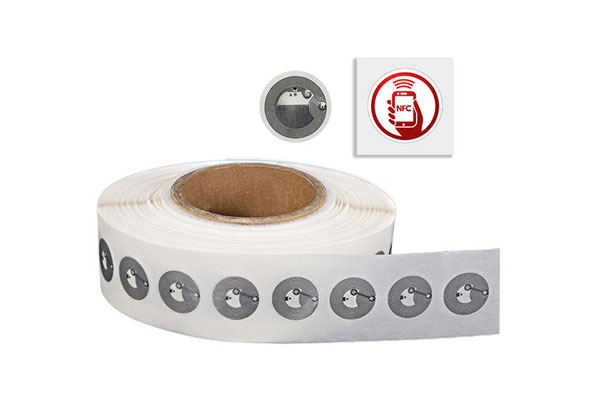
Near-field communication (NFC) also has a complementary role in individual equipment identification. Operating at 13.56 MHz, NFC supports close-proximity interactions with compatible smartphones and can provide access to authorized maintenance documentation.
NXP NTAG213 and NTAG424 DNA represent two different NFC chip categories, with the latter supporting cryptographic authentication. Their applications differ from conventional UHF asset identification, particularly in reading distance, interaction methods and security capabilities.
The Cost of Poor Asset Visibility
Commercial shipbuilding involves extensive capital expenditure, long manufacturing cycles and substantial inventories of reusable industrial equipment. Asset management costs accumulate through equipment purchases, inspections, maintenance, storage and administrative work.
A significant proportion of these costs is associated with uncertainty over existing resources. Equipment recorded as unavailable may still be physically present within the organization, while assets that remain in service can require additional administrative verification when maintenance records are incomplete.
The 60,000-asset deployment at Chantiers de l’Atlantique illustrates the scale at which identification and maintenance records become financially significant. Even relatively small improvements in equipment utilization and replenishment expenditure can have considerable cumulative value across such a large asset population.
RFID project economics vary according to asset value, tag durability, equipment turnover, software integration and the amount of existing manual work. Reported returns from individual projects therefore reflect their particular operating conditions rather than a universal financial benchmark.
For large commercial shipyards, equipment identification forms part of a broader industrial information infrastructure encompassing inventory management, maintenance documentation and procurement records. The service life of an on-metal RFID tag, its performance on industrial equipment and the integrity of its associated digital record influence the long-term cost of maintaining that infrastructure across successive shipbuilding projects.
